
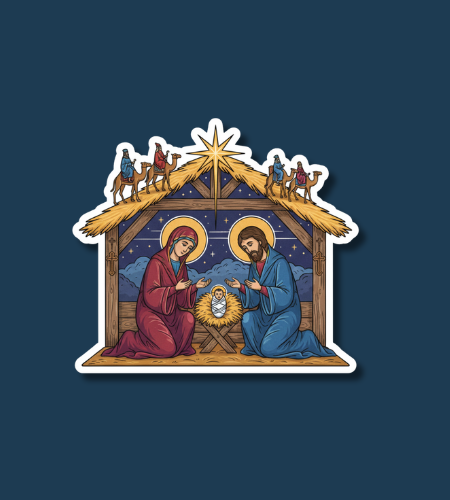
Orthodox Christmas Day is observed by Eastern Orthodox Christians as a religious feast commemorating the birth of Jesus Christ according to the Julian calendar. It falls on January 7. This date differs from the December 25th celebration used by Western denominations because many Orthodox churches continue to follow an older calendar system that currently runs thirteen days behind the Gregorian calendar.
Table of Contents
History of Orthodox Christmas
The origins of this holiday date back to the early centuries of the Christian Church. For over a thousand years, all of Christendom followed the Julian calendar, which was introduced by Julius Caesar in 46 B.C. However, this calendar had a slight mathematical error that caused it to drift away from the solar year over time. In 1582, Pope Gregory XIII introduced the Gregorian calendar to correct this discrepancy, but Eastern Orthodox churches maintained the original Julian system to preserve their liturgical traditions and theological independence.
During the 20th century, some Orthodox branches, such as those in Greece and Romania, adopted a revised calendar that aligns with the Western date for Christmas. Others, including the Russian, Serbian, and Georgian Orthodox Churches, stayed with the “Old Calendar.” In regions like Russia, the public observance of the holiday was suppressed for decades under Soviet rule, leading many traditions to merge with secular New Year’s celebrations. It was only after 1991 that the day was restored as a significant public holiday and religious event in many Eastern European nations.
Why is Orthodox Christmas important?
This day serves as a vital spiritual milestone that emphasizes the doctrine of the Incarnation, the belief that God became human to offer salvation to the world. For many believers, it is the second most important feast of the liturgical year, preceded only by Easter. The holiday marks the conclusion of the Nativity Fast, a forty-day period of abstinence and preparation intended to purify the body and spirit before the joy of the feast.
The celebration reinforces cultural identity and communal bonds among the estimated 260 million Orthodox Christians globally. It is a time when secular pressures often fade in favor of ancient hymns, traditional recipes, and family gatherings. By maintaining the January 7 date, these communities honor a heritage that spans nearly two millennia, connecting modern worshippers to the practices of the early Church.
- It marks the end of a forty-day period of fasting and reflection.
- The holiday honors the birth of Jesus Christ as the savior of humanity.
- It preserves ancient liturgical traditions that predate modern calendar reforms.
- The day strengthens family ties through shared traditional meals and customs.
- It provides a sense of continuity and historical identity for Orthodox communities.
How to Observe Orthodox Christmas
Observance typically begins on the evening of January 6 with a solemn church service and a special meal known as the Holy Supper. This dinner often consists of twelve meatless dishes representing the twelve apostles. In many Slavic cultures, the meal cannot begin until the first star is visible in the night sky, symbolizing the Star of Bethlehem that guided the Wise Men. The table may be decorated with straw or a white tablecloth to represent the manger and the purity of the Christ child.
On the day of the feast, believers attend the Divine Liturgy, a joyful service filled with chanting and incense. Afterward, the strict fast is broken with a large banquet featuring meat, pastries, and rich desserts. Many cultures include caroling, where groups of people go from house to house singing “koliadky” and wishing neighbors prosperity in exchange for small treats. It is also a time for acts of charity, as practitioners are encouraged to help those less fortunate during the festive season.
- Attend a midnight or morning Divine Liturgy at an Orthodox church.
- Prepare a traditional twelve-dish meatless meal for Christmas Eve.
- Place straw under the tablecloth to remember the humble birth in a manger.
- Break the fast on January 7 with a festive meal featuring roasted meats.
- Join or host carolers to share traditional songs and holiday greetings.
Orthodox Christmas Day Dates Table
| Year | Date | Day |
|---|---|---|
| 2026 | January 7 | Wednesday |
| 2027 | January 7 | Thursday |
| 2028 | January 7 | Friday |
| 2029 | January 7 | Sunday |
| 2030 | January 7 | Monday |
Subscribe to our newsletter and never miss a holiday again!