
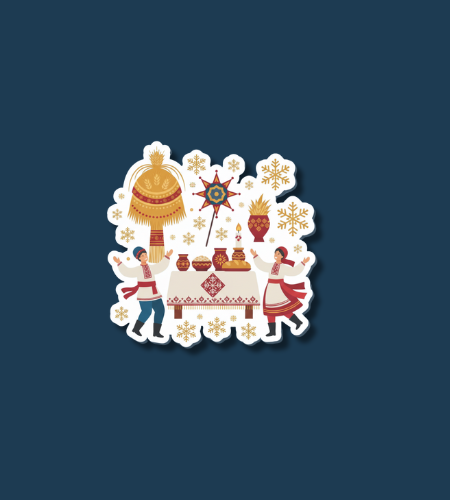
Orthodox New Year is observed on the start of the year according to the Julian calendar. Also commonly known as the “Old New Year,” this holiday is an informal but deeply cherished celebration for millions of Eastern Orthodox Christians around the world. While the civil calendar transitioned to the Gregorian system centuries ago, this day allows communities to honor their historical and religious roots through a second New Year’s celebration. It acts as a bridge between the spiritual and secular worlds, extending the festive winter with a focus on heritage and family connection.
Table of Contents
History of Orthodox New Year
The existence of the Orthodox New Year is the result of a 16th-century calendar reform initiated by Pope Gregory XIII. In 1582, the Gregorian calendar was introduced to correct a small but cumulative error in the Julian calendar, which was about 11 minutes longer than the solar year. While Catholic and eventually Protestant nations adopted the new system to keep seasonal dates like the spring equinox accurate, many Orthodox churches resisted the change. They viewed the new calendar as a departure from ancient ecclesiastical traditions and the decrees of early church councils.
By the time various Eastern European and Balkan nations adopted the Gregorian calendar for civil use in the early 20th century, the gap between the two systems had grown to 13 days. This shift meant that the traditional Julian New Year on January 1 moved to January 14 on the modern calendar. In places like Russia, the holiday gained a unique cultural status following the 1918 Bolshevik reform, which officially moved the country to the Gregorian calendar. Citizens began celebrating the “Old New Year” as a way to maintain their cultural identity and religious observances during a period of state-enforced secularism.
Why is Orthodox New Year important?
The Orthodox New Year is important because it preserves a sense of cultural continuity and historical memory that stretches back to the Roman Empire. For many, it is a “bonus” holiday that is significantly less commercialized and stressful than the mainstream January 1 festivities. It provides a quiet, reflective space for families to gather and celebrate their specific ethnic and religious identities without the pressure of large-scale public events. The holiday reinforces the resilience of tradition, showing how community customs can survive and thrive despite major political and scientific shifts.
Spiritually, the day often coincides with significant religious feasts, such as the Feast of the Circumcision of Christ and St. Basil’s Day. St. Basil the Great was a 4th-century bishop known for his immense charity and social reform, and his legacy of generosity is a central theme of the day. Celebrating this New Year encourages individuals to think about the upcoming year through the lens of service and compassion rather than just personal ambition. It serves as a reminder that time is not just a linear measurement but a cycle of spiritual renewal and communal support.
- The day maintains a connection to the ancient Julian calendar used for centuries.
- It offers a less commercialized alternative to the global New Year’s Eve.
- The holiday honors the legacy of St. Basil and his commitment to the poor.
- Celebrating together strengthens the bond of the global Orthodox diaspora.
- It serves as a symbolic “farewell” to the winter holiday season.
How to Celebrate Orthodox New Year
Celebrating the Orthodox New Year often involves a large family dinner featuring traditional regional dishes. In Greek households, the centerpiece is the Vasilopita, a sweet bread or cake baked with a hidden coin inside. The head of the household cuts the cake into slices for each family member, and whoever finds the coin is said to have good luck for the entire year. In Slavic traditions, festive tables might include stuffed cabbage, roasted meats, and “Old New Year” pies. The atmosphere is generally warm and intimate, with a focus on hospitality and long-form storytelling.
Many observers also attend a special liturgy at their local Orthodox church to ask for blessings for the coming year. In some cultures, children participate in “kolyadki,” or caroling, where they visit neighbors to sing songs and offer well-wishes in exchange for sweets or small coins. It is also a popular time for fortune-telling and weather omens, such as checking the wind direction on New Year’s Eve to predict the summer’s harvest. Because it is an informal holiday, it is a perfect time to reach out to friends and family with a simple greeting of “Happy Old New Year.”
- Bake or buy a Vasilopita and hold a coin-finding ceremony with your family.
- Prepare a traditional meal featuring recipes passed down through your heritage.
- Attend a church service or a “Watchnight” liturgy for spiritual reflection.
- Take down your holiday tree and decorations on this day as a final farewell to the season.
- Share a toast at midnight on January 13 to mark the transition to the Old New Year.
Orthodox New Year Dates Table
| Year | Date | Day |
|---|---|---|
| 2026 | January 14 | Wednesday |
| 2027 | January 14 | Thursday |
| 2028 | January 14 | Friday |
| 2029 | January 14 | Sunday |
| 2030 | January 14 | Monday |
Subscribe to our newsletter and never miss a holiday again!