
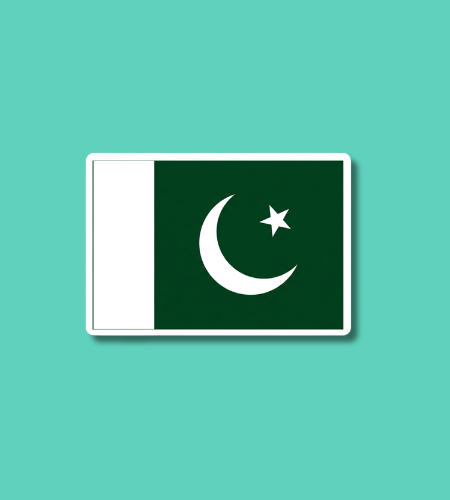
Pakistan Day is observed annually on March 23. This national holiday commemorates the passing of the Lahore Resolution in 1940, which formally called for the creation of an independent sovereign state for the Muslims of British India. It also marks the adoption of the first constitution of Pakistan in 1956, transitioning the country from a British Dominion to the world’s first Islamic Republic. The day is characterized by significant military displays and patriotic events that reinforce the national identity and the historical struggle for self-determination.
Table of Contents
History of Pakistan Day
The roots of Pakistan Day trace back to a three-day session of the All-India Muslim League held at Minto Park in Lahore from March 22 to 24, 1940. On March 23, the “Lahore Resolution” was presented by A. K. Fazlul Huq, the Prime Minister of Bengal, and subsequently adopted. This document rejected the concept of a united India and proposed that geographically contiguous regions with Muslim majorities should be grouped to constitute independent states. This was a definitive shift in the political landscape of the subcontinent, transforming the Muslim community’s goal from seeking constitutional safeguards to demanding a separate homeland.
Exactly sixteen years after the Lahore Resolution, on March 23, 1956, Pakistan officially adopted its first constitution. This act replaced the Government of India Act 1935 and shifted the nation’s status to a Republic. Although the country had gained independence on August 14, 1947, the adoption of the constitution was seen as the final step in establishing full sovereignty. To honor both the 1940 resolution and the 1956 republican status, the day was designated as a public holiday. Today, the Minar-e-Pakistan monument stands in Lahore at the exact site where the resolution was passed, serving as a permanent memorial to these events.
Why is Pakistan Day important?
Pakistan Day is important because it represents the birth of the political vision that led to the creation of the nation. The 1940 resolution provided a clear objective and a sense of purpose for the Muslim population, unifying various regional movements under a single banner of statehood. It is viewed as the “foundational moment” of the Pakistan Movement, without which the eventual independence in 1947 might not have materialized. This day reminds the citizenry of the ideological origins of their country and the “Two-Nation Theory” that defined its early history.
The observance also serves as a display of national strength and military readiness. In a region with complex geopolitical challenges, the annual military parade in Islamabad is a significant event that showcases the country’s defense capabilities, including its air force, navy, and army. It provides a sense of security and pride for the public while honoring the sacrifices of the armed forces. Beyond the military aspect, the holiday is a time for national reflection on progress toward the founding principles of “Unity, Faith, and Discipline,” emphasizing the ongoing effort to build a stable and prosperous republic.
- The day marks the first formal demand for a separate Muslim state in the subcontinent.
- It celebrates the transition of Pakistan into the world’s first Islamic Republic in 1956.
- The holiday fosters a sense of unity across the country’s diverse provincial cultures.
- It honors the intellectual contributions of leaders like Muhammad Ali Jinnah and Allama Iqbal.
- Public recognition of the day helps preserve the history of the largest mass migration in human history.
How to Celebrate Pakistan Day
Celebrations for Pakistan Day typically begin with a 31-gun salute in the federal capital and 21-gun salutes in the provincial capitals. The most prominent event is the grand military parade in Islamabad, attended by the President and Prime Minister, as well as foreign dignitaries. Citizens across the country watch the live telecast of the parade, which includes aerobatic displays by the Pakistan Air Force and traditional floats representing the different provinces. National flags are hoisted on government and private buildings, and many people decorate their vehicles and homes with green and white bunting.
Individual and community celebrations involve traditional food and patriotic gatherings. Families often prepare special meals such as biryani, kebabs, and traditional sweets like gulab jamun to share with friends and neighbors. Educational institutions organize seminars, debates, and national song competitions to engage the younger generation with the country’s history. In major cities, landmarks and government buildings are illuminated at night with colorful lights, creating a festive environment. Many people visit the Minar-e-Pakistan or the mausoleum of Muhammad Ali Jinnah to pay their respects to the founders of the nation.
- Watch the live military parade featuring traditional dances and air shows.
- Decorate your home or business with the national flag and green lights.
- Prepare a traditional Pakistani feast for family and friends.
- Visit national monuments or museums to learn about the 1940 Lahore Resolution.
- Sing patriotic songs and listen to speeches by national leaders.
Pakistan Day Dates Table
| Year | Date | Day |
|---|---|---|
| 2026 | March 23 | Monday |
| 2027 | March 23 | Tuesday |
| 2028 | March 23 | Thursday |
| 2029 | March 23 | Friday |
| 2030 | March 23 | Saturday |
Subscribe to our newsletter and never miss a holiday again!