
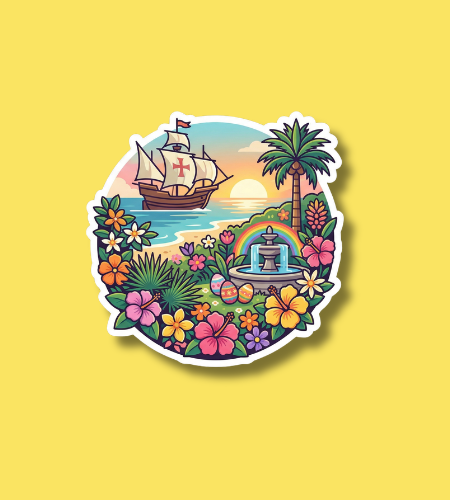
Pascua Florida Day is a state holiday in Florida, observed annually on April 2 to commemorate the anniversary of the discovery of Florida by Spanish explorer Juan Ponce de León in 1513. The name “Pascua Florida” translates to “Flowery Festival” or “Flowery Easter,” referring to the Spanish tradition of the Easter season during which the explorer first sighted the peninsula. While it is not a federal holiday, it serves as the official state day of Florida, designated by the legislature to honor the region’s Spanish heritage and its status as the site of the first permanent European landing in what is now the continental United States.
Table of Contents
History of Pascua Florida Day
The historical significance of this day dates back to March 1513, when Juan Ponce de León set sail from Puerto Rico with three ships in search of new lands. On April 2, 1513, he sighted land and came ashore along the eastern coast of the peninsula, likely near present-day St. Augustine or Melbourne Beach. Because the landing occurred during the Spanish Easter season, known as Pascua Florida, he named the land La Florida. This event marked the beginning of European influence in North America, predating the arrival of the Pilgrims at Plymouth Rock by over a century.
In 1953, the Florida Legislature officially designated April 2 as Pascua Florida Day. The law encourages the Governor to issue an annual proclamation and urges schools and civic organizations to observe the day with appropriate exercises. Over the decades, the holiday has evolved to encompass a broader educational mission, highlighting the 500-plus years of history that have shaped the state. From the founding of St. Augustine in 1565 to Florida’s admission as the 27th state in 1845, the day acts as a chronological anchor for the state’s storied past.
Why is Pascua Florida Day important?
This day is significant because it establishes Florida’s unique position as the oldest European-settled region in the United States. It provides a platform to educate the public about the “First Spanish Period,” a chapter of American history that is often overshadowed by the British colonial narrative of the Northeast. By celebrating Pascua Florida Day, the state honors the linguistic, architectural, and culinary influences that remain a vital part of Florida’s modern culture. It serves as a reminder of the state’s resilience, having flourished under five different flags—Spain, France, Great Britain, the Confederate States, and the United States.
Furthermore, the observance is vital for fostering a sense of state pride and local identity among Florida’s rapidly growing and diverse population. For students, the day is an essential part of the social studies curriculum, helping them understand the geography and exploration that led to the development of their home state. It also highlights the state’s natural beauty—the “flowery” aspect of its name—and the importance of preserving the unique ecosystems that first enchanted the Spanish explorers.
- It marks the official “birthday” of Florida’s documented history.
- The day honors the state’s Spanish colonial heritage and influence.
- It highlights Florida’s status as the site of the first European landing in the U.S.
- The observance promotes heritage tourism and the preservation of historic sites.
- It serves as an educational tool for schools to teach state-specific history.
How to Celebrate Pascua Florida Day
Celebrating involves engaging with Florida’s rich history and natural environment. Many residents observe the day by visiting one of Florida’s many historical landmarks, such as the Castillo de San Marcos in St. Augustine or the Ponce de Leon Inlet Lighthouse. State parks often host special guided tours or historical reenactments that bring the 16th-century landing to life. For families, the day is an excellent opportunity to explore local botanical gardens or state forests, appreciating the “flowery” landscapes that gave the state its name.
In the classroom and at home, the day is often marked by educational activities centered on the “Age of Discovery.” Students might create maps of Ponce de León’s route or research the indigenous tribes, such as the Calusa and Timucua, who inhabited the land long before European arrival. Many people also celebrate by enjoying traditional Spanish-inspired Floridian cuisine or attending local heritage festivals. Whether through a visit to a museum or a quiet walk through a blooming Florida trail, the goal is to acknowledge the courage of early explorers and the enduring spirit of the people who have called Florida home for centuries.
- Visit a Florida State Park or a historic site like the Fountain of Youth Archaeological Park.
- Read about the voyages of Juan Ponce de León and the early mapping of the Gulf Stream.
- Explore a local botanical garden to see the “flowery” flora that inspired Florida’s name.
- Attend a local historical society lecture or a library exhibition about state history.
- Display the Florida state flag to show your pride for the Sunshine State.
Pascua Florida Day Dates Table
| Year | Date | Day |
|---|---|---|
| 2026 | April 2 | Thursday |
| 2027 | April 2 | Friday |
| 2028 | April 2 | Sunday |
| 2029 | April 2 | Monday |
| 2030 | April 2 | Tuesday |
Subscribe to our newsletter and never miss a holiday again!