
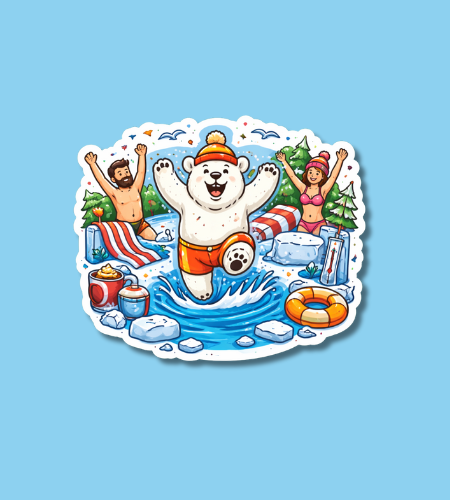
Polar Bear Plunge Day is observed on January 1. This winter event involves thousands of individuals diving into freezing bodies of ocean or lake surf to mark the beginning of the new year. Participants, often referred to as “polar bears,” gather at beaches and docks to submerge themselves in cold temperatures, frequently as a test of physical endurance or a means of raising money for local charities.
Table of Contents
History of Polar Bear Plunge Day
The oldest documented cold-water swim in the United States took place in 1904 in South Boston, Massachusetts. The L Street Brownies, a local swimming club founded two years prior, began the tradition of taking a collective dip into Dorchester Bay on the first day of the year. Their founder believed that regular exposure to cold ocean surf improved health and extended life expectancy. This Bostonian tradition continues today, drawing large crowds to the shoreline to witness the mid-winter spectacle.
In Canada, the tradition gained significant momentum in 1920 when Peter Pantages founded the Vancouver Polar Bear Swim Club. Pantages, who believed that a daily swim was essential for wellness regardless of the weather, led a small group of five friends into the English Bay on New Year’s Day. Since that initial event, the Vancouver club has grown into one of the largest organizations of its kind in the world, often registering thousands of official participants for its annual New Year’s event. Similar groups emerged throughout Europe and the United States during the 20th century, formalizing the activity as a global New Year’s ritual.
Why is Polar Bear Plunge Day important?
The observance is significant for its role in supporting massive philanthropic efforts, particularly for organizations like the Special Olympics. In many regions, the plunge acts as a high-visibility fundraising event where participants collect pledges from donors in exchange for braving the cold. The Maryland State Police Polar Bear Plunge, for example, has raised millions of dollars annually, proving that the event is a critical financial driver for community programs and social services. It transforms a simple act of bravery into a tangible benefit for individuals with intellectual disabilities.
This day also promotes a unique form of social camaraderie and mental resilience. Facing the shock of freezing temperatures requires a level of mental fortitude that many find empowering as they set their intentions for a new year. The biological response to cold immersion includes a surge in endorphins and adrenaline, which participants describe as an invigorating “natural high.” By engaging in a shared hardship, strangers and friends alike build community bonds that emphasize optimism and a willingness to step outside of one’s comfort zone.
- It generates millions of dollars in donations for local and national charities.
- The event fosters an environment of inclusion and support for athletes with disabilities.
- Cold-water immersion is recognized for its ability to trigger an immediate adrenaline boost.
- It serves as a symbolic rite of passage to leave the past year behind.
- The tradition supports the visibility of local swimming clubs and coastal conservation.
How to Celebrate Polar Bear Plunge Day
Celebrating involves finding an organized event near a local shoreline or dock and registering as a participant. Many veterans of the plunge recommend wearing a colorful costume or a themed outfit, which adds to the festive atmosphere of the morning. It is essential to bring a thick bathrobe, large towels, and a change of warm, dry clothes to use immediately after exiting the surf. Wearing water shoes or neoprene booties is also a practical tip, as it protects feet from rocky bottoms and provides a barrier against the freezing sand or ice.
Safety is the most critical component of the celebration, and participants should never plunge alone or without lifeguards present. It is advisable to avoid diving headfirst to prevent cold shock and instead enter the water at a steady, controlled pace. After the event, many participants gather at nearby cafes or heated tents for hot cocoa or a warm meal to help their core body temperature return to normal. Sharing photos of the experience on social media can help spread awareness of the specific causes being supported by the local plunge.
- Join an officially sanctioned event that provides on-site medical and safety staff.
- Wear a creative costume to enhance the celebratory spirit of the New Year.
- Bring a pair of insulated shoes or aqua socks to protect your feet.
- Keep your time in the freezing temperatures limited to just a few minutes.
- Prepare a thermos of hot tea or broth to drink immediately after the plunge.
Polar Bear Plunge Day Dates Table
| Year | Date | Day |
|---|---|---|
| 2026 | January 1 | Thursday |
| 2027 | January 1 | Friday |
| 2028 | January 1 | Saturday |
| 2029 | January 1 | Monday |
| 2030 | January 1 | Tuesday |
Subscribe to our newsletter and never miss a holiday again!