
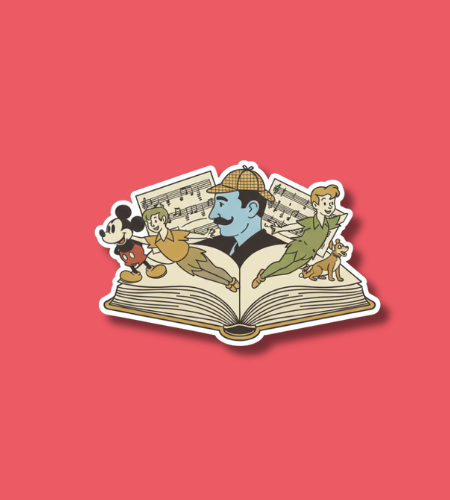
Public Domain Day is observed on January 1. This day celebrates the moment when legal copyright protections expire on books, films, music, and other creative works, allowing them to enter the public domain. Once a work is in the public domain, anyone can legally copy, share, adapt, or build upon it without needing to seek permission or pay royalties to the original creator.
Table of Contents
History of Public Domain Day
The concept of a public domain emerged from the legal framework of early intellectual property rights, specifically the British Statute of Anne in 1710. This law was the first to establish that creators should only have exclusive rights for a limited time, after which their work would belong to the public. However, the term “public domain” itself was not popularized until mid-19th-century France. For much of the 20th century, the length of copyright protection was repeatedly extended by international treaties and national laws, which delayed many famous works from becoming free to use.
The specific observance of January 1 as Public Domain Day was proposed in 2004 by Canadian activist Wallace McLean and supported by law professor Lawrence Lessig. The date was chosen because most countries’ copyright terms end on the last day of the calendar year, making New Year’s Day the official birth date for thousands of “new” public works. In the United States, a 20-year freeze on copyright expirations between 1998 and 2018 meant that no new works entered the public domain for two decades. The tradition resumed in 2019, turning the first day of every year into a major event for historians, librarians, and artists.
Why is Public Domain Day important?
This day is vital for the preservation of cultural history and the advancement of education. Many older films, photographs, and recordings are at risk of being lost to physical decay because their copyright status is unclear, leaving them in a legal “orphan” state where no one is willing to restore them. When these items enter the public domain, libraries and archives can digitize them and make them available to the entire world for free. This access ensures that the collective memory of humanity remains intact and reachable for students and researchers regardless of their financial resources.
Public Domain Day also acts as a fuel for modern creativity and innovation. It allows new artists to remix classic stories or characters into fresh formats, such as turning a famous novel into a graphic novel or a theatrical play. In 2025, iconic works like Ernest Hemingway’s A Farewell to Arms and William Faulkner’s The Sound and the Fury are entering the public domain in the United States. Characters like Popeye and the first versions of Tintin are also becoming free for use. This cycle ensures that culture continues to evolve by allowing each generation to interpret the past in their own unique way.
- It marks the legal transition of private intellectual property into shared cultural heritage.
- The day enables the free digitization and preservation of rare historical materials.
- It allows educators to provide classic literature and art to students at no cost.
- New creators can adapt old stories into modern movies, plays, and sequels.
- The observance highlights the importance of balancing creator rewards with public access.
How to Celebrate Public Domain Day
A great way to celebrate is to visit the websites of the Internet Archive, Project Gutenberg, or Duke University’s Center for the Study of the Public Domain. These organizations publish lists of the most famous works entering the public domain each year. You can download and read a classic book that was previously restricted or watch a vintage film that is now legally free to stream. If you are an artist or a writer, you might use the day to start a new project inspired by one of the newly released characters or musical compositions.
You can also participate by helping to spread awareness of the public domain through social media or local community events. Many libraries host “edit-a-thons” where volunteers update Wikipedia pages with newly available images and text. If you enjoy digital archiving, you can volunteer to help proofread scanned books or identify old recordings that need to be preserved. Simply using a piece of public domain art for a personal project or a school assignment is a practical way to honor the purpose of the day and exercise your right to access global culture.
- Explore the newly available books and films from the current year’s release list.
- Share a piece of public domain music or art with friends on social media.
- Start a creative project that uses a character or plot from a newly released work.
- Donate your time to help a digital library proofread and archive old texts.
- Download a classic novel to read on your tablet or smartphone for free.
Public Domain Day Dates Table
| Year | Date | Day |
|---|---|---|
| 2026 | January 1 | Thursday |
| 2027 | January 1 | Friday |
| 2028 | January 1 | Saturday |
| 2029 | January 1 | Monday |
| 2030 | January 1 | Tuesday |
Subscribe to our newsletter and never miss a holiday again!