
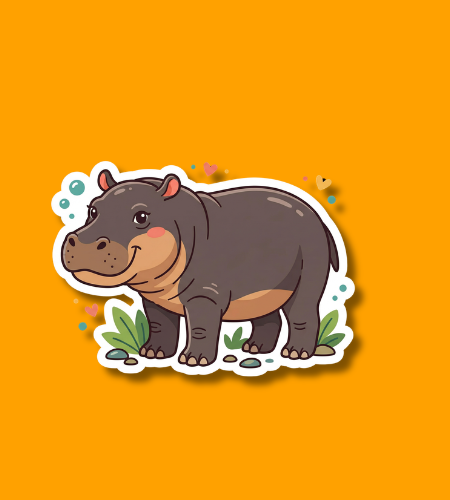
Pygmy Hippo Day is observed on April 8. This day is dedicated to raising awareness for one of the world’s most elusive and endangered mammals. Unlike their much larger and more famous cousins, pygmy hippos lead a solitary, quiet existence in the dense forests of West Africa. The observance highlights the urgent need for habitat preservation and scientific study to ensure these “reclusive residents” of the rainforest do not vanish.
Read also about World Hippo Day
Table of Contents
History of Pygmy Hippo Day
The World Wildlife Fund (WWF) established Pygmy Hippo Day to bring attention to a species that often lives in the shadow of the common hippopotamus. For centuries, these animals were unknown to the Western world, with the first official scientific description not occurring until 1849. Historically, they were shrouded in local folklore, including West African tales that claimed they carried diamonds in their mouths to light their way through the dark forest at night. By creating a specific day of awareness, conservationists aimed to transition the pygmy hippo from a creature of myth to a priority for global biodiversity.
Modern history for the species has been marked by a struggle for survival. During the 20th century, their populations were severely impacted by civil unrest and large-scale logging in their primary habitats of Liberia, Sierra Leone, Guinea, and Ivory Coast. The Nigerian subspecies is already believed to be extinct, as there have been no reliable sightings for decades. Today, the holiday serves as a platform for the Pygmy Hippo Foundation and international zoos to share research gathered from successful captive breeding programs, which remain the primary source of knowledge for this secretive animal.
Why is Pygmy Hippo Day important?
This day is vital because pygmy hippos are a “keystone species” for the Upper Guinean forests. Their presence indicates a healthy, functioning ecosystem with clean water and dense vegetation. With only an estimated 2,000 to 2,500 individuals remaining in the wild, every animal is critical for the survival of the species. The observance draws attention to the fact that their habitat is disappearing at an alarming rate due to mining, agricultural expansion, and illegal logging. Without the focused international pressure that this day provides, these shy creatures could easily slip toward extinction unnoticed.
The holiday also serves an educational purpose by debunking common misconceptions about hippos. Many people are surprised to learn that pygmy hippos are roughly one-tenth the weight of common hippos and are not nearly as aggressive. They spend more time on land and follow worn, familiar trails through the forest to forage for ferns and fallen fruits. Highlighting these unique traits helps the public understand that “one size does not fit all” in conservation; the strategies needed to save a forest-dwelling pygmy hippo are vastly different from those used to protect the river-dwelling common hippo.
- It raises awareness for a species with fewer than 2,500 individuals left in the wild.
- The day promotes the protection of the Upper Guinean forest, a global biodiversity hotspot.
- It highlights the success of international zoo breeding programs in preventing extinction.
- Educational efforts help distinguish the pygmy hippo from its larger, more aggressive relative.
- The observance supports research into the elusive nocturnal behaviors of these animals.
Interesting facts about the pygmy hippo
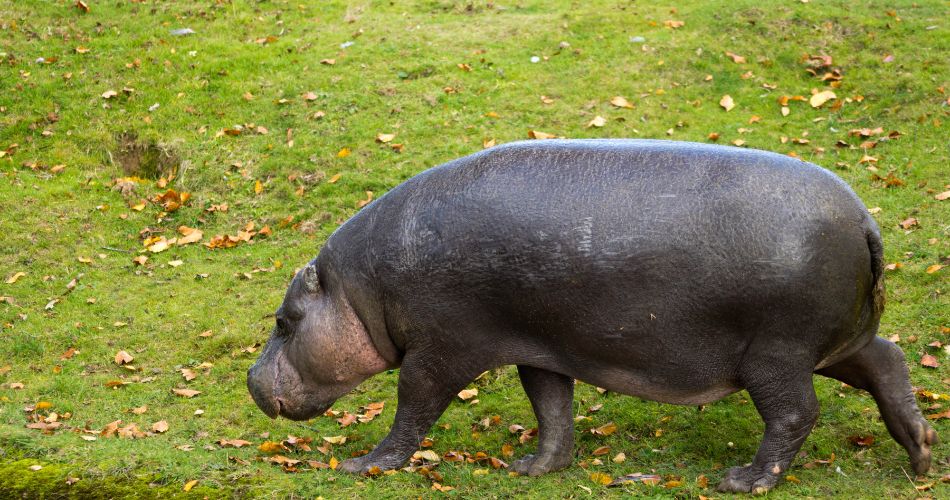
- The Reclusive West Africans
Unlike their famous cousins in East Africa, these “mini-hippos” are exclusive to the dense, swampy forests of West Africa. You’ll primarily find them hiding in Liberia, with tiny, scattered populations in Sierra Leone, Guinea, and Côte d’Ivoire. - Masters of Stealth
Spotting one in the wild is nearly impossible. They are solitary, nocturnal, and incredibly quiet. Because they prefer a “secret agent” lifestyle in deep swamps, scientists actually learn more about them from zoo residents—like the viral sensation Moo Deng—than from wild sightings. - Pink “Sunscreen” and Glowing Skin
They aren’t actually shiny because of water. Their skin is naturally greenish-black, but it’s covered in specialized glands that secrete a mysterious pink mucus. This “blood sweat” acts as a natural moisturizer and high-SPF sunscreen, giving them a distinct rosy glow. - A “Small” 550-Pound Herbivore
While they are only one-tenth the size of a standard hippo, “small” is relative—they still weigh as much as a full-grown male lion. They spend at least six hours every night munching on a buffet of roots, grasses, and succulent leaves to fill their complex four-chambered stomachs. - Surprisingly Speedy
Don’t let the stubby legs fool you. On land, a pygmy hippo can sprint at 18 mph. That’s roughly the same top speed as a fast human runner! - The Whale Connection
In a bizarre twist of evolution, these forest dwellers aren’t closely related to pigs. Recent research suggests their nearest living relatives are actually whales and dolphins. - A Race Against Time
With fewer than 2,500 left in the wild, these incredible creatures are under immense pressure. Logging, mining, and poaching are shrinking their world, making the work of organizations like the WWF critical to ensuring they don’t vanish into the shadows forever. 1
How to Observe Pygmy Hippo Day
The most effective way to observe this day is to visit a zoo or wildlife park that participates in pygmy hippo conservation. Many facilities offer “meet and greets” or educational talks on April 8 to explain the complex care these animals require. If a physical visit is not possible, many zoos host “hippo cams” where you can watch these animals interact with their environment in real-time. Donating to organizations like the Pygmy Hippo Foundation or the African Wildlife Foundation provides direct funding for anti-poaching patrols and habitat restoration in West Africa.
Sharing facts and media on social media is another practical way to celebrate. Because pygmy hippos are often considered “cute” and “charismatic,” they are excellent ambassadors for broader forest conservation messages. You can use the day to learn about the “walking whale” ancestry that hippos share with cetaceans, a fascinating piece of evolutionary history. For a more personal touch, reading local West African folktales about the “forest pig” helps connect the biological importance of the animal with its cultural significance in its native land.
- Visit an accredited zoo to see a pygmy hippo and learn about its diet and habitat.
- Share a “fun fact” about pygmy hippos on social media to increase their visibility.
- Donate to a conservation fund that protects the rainforests of Liberia and Guinea.
- Watch a documentary or read a scientific article about the differences between hippo species.
- Avoid purchasing products made from tropical hardwoods that contribute to deforestation.
Pygmy Hippo Day Dates Table
| Year | Date | Day |
|---|---|---|
| 2026 | April 8 | Wednesday |
| 2027 | April 8 | Thursday |
| 2028 | April 8 | Saturday |
| 2029 | April 8 | Sunday |
| 2030 | April 8 | Monday |
- https://www.worldwildlife.org/resources/facts/why-are-pygmy-hippos-so-small-and-6-other-pygmy-hippo-facts/[↩]
Subscribe to our newsletter and never miss a holiday again!