
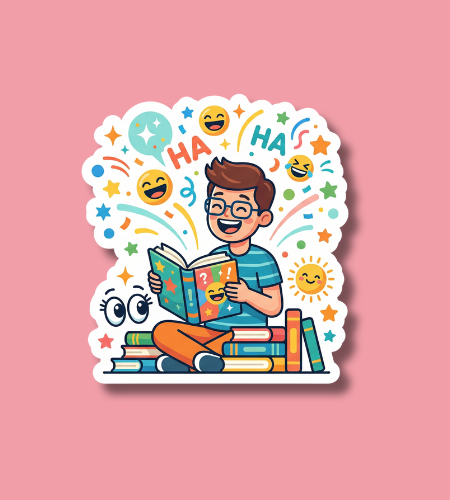
Reading is Funny Day is a lighthearted educational observance celebrated annually on April 1 to show children that books can be just as entertaining as television or video games. By focusing on the humorous side of literature, the day aims to spark a lifelong passion for reading in younger generations who may otherwise view it as a dry or purely academic task. Coinciding with April Fools’ Day, this event leverages the natural atmosphere of silliness and pranks to introduce kids to joke books, riddles, and comedic stories. Educators and parents use this time to demonstrate that reading is not just about learning facts, but also about experiencing joy, laughter, and creative storytelling. By making the reading experience interactive and funny, the holiday helps break down barriers for reluctant readers and fosters a more vibrant, inclusive literacy culture in homes and classrooms alike.
Read also about Tolkien Reading Day
Table of Contents
History of Reading is Funny Day
The origins of Reading is Funny Day are rooted in the broader movement to improve global literacy by making books more appealing to children. While the specific founder of the day is not documented, it emerged as a response to the increasing competition between traditional books and modern digital entertainment. Advocates for children’s literature realized that humor is one of the most effective tools for engaging a child’s attention. The choice of April 1 was deliberate, allowing the holiday to ride the wave of “silly” energy already present in schools and homes due to April Fools’ Day traditions.
Historically, the connection between humor and the written word dates back thousands of years. The oldest recorded joke, an ancient Sumerian proverb, was discovered on a cuneiform tablet from approximately 1900 BC. Similarly, the first children’s book intended specifically for enjoyment, A Little Pretty Pocket-Book, was published in 1744. Over the centuries, the “joke book” has remained one of the most popular genres for new readers. Reading is Funny Day draws on this long history of written wit, using it as a modern strategy to ensure that the ancient art of reading remains relevant and exciting for children in the 21st century.
Why is Reading is Funny Day important?
This day is important because it directly addresses the “literacy gap” by providing a low-pressure entry point for children who struggle with reading. Psycholinguistic research indicates that understanding a punchline requires complex cognitive skills, such as tracking multiple word meanings and interpreting figurative language. When a child laughs at a joke in a book, they are practicing high-level reading comprehension without even realizing it. By associating books with positive emotions and shared laughter, the holiday helps build a “reading identity” that can lead to better academic performance and improved vocabulary over time.
Furthermore, the observance strengthens the social and emotional bonds between adults and children. Shared reading time focused on comedy creates lasting memories and a sense of camaraderie that more serious educational tasks might lack. In an era where children spend a significant portion of their leisure time on social media or gaming, having a designated day to celebrate “funny” books reminds families to diversify their entertainment. It provides a unique opportunity for parents and teachers to model that being a “reader” includes enjoying comic strips, graphic novels, and silly poems, thereby broadening the definition of what it means to be literate.
- It encourages reluctant readers to engage with books through humor and play.
- The day helps develop critical thinking skills needed to understand puns and riddles.
- Sharing a funny book creates a strong emotional bond between parents and kids.
- It exposes children to a wide variety of genres, including poetry and comics.
- Laughing while learning reduces the stress and anxiety often associated with school.
How to Celebrate Reading is Funny Day
Celebrating involves making reading a highly interactive and visible part of your day. The most popular way to observe the holiday is by visiting a local library or bookstore specifically to find “joke” and “riddle” books. Many parents celebrate by hosting a “riddle-off” at the dinner table, where family members take turns trying to stump each other with wordplay found in their favorite funny books. Schools often participate by allowing students to perform short comedy skits based on a humorous story they have recently read in class, turning the act of reading into a lively performance.
On an individual level, you can celebrate by gifting a funny book to a young person in your life or by setting aside twenty minutes for a “laugh-out-loud” read-aloud session. Creating your own funny stories or comic strips is another excellent way to engage with the spirit of the day, as it allows children to see themselves as both consumers and creators of humor. Sharing your favorite funny book recommendations on social media can also help inspire other families to join the fun. No matter the activity, the goal is to ensure that the primary focus remains on the sheer enjoyment of the story and the laughter it brings.
- Take a special trip to the library to check out a new collection of riddles.
- Read a “funny” poem or short story out loud during family mealtime.
- Help a child write and illustrate their own original comic strip or joke.
- Host a friendly competition to see who can find the silliest book title.
- Create a cozy “humor nook” in your home filled with comedy books and pillows.
Reading is Funny Day Dates Table
| Year | Date | Day |
|---|---|---|
| 2026 | April 1 | Wednesday |
| 2027 | April 1 | Thursday |
| 2028 | April 1 | Saturday |
| 2029 | April 1 | Sunday |
| 2030 | April 1 | Monday |
Subscribe to our newsletter and never miss a holiday again!