
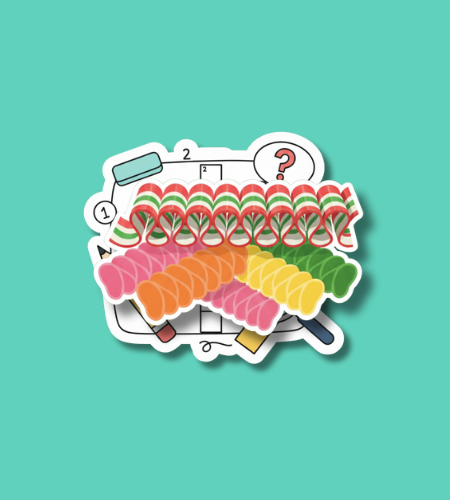
Ribbon Candy Day is celebrated annually on December 21, highlighting one of the most beautiful and fragile confections of the holiday season. This day honors the thin, wavy, hard candy that has adorned Christmas tables and candy dishes for centuries, serving as both a sweet treat and a nostalgic decoration.
Table of Contents
History of Ribbon Candy
The origins of ribbon candy trace back to Europe, where it was originally created by confectioners as a decoration for their shop windows. In these early days, the candy was made entirely by hand. Skilled candy makers would pull the warm, pliable sugar and shape the delicate waves around their own thumbs. Because the sugar hardened quickly and required such careful manipulation, ribbon candy was considered a luxury item, available only to the wealthy and produced in very limited quantities.
The production process changed dramatically in the 1800s with the invention of mechanical crimpers. These machines featured finger-like attachments that mimicked the human hand, allowing for the rapid creation of the candy’s signature curls. This industrial advancement transformed ribbon candy from an exclusive luxury into a popular, affordable treat for the masses. In North America, New England became a hub for its production, with companies like F.B. Washburn Candy famously refining the process to prevent the delicate strands from breaking during cutting.
Why is Ribbon Candy Day important?
This day serves as a preservation effort for a dying culinary art. As modern tastes shift toward chocolate and soft gummies, old-fashioned hard candies like ribbon candy are becoming harder to find. Observing this day reminds people of the skill required to create these glossy, satin-like ribbons, which are often spun so thin they are translucent. It celebrates the craftsmanship of the few remaining candy makers who still produce this traditional sweet, ensuring the history is not lost to time.
Beyond the candy itself, the day triggers a deep sense of nostalgia for many people. Ribbon candy is often associated with grandparents’ homes and vintage holiday celebrations, where a glass dish filled with peppermint, cinnamon, and clove ribbons was a staple. It represents a slower era of holiday preparation, where the visual beauty of food was just as important as the taste.
- It preserves the tradition of old-fashioned hard candy making.
- The day connects people to family memories and past holidays.
- It appreciates the visual artistry of the delicate, wavy shapes.
- The observance supports the few remaining manufacturers of this treat.
- It offers a unique alternative to standard chocolate holiday sweets.
How to Celebrate Ribbon Candy Day
The best way to celebrate is to seek out and purchase a box of traditional ribbon candy. Because it is extremely fragile and difficult to ship, it is often best found at local specialty candy shops or old-fashioned general stores. Buying a box not only treats you to a sweet snack but also directly supports the confectioners who are keeping this labor-intensive tradition alive.
You can also use ribbon candy as a stunning edible decoration. Its bright stripes and light-reflecting curves make it perfect for filling glass jars or arranging on a holiday dessert table. Some people even use it to decorate gingerbread houses, where the ribbons simulate flowing fabric or fences. Just be sure to handle it gently, as the thin sugar shatters easily, which is part of its delicate charm.
- Visit a local candy shop to find a box of ribbon candy.
- Fill a vintage glass bowl with the candy for a festive centerpiece.
- Gift a box to an older relative who may appreciate the nostalgia.
- Use pieces of the candy to decorate a gingerbread house.
- Photograph the light shining through the thin ribbons for art.
Ribbon Candy Day Dates Table
| Year | Date | Day |
|---|---|---|
| 2026 | December 21 | Monday |
| 2027 | December 21 | Tuesday |
| 2028 | December 21 | Thursday |
| 2029 | December 21 | Friday |
| 2030 | December 21 | Saturday |
Subscribe to our newsletter and never miss a holiday again!