
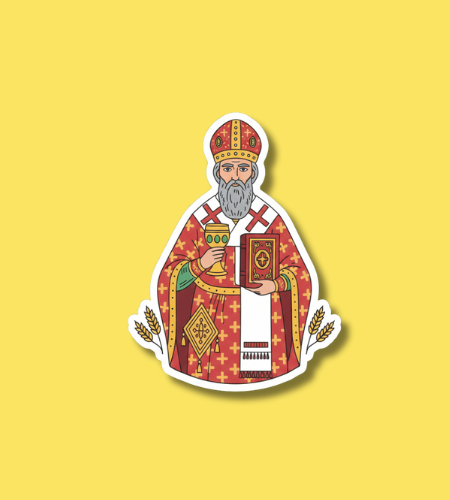
Saint Basil’s Day is observed annually on January 1. This day honors Saint Basil the Great, a 4th-century archbishop of Caesarea who remains one of the most influential figures in the Eastern Orthodox Church. While the Eastern tradition celebrates on the first day of the calendar year, the Roman Catholic and Anglican churches typically observe the feast on January 2. The holiday combines religious observance with cultural festivities, marking the start of the New Year with acts of charity and family gatherings.
Table of Contents
History of Saint Basil’s Day
Saint Basil was born around 329 AD into a wealthy Christian family in Cappadocia, located in modern-day Turkey. He pursued an extensive education in Athens and Constantinople before choosing a life of spiritual devotion and service to the poor. In 370 AD, he was consecrated as the Bishop of Caesarea, where he became a prominent defender of the Nicene Creed against theological divisions. His leadership redefined the role of a bishop as a social advocate who utilized church resources to provide systematic aid to those in need.
The tradition of the Vasilopita, or Saint Basil’s bread, stems from a popular legend regarding his time as bishop. According to folklore, Basil needed to return gold and jewelry to the citizens after a period of heavy taxation or siege. To ensure the valuables were returned fairly and anonymously, he ordered large loaves of bread to be baked with the items hidden inside. When the bread was distributed, each person miraculously received their own property. This event established his legacy as a benefactor and inspired the modern practice of hiding a coin in New Year’s bread.
Why is Saint Basil’s Day important?
This holiday is significant because it emphasizes the values of philanthropy and community responsibility during the New Year transition. Saint Basil is recognized as the father of Eastern monasticism for establishing the rules that governed communal religious life. His theological works on the Holy Spirit and the Trinity are still considered foundational to Christian doctrine. In Greek and Eastern European cultures, he serves as the primary holiday gift-bearer, fulfilling a role similar to Saint Nicholas or Santa Claus.
The day also highlights the historical development of organized social welfare. Basil founded the Basiliad, a large complex outside Caesarea that functioned as a hospital, hospice, and poorhouse. This institution is often cited as the first of its kind, offering free medical care to the sick regardless of their social status. By observing this feast, people honor the shift toward institutional charity and reflect on the importance of helping the vulnerable within their own communities.
- It honors one of the Three Holy Hierarchs of the Eastern Church.
- The holiday marks the traditional day for exchanging gifts in Greece.
- It recognizes the historical origins of free public hospitals.
- Families use the day to seek blessings and luck for the coming year.
- The day celebrates the theological defense of early Christian creions.
How to Celebrate Saint Basil’s Day
The primary tradition of the holiday is the baking and cutting of the Vasilopita. This sweet bread is prepared with a single coin hidden inside the dough before it is baked. Before the meal, the head of the household makes the sign of the cross over the bread and cuts it into slices. Pieces are traditionally designated for Christ, the Virgin Mary, and Saint Basil before being served to guests and family members in order of seniority. The person who finds the coin in their slice is expected to have good fortune for the remainder of the year.
Children often celebrate by singing kalanda, which are traditional carols describing Saint Basil’s arrival from Caesarea. These songs are performed on New Year’s Eve or the morning of the feast to bring good wishes to the neighborhood. Many observers also follow the saint’s example by performing specific acts of charity, such as preparing meals for the elderly or donating to local shelters. This combination of festive caroling and community service ensures the holiday remains focused on the welfare of others.
- Bake a round loaf of Vasilopita and hide a coin inside.
- Attend a church service to commemorate the saint’s life.
- Sing traditional New Year carols with friends and family.
- Give a small gift to children on the morning of January 1.
- Make a donation to a charity that helps the poor or sick.
Saint Basil’s Day Dates Table
| Year | Date | Day |
|---|---|---|
| 2026 | January 1 | Thursday |
| 2027 | January 1 | Friday |
| 2028 | January 1 | Saturday |
| 2029 | January 1 | Monday |
| 2030 | January 1 | Tuesday |
Subscribe to our newsletter and never miss a holiday again!