
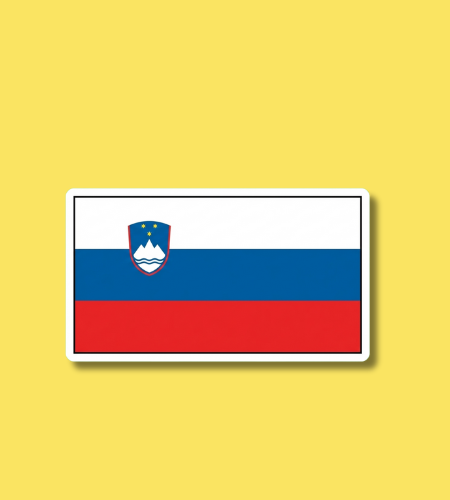
Slovenia Independence and Unity Day is a significant national public holiday observed annually on December 26. This widely celebrated date commemorates the official proclamation of the results from the 1990 independence plebiscite, a defining historic moment that established the legal mandate for Slovenia’s separation from Yugoslavia. Falling immediately after Christmas, the holiday serves as a work-free day for citizens to not only extend their festive winter gatherings but also to honor the rare political and social consensus that paved the way for the nation’s sovereignty.
Table of Contents
History of Slovenia Independence and Unity Day
The holiday traces its origins to December 1990, when the Slovenian people participated in a historic plebiscite on sovereignty. While the actual voting took place on December 23, the official results were formally announced by the Slovenian Assembly three days later, on December 26. The outcome was decisive: with a turnout of over 93%, nearly 95% of voters—representing 88.5% of the total electorate—chose to separate from the Socialist Federal Republic of Yugoslavia. This overwhelming mandate triggered a six-month timeline for the government to prepare the necessary legislation for independence, which was ultimately declared in June 1991.
Originally, this holiday was known simply as “Independence Day.” However, in 2005, the National Assembly amended the law to rename it “Independence and Unity Day.” This change was made to explicitly recognize the extraordinary political and social cohesion displayed during the plebiscite era. At that time, opposing political parties and the general public set aside their differences to pursue a shared vision of a sovereign state, a level of cooperation that is remembered as a cornerstone of modern Slovenian identity.
Why is Slovenia Independence and Unity Day important?
This day is vital because it celebrates the democratic legitimacy of the Slovenian state. It serves as a permanent reminder that the country’s independence was not merely a political maneuver but a direct expression of the people’s will. The announcement of the plebiscite results provided the legal and moral foundation for Slovenia to pursue international recognition and eventually join the global community as an autonomous entity. It is a day to reflect on the courage required to step away from a larger federation and forge a new path.
The inclusion of “Unity” in the title underscores the value of collaboration in times of crisis or change. It highlights a moment when national interest superseded partisan politics, serving as an enduring example for future generations. The holiday reinforces the idea that despite internal differences, the nation is capable of coming together to achieve monumental goals. It acts as a yearly reinforcement of the shared values and collective responsibility that sustain the country’s democracy.
- It commemorates the first time citizens voted for their own sovereign state
- The day honors the rare political consensus achieved in 1990
- It marks the legal beginning of the separation from Yugoslavia
- Citizens reflect on the power of democratic self-determination
- The holiday strengthens the sense of a distinct national identity
How to Observe Slovenia Independence and Unity Day
Official state celebrations typically involve a high-profile ceremony in Ljubljana, attended by government leaders and featuring speeches, cultural performances, and the national anthem. Because it is a public holiday, schools and businesses are closed, allowing families to spend time together. Many people attend local municipal events or visit museums that host special exhibitions regarding the road to independence. Television stations often air documentaries and interviews with key figures from the 1990s, providing historical context for the younger generation.
In addition to civic observances, the date coincides with St. Stephen’s Day, a Christian holiday that carries its own set of folk traditions. In many rural areas, particularly in the Gorenjska and Dolenjska regions, horse owners bring their animals to local churches for a special blessing. This custom, known as the “blessing of horses,” blends seamlessly with the national holiday, creating a unique atmosphere where patriotic pride meets centuries-old cultural heritage. For those not involved in ceremonies, the day is often spent hiking in the Slovenian hills or enjoying a festive meal with leftovers from Christmas.
- Attend a formal state ceremony or local municipal gathering
- Watch historical documentaries broadcast on national television
- Visit a rural village to witness the traditional blessing of horses
- Take a family hike to appreciate the country’s natural landscape
- Display the Slovenian flag to show support for national unity
| Year | Date | Day |
|---|---|---|
| 2026 | December 26 | Saturday |
| 2027 | December 26 | Sunday |
| 2028 | December 26 | Tuesday |
| 2029 | December 26 | Wednesday |
| 2030 | December 26 | Thursday |
Subscribe to our newsletter and never miss a holiday again!