
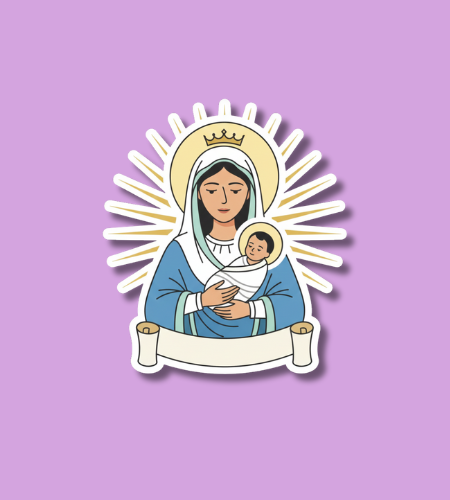
Solemnity of Mary, Mother of God, is a feast day of the Blessed Virgin Mary under the aspect of her motherhood of Jesus Christ. It is observed on January 1.
In the Roman Catholic Church, this day is a Holy Day of Obligation, meaning the faithful are required to attend Mass. It is the Octave Day of Christmas (the eighth day after the birth of Christ) and serves as the highest title of Mary, honoring her role in the mystery of the Incarnation.
Table of Contents
History of the Solemnity of Mary
The celebration of Mary’s motherhood is one of the oldest traditions in the Christian Church. The title “Mother of God” (Theotokos in Greek) was officially Dogmatized at the Council of Ephesus in 431 AD. This council was held to address the Nestorian heresy, which argued that Mary was only the mother of Jesus’ human nature. The Church affirmed that because Jesus is one person with two natures (divine and human), Mary is truly the Mother of God.
For centuries, the feast was celebrated on different dates. In the 13th and 14th centuries, January 1 was primarily the Feast of the Circumcision of Christ. However, following the liturgical reforms of the Second Vatican Council in the 1960s, Pope Paul VI restored the Marian focus to January 1. He emphasized that this day should not only celebrate the beginning of the year but also honor the woman through whom the Savior entered the world.
Why is the Solemnity of Mary Important?
This solemnity is significant because it highlights the essential connection between Jesus’ divinity and his humanity. By honoring Mary as the Mother of God, the Church reaffirms the central Christian belief that God truly became man. It reminds believers that the salvation of humanity was made possible through Mary’s “fiat”—her “yes” to God’s plan.
Furthermore, because it falls on New Year’s Day, the feast offers a spiritual perspective on new beginnings. It provides a moment for the faithful to place the upcoming year under the protection and intercession of Mary. In many parts of the world, it is also observed as the World Day of Peace, a tradition started by Pope Paul VI, linking the motherhood of Mary to the hope for global harmony.
- Doctrinal Foundation: It upholds the truth of the Incarnation.
- Liturgical Culmination: It concludes the Christmas Octave.
- Intercession: It seeks Mary’s guidance for the new year.
- Focus on Peace: It aligns with prayers for global non-violence and unity.
How to Observe the Solemnity of Mary
As a Holy Day of Obligation, the primary way Catholics observe this day is by attending Mass. Many parishes offer a “Vigil Mass” on the evening of New Year’s Eve, as well as several services on New Year’s Day. The liturgy often focuses on the Gospel of Luke, specifically the passage where the shepherds visit the manger and find Mary, Joseph, and the infant Jesus.
Beyond the church service, many families observe the day by:
- Reciting the Rosary: Specifically the Joyful Mysteries, which focus on the Incarnation.
- Marian Devotions: Lighting a candle or placing flowers before a statue of Mary in the home.
- The Angelus: Praying this traditional prayer that commemorates the Annunciation.
- Acts of Charity: Starting the year by helping those in need, reflecting the “service” of Mary.
Solemnity of Mary Dates Table
| Year | Date | Day |
|---|---|---|
| 2026 | January 1 | Thursday |
| 2027 | January 1 | Friday |
| 2028 | January 1 | Saturday |
| 2029 | January 1 | Monday |
| 2030 | January 1 | Tuesday |
Subscribe to our newsletter and never miss a holiday again!