
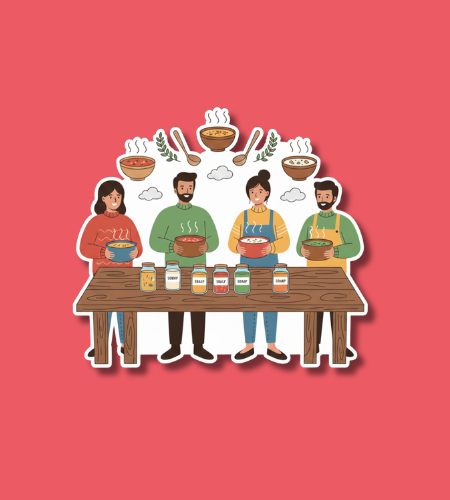
Soup Swap Day is observed on the third Saturday of January. In 2026, it falls on January 17. This culinary event encourages people to gather during the coldest month of the year to exchange large batches of homemade soup. It serves as a practical way to diversify a household’s winter meal options while fostering community connections through shared cooking. Participants typically leave the gathering with different frozen or chilled soups, providing them with ready-made dinners for the weeks ahead.
Table of Contents
History of Soup Swap Day
The concept of the soup swap originated in Seattle in 1998 with a resident named Knox Gardner. Tired of eating the same large pot of soup throughout the winter, Gardner invited friends to bring their own homemade batches to exchange. He drew inspiration from holiday cookie swaps but adapted the idea for hearty, savory meals. The event was designed as a “quirky solution” to the monotony of winter cooking, allowing people to enjoy multiple recipes without the labor of preparing each one from scratch.
By 2006, the event had gained enough popularity through food blogs and word-of-mouth to be recognized as a national day of observance. Gardner launched a website to provide guidelines and resources for others wishing to host their own swaps. The tradition spread from the Pacific Northwest across the United States and eventually reached international participants in cities like London and Vancouver. While it began as a small gathering in a private cottage, it has evolved into a widespread practice used by neighborhood groups, churches, and community centers to build social bonds.
Why is Soup Swap Day important?
Soup Swap Day addresses the practical challenge of meal planning during winter. Most soup recipes yield large quantities, which often leads to “soup fatigue” when a single person or family tries to finish a whole pot. Swapping allows individuals to trade their surplus for various flavors, such as minestrone, chili, or chowder, ensuring a more interesting diet. This exchange effectively “outsources” the meal preparation for several nights, saving participants significant time and energy in the kitchen.
Beyond the convenience of meal prep, the day serves as a vital social anchor during a time of year when people often feel isolated due to cold weather. The “Telling of the Soup” is a common tradition during these events where guests share the stories, heritage, or specific ingredients behind their recipes. This practice turns a simple food exchange into a meaningful cultural dialogue. It also promotes the consumption of healthy, whole-food ingredients and encourages people to hone their home-cooking skills rather than relying on processed, store-bought alternatives.
- It helps households reduce food waste by distributing large batches of soup.
- Participants gain access to a wide range of nutrients from different vegetable and protein bases.
- The event provides an affordable way to stock a freezer with high-quality meals.
- It creates a platform for sharing family heritage through traditional recipes.
- Neighbors and friends use the day to strengthen local social safety nets.
How to Celebrate Soup Swap Day
To celebrate this day, one must first coordinate a group of participants and establish a clear set of swapping rules. Hosts typically ask each guest to bring a specific number of quart-sized containers of one type of soup, ensuring the containers are leak-proof and clearly labeled. Labels should include the name of the soup, the date it was prepared, and any specific reheating instructions. It is also standard practice to bring a small extra portion of the soup in a thermos or slow cooker so that everyone can taste the offerings before the official swap begins.
The actual swapping process can be done through a simple one-for-one trade or a more organized “draft” system where participants pick their favorite options in rounds. Providing small cups or spoons for sampling allows guests to make informed choices based on their flavor preferences. To enhance the experience, hosts often provide simple side items like fresh bread, crackers, or beverages that complement the various soups. Many groups also include a charitable component by collecting canned goods or extra portions of soup to donate to local shelters or neighbors in need.
- Invite four to six friends to keep the quantity of soup manageable.
- Freeze your soup a few days in advance to make transport easier and safer.
- Use masking tape and permanent markers to list all ingredients for those with allergies.
- Bring printed copies of your recipe to share with others who enjoy your dish.
- Provide a large bag or box to help guests carry their new soup collection home.
Soup Swap Day Dates Table
| Year | Date | Day |
|---|---|---|
| 2026 | January 17 | Saturday |
| 2027 | January 16 | Saturday |
| 2028 | January 15 | Saturday |
| 2029 | January 20 | Saturday |
| 2030 | January 19 | Saturday |
Subscribe to our newsletter and never miss a holiday again!