
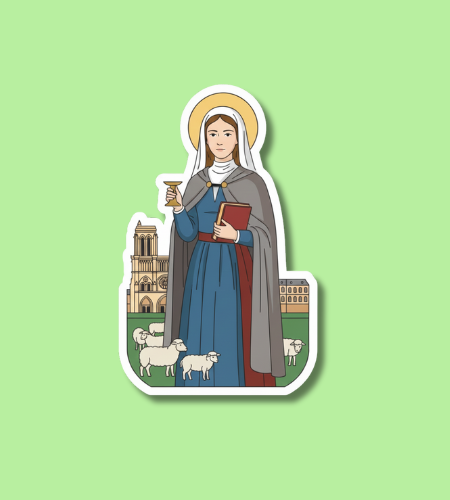
St. Genevieve Feast Day is observed on January 3. This day honors the patron saint of Paris, a woman whose leadership and faith are credited with saving the city from multiple historical threats. While it is primarily a religious holiday within the Catholic and Eastern Orthodox traditions, it also serves as a cultural celebration of French heritage and the resilience of the Parisian people. Genevieve is remembered not just as a mystic, but as a practical leader who organized food supplies and negotiated for the safety of her fellow citizens during times of war and famine.
Table of Contents
History of St. Genevieve Feast Day
Genevieve was born around 422 in Nanterre, a small village near Paris. Her life took a spiritual turn at age seven when she met Bishop Germanus of Auxerre, who recognized her devotion and encouraged her to dedicate her life to God. She later moved to Paris and became a consecrated virgin, living a life of extreme austerity and constant prayer. Despite early skepticism from some neighbors, she gained widespread respect for her charitable works and her ability to guide the city through political and military crises.
The most famous event in her history occurred in 451, when Attila the Hun and his army were marching toward Paris. While many residents prepared to flee in terror, Genevieve convinced them to stay and pray for protection. According to historical accounts, Attila’s forces suddenly changed their route toward Orléans, leaving Paris untouched. Decades later, during a blockade by the Frankish King Childeric I, she famously led a convoy of boats through enemy lines to bring grain to the starving population. She died around the year 512 and was buried in a church she had helped establish, which eventually became a site of pilgrimage.
Why is St. Genevieve Feast Day important?
This day highlights the role of women in early European history as both spiritual guides and civic leaders. Genevieve is a rare example of a female figure from the fifth century whose administrative and tactical skills were as respected as her religious piety. Her legacy provides a sense of continuity for the city of Paris, where she has been invoked for protection against plagues, floods, and invasions for over 1,500 years. The holiday reinforces the values of courage and selfless service to one’s community during times of extreme hardship.
For many, the feast day is also a celebration of the “Light of Paris.” Genevieve is often depicted in art holding a candle, symbolizing her role as a light-bearer in dark times. This imagery stems from a legend where the devil repeatedly blew out her candle as she walked to church, but she was able to relight it through prayer. Today, the day serves as a reminder of the power of conviction and the impact that one person’s resolve can have on the fate of an entire city.
- She is the primary patron saint of the city of Paris
- Her leadership saved the city from the Huns and Frankish sieges
- The day celebrates the historic link between faith and civic duty
- She remains a symbol of protection against natural disasters and disease
- Her life story encourages the practice of charity and feeding the hungry
How to Celebrate St. Genevieve Feast Day
Many people celebrate by visiting the Church of Saint-Étienne-du-Mont in Paris, which houses the remains of her original shrine and some of her relics. It is common to attend a special Mass or prayer service dedicated to her, where worshippers ask for her intercession and protection. Because she is often associated with the miracle of the candle, lighting a votive candle is a traditional way to mark the day. This act symbolizes a commitment to maintaining hope and clarity even when facing personal or community challenges.
Another way to observe the day is through acts of charity that mirror Genevieve’s efforts to feed the hungry. Baking or sharing bread is a meaningful gesture, as she was known for distributing loaves to those suffering during the city’s blockade. In France, some families enjoy traditional pastries or simple meals together while reflecting on the history of the “City of Light.” For those outside of France, the day can be spent learning about her life or supporting local organizations that provide food and resources to those in need.
- Light a candle to represent the light of faith and hope
- Share a loaf of bread with friends, family, or neighbors
- Visit a church or shrine dedicated to her for a moment of reflection
- Read about the history of Paris during the fifth century
- Donate food to a local pantry to honor her charitable work
St. Genevieve Feast Day Dates Table
| Year | Date | Day |
|---|---|---|
| 2026 | January 3 | Saturday |
| 2027 | January 3 | Sunday |
| 2028 | January 3 | Monday |
| 2029 | January 3 | Wednesday |
| 2030 | January 3 | Thursday |
Subscribe to our newsletter and never miss a holiday again!