
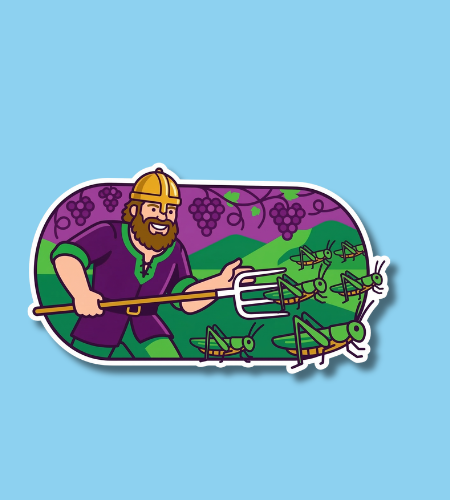
St. Urho’s Day is traditionally celebrated on March 16. This holiday honors a fictional saint created by Finnish-Americans in Minnesota during the 1950s. The celebration serves as a lighthearted tribute to Finnish heritage, specifically parodying the legends of St. Patrick’s Day by providing the Finnish community with a unique “saint” to celebrate exactly one day before the Irish.
Table of Contents
History of St. Urho’s Day
Richard Mattson, an employee at Ketola’s Department Store in Virginia, Minnesota, invented St. Urho in 1956. Mattson originally conceived of the saint as a figure who chased frogs out of Finland. Later, Dr. Sulo Havumäki, a psychology professor at Bemidji State College, refined the legend. He changed the pests from frogs to grasshoppers and claimed that Urho saved the Finnish grape crop by shouting, “Heinäsirkka, heinäsirkka, mene täältä helveteen!” which translates to “Grasshopper, grasshopper, go from hence to hell!”
The holiday quickly spread through Finnish-American communities in Northern Minnesota and the Upper Peninsula of Michigan. In 1975, Governor Wendell Anderson officially proclaimed Minnesota as the home of St. Urho’s Day. While the saint is not a religious figure in the traditional sense, his name likely pays homage to Urho Kekkonen, who served as the President of Finland from 1956 to 1982. The legend grew to include details about Urho’s diet of fish soup and sour milk, which supposedly gave him the strength to banish the insects.
Why is St. Urho’s Day important?
The holiday provides a playful way for people of Finnish descent to celebrate their cultural identity and “sisu,” a Finnish concept of stoic determination and grit. By creating their own folklore, Finnish immigrants and their descendants established a sense of belonging and community in the United States. It allows participants to celebrate their roots through humor rather than strictly formal traditions, making the culture accessible to younger generations.
In many Midwestern towns, the day acts as a significant community-building event that draws visitors and supports local businesses. It serves as a precursor to St. Patrick’s Day, often bringing together people of different backgrounds to share in the festivities. The holiday also preserves the specific dialects and linguistic quirks of Finnish-American culture through songs, odes, and public chants that would otherwise be lost to time.
- Highlights the value of humor in preserving immigrant cultural history.
- Encourages the use of Finnish phrases and traditional folk songs.
- Provides a unique identity for Finnish-American communities in the Midwest.
- Acts as a social bridge between different ethnic groups in diverse towns.
- Celebrates the concept of “sisu” through the legendary strength of Urho.
How to Celebrate St. Urho’s Day
Participants celebrate by wearing the official holiday colors of royal purple and Nile green. Purple represents the grapes that Urho saved, while green symbolizes the grasshoppers he banished. Many towns, such as Finland and Menahga in Minnesota, host parades featuring giant grasshopper floats and people dressed in medieval Finnish attire. It is common for revelers to gather at local halls or bars to drink purple-tinted beverages and eat traditional foods.
Food plays a central role in the observance, with many families preparing mojaka, a traditional Finnish beef or fish soup. Another popular dish is pannukakku, a dense, oven-baked custard pancake often served with berries. To truly observe the day, many followers recite the “Ode to St. Urho,” a poem written in a heavy Finnish-American dialect. Local contests often include wood-sawing competitions, beauty pageants for “Miss Helmi,” and prizes for the best grasshopper-themed costumes.
- Wear a combination of bright purple and green clothing.
- Eat a bowl of traditional Finnish fish soup for strength.
- Recite the “Ode to St. Urho” in a Finnish-American accent.
- Attend a local parade to see grasshopper-themed floats.
- Bake a Finnish custard pancake called pannukakku for breakfast.
St. Urho’s Day Dates Table
| Year | Date | Day |
|---|---|---|
| 2026 | March 16 | Monday |
| 2027 | March 16 | Tuesday |
| 2028 | March 16 | Thursday |
| 2029 | March 16 | Friday |
| 2030 | March 16 | Saturday |
Subscribe to our newsletter and never miss a holiday again!