
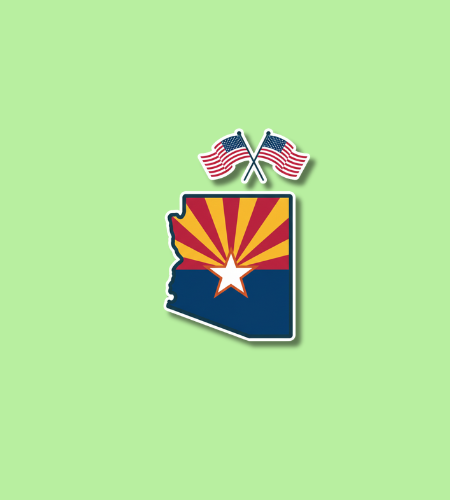
Statehood Day in Arizona is observed annually on February 14, commemorating the anniversary of the state’s admission to the Union in 1912. This local observance, often referred to as Arizona’s birthday, celebrates the region’s transition from a rugged territory to the 48th state of the United States. Because the date coincides with Valentine’s Day, Arizona is frequently called the “Valentine State,” and residents use the occasion to honor the unique cultural heritage, diverse landscapes, and independent spirit of the Grand Canyon State.
Table of Contents
History of Statehood Day in Arizona
The journey to statehood was a decades-long process that began after the Mexican-American War and the subsequent Gadsden Purchase of 1853. Arizona was originally part of the New Mexico Territory until President Abraham Lincoln signed the Arizona Organic Act in 1863, officially creating the Arizona Territory. Over the following years, residents made several attempts to achieve statehood, but progress was often stalled by political debates in Washington, D.C. One significant hurdle was the federal proposal to admit Arizona and New Mexico as a single joint state, a plan that Arizona voters overwhelmingly rejected in 1906.
In 1910, Arizonans drafted a remarkably progressive constitution that included provisions for the initiative, referendum, and the recall of public officials, including judges. President William Howard Taft, concerned that the judicial recall clause threatened the independence of the judiciary, initially vetoed the statehood bill. To secure admission, Arizonans temporarily removed the controversial clause from their constitution. On February 14, 1912, President Taft signed the proclamation making Arizona the 48th state. In a display of political independence, Arizona voters reinstated the judicial recall provision during their very first year of statehood.
Why is Statehood Day in Arizona important?
This day is important because it marks the completion of the contiguous United States, as Arizona was the last territory in the lower 48 to be admitted to the Union. The observance provides an opportunity for residents to reflect on the state’s “5 C’s”—cattle, copper, cotton, citrus, and climate—which historically fueled the economy and shaped the development of the region. It serves as a reminder of the state’s resilience, moving from a sparsely populated frontier to one of the fastest-growing states in the nation. The day fosters a sense of unity and pride among Arizonans of all backgrounds.
The holiday also honors the long history of the land that predates statehood by thousands of years. It acknowledges the Indigenous nations, such as the Navajo, Hopi, and Apache, whose civilizations flourished in the desert long before European contact. By celebrating statehood, residents also celebrate the blending of Spanish, Mexican, and American influences that created Arizona’s distinct cultural identity. This historical perspective helps the community understand its roots and the ongoing evolution of the state’s political and social landscape.
- Arizona was the final state admitted to the contiguous United States.
- The state’s constitution is known for its emphasis on direct democracy.
- Statehood Day honors the cultural contributions of twenty-two sovereign tribes.
- The nickname “Valentine State” stems from the unique February 14 admission date.
- The observance highlights the state’s transition from a mining frontier to a modern hub.
How to Observe Statehood Day in Arizona
Celebrating involves visiting historical landmarks and participating in community events that showcase the state’s heritage. Many people attend open houses at the State Capitol in Phoenix or local museums, where original documents like the state constitution are often put on public display. Local festivals frequently feature historic demonstrations, such as blacksmithing, Mexican tortilla making, and traditional cowboy roping. It is also common for residents to enjoy “Arizona-born” foods, including chimichangas or dishes featuring local citrus and pecans.
Educators and families often observe the day by exploring Arizona’s natural wonders, such as the Grand Canyon, Sedona’s red rocks, or the Saguaro National Park. Schools participate by teaching students about state symbols, including the cactus wren and the saguaro blossom, and by discussing the profiles of famous Arizonans. For a more modern celebration, many residents support local businesses and artisans who draw inspiration from the desert landscape. The overlap with Valentine’s Day makes it a popular time to send “Arizona-themed” postcards to friends and family outside the state.
- Visit the Arizona Capitol Museum to see the original statehood proclamation.
- Explore a ghost town like Jerome or Bisbee to learn about mining history.
- Take a hike in one of the state’s many diverse mountain ranges or canyons.
- Attend a community festival featuring traditional folk music and dancing.
- Support local independent restaurants that serve authentic Southwestern cuisine.
Statehood Day in Arizona Dates Table
| Year | Date | Day |
|---|---|---|
| 2026 | February 14 | Saturday |
| 2027 | February 14 | Sunday |
| 2028 | February 14 | Monday |
| 2029 | February 14 | Wednesday |
| 2030 | February 14 | Thursday |
Subscribe to our newsletter and never miss a holiday again!