
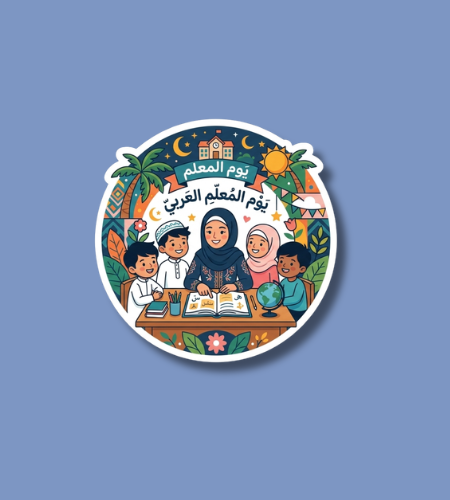
Teachers’ Day in Arab Countries is observed annually on February 28.This day serves as a collective appreciation for educators across several nations in the Middle East and North Africa, including Egypt, Morocco, Algeria, Tunisia, Libya, Jordan, Saudi Arabia, Yemen, and the United Arab Emirates. It recognizes the fundamental role teachers play in shaping the intellectual and moral foundations of the younger generation within the Arab world.
Table of Contents
History of Teachers’ Day in Arab Countries
The tradition of honoring teachers in the Arab world is deeply connected to the high status historically afforded to scholars and educators in Islamic and Arab culture. Throughout history, the “Mu’allim” (teacher) has been viewed as a pillar of the community, responsible for passing down both religious knowledge and secular sciences. While many countries eventually adopted the UNESCO World Teachers’ Day in October, several Arab nations chose to maintain February 28 as a distinct regional observance to celebrate their specific educational heritage and progress.
The establishment of this specific date allowed for a unified regional celebration that accounts for the traditional academic calendars of the Mediterranean and Gulf regions. Over the decades, the holiday has evolved from simple classroom gestures into a significant national event in many countries. Governments use this day to announce educational reforms, award excellence medals to distinguished veterans of the profession, and reflect on the transition from traditional rote learning to modern, technology-driven pedagogical methods.
Why is Teachers’ Day in Arab Countries important?
This day is important because it addresses the social and professional standing of educators in rapidly developing societies. In many Arab countries, the education sector has seen massive expansion in recent years, and this holiday ensures that the human element of that growth—the teachers—is not overlooked. It provides a formal platform to discuss the challenges faced by the profession, such as classroom sizes and the need for continuous professional development, while reaffirming the teacher’s role as a mentor and role model.
The celebration also fosters a sense of gratitude and respect among students and parents. By dedicating a day to those who dedicate their lives to the classroom, it reinforces the value of knowledge as a primary driver of national success. In regions that have faced social or economic instability, Teachers’ Day serves as a reminder of the resilience of the educational system and the commitment of teachers to provide a stable learning environment for children regardless of external circumstances.
- It reinforces the cultural value of “Al-Ihtiram” (respect) for elders and educators.
- The day highlights the critical contribution of teachers to national development and literacy.
- It encourages young graduates to consider teaching as a prestigious and vital career path.
- The holiday promotes cooperation between parents and schools to support student success.
- It honors the historical legacy of Arab scholars who pioneered mathematics, medicine, and astronomy.
How to Celebrate Teachers’ Day in Arab Countries
Celebrations usually begin in schools with special morning assemblies where students recite poems or give speeches dedicated to their instructors. It is a common tradition for students to bring small gifts, such as flowers, chocolates, or handmade cards expressing their thanks. Many schools also organize “Teacher for a Hour” programs where older students take over lower-grade classes to give their teachers a well-deserved break and a chance to socialize with their colleagues over traditional tea and sweets.
At the institutional level, ministries of education often hold formal ceremonies to recognize the “Teacher of the Year” from various districts. These events are frequently broadcast on national television and include testimonials from former students who have achieved success in their careers. For the general public, observing the day can be as simple as sending a message of appreciation to a former teacher or sharing stories on social media using regional hashtags to highlight the positive impact a specific educator had on their life.
- Prepare a handwritten note or a small bouquet of flowers for a current teacher.
- Participate in school-organized plays or musical performances honoring the staff.
- Share an inspirational story about a teacher on social media to spread awareness.
- Attend a local community event that celebrates educational achievements.
- Reach out to a retired teacher to thank them for their years of dedicated service.
Teachers’ Day in Arab Countries Dates Table
| Year | Date | Day |
|---|---|---|
| 2026 | February 28 | Saturday |
| 2027 | February 28 | Sunday |
| 2028 | February 28 | Monday |
| 2029 | February 28 | Wednesday |
| 2030 | February 28 | Thursday |
Subscribe to our newsletter and never miss a holiday again!