
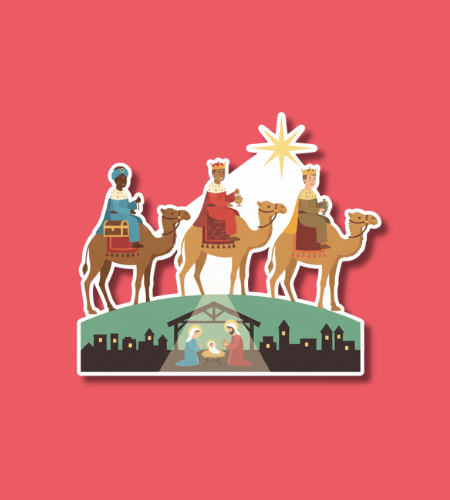
Three Kings Day is observed on January 6. Also known as the Epiphany, this day marks the end of the twelve days of Christmas. It celebrates the biblical story of the three magi—Melchior, Caspar, and Balthazar—who followed a star to Bethlehem to present gifts of gold, frankincense, and myrrh to the infant Jesus.
Table of Contents
History of Three Kings Day
The origins of this observance trace back to the fourth century. The word epiphany comes from the Greek term “epiphaneia,” which means manifestation or appearance. Early Christian records from AD 361 indicate that the feast was initially established to commemorate the various ways the divinity of Jesus was revealed to the world. While the Eastern Church focused on the baptism of Jesus, the Western Church emphasized the arrival of the magi as the first manifestation of Christ to the non-Jewish world.
Over centuries, the holiday evolved into a major cultural event, particularly in Spanish-speaking nations and parts of Europe. In the Middle Ages, the names and traditional origins of the three kings were solidified in church lore. Melchior was identified as a king from Persia, Caspar from India, and Balthazar from Arabia or Ethiopia. This diversity among the kings was intended to symbolize that the message of Christianity was intended for all nations and ethnicities across the globe.
Why is Three Kings Day important?
This day serves as a conclusion to the winter holiday season and holds deep religious significance for millions of Christians. It represents the moment of revelation when the birth of Jesus was recognized beyond the immediate local community in Bethlehem. For many cultures, especially within the Hispanic community, this day is often more prominent than December 25 for gift-giving and family gatherings. It reinforces values of hospitality, faith, and the tradition of seeking spiritual truth.
Beyond its theological roots, the holiday is a cornerstone of cultural identity. It provides a specific time for families to reconnect and share unique culinary traditions that have been passed down for generations. The day also emphasizes the spirit of generosity, mirroring the actions of the magi. By participating in communal feasts and parades, people maintain a sense of social cohesion and historical continuity that bridges the gap between ancient stories and modern life.
- It marks the formal end of the Christmas holiday period.
- The day celebrates the revelation of Jesus to the wider world.
- It highlights the historical significance of the three wise men.
- Families use the occasion to pass down specific cultural heritage.
- The holiday encourages acts of kindness and community sharing.
How to Celebrate Three Kings Day
Traditional celebrations often begin on the evening of January 5, known as the Twelfth Night. In many countries, grand parades called “Cabalgatas” feature actors dressed as the three kings riding through the streets on horses or camels. Children often leave their shoes by the door or under the bed, filling them with hay or grass for the kings’ animals. In the morning, they find the grass replaced with small toys, candies, or clothing, mirroring the gifts brought to the manger.
Food is a central part of the observance, specifically the King Cake, known as “Rosca de Reyes” or “Galette des Rois.” This ring-shaped sweet bread is decorated with candied fruit to look like a jeweled crown. A tiny figurine representing the baby Jesus is hidden inside the dough. According to tradition, whoever finds the figure in their slice is named the “king” or “queen” for the day and may be responsible for hosting a future gathering. Some families also mark their front doors with chalk as a blessing for the new year.
- Leave shoes filled with grass or hay for the kings’ camels.
- Share a Rosca de Reyes with friends and family members.
- Attend a local parade to see the three kings arrive.
- Place the three magi figurines into the household nativity scene.
- Write a chalk blessing above the front door for protection.
Three Kings Day Dates Table
| Year | Date | Day |
|---|---|---|
| 2026 | January 6 | Tuesday |
| 2027 | January 6 | Wednesday |
| 2028 | January 6 | Thursday |
| 2029 | January 6 | Saturday |
| 2030 | January 6 | Sunday |
Subscribe to our newsletter and never miss a holiday again!