
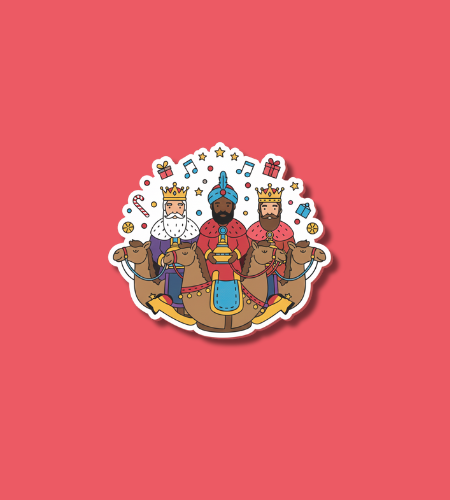
The Three Kings Parade is celebrated annually on January 5. This festive event, known as the Cabalgata de Reyes, marks the arrival of the biblical Magi—Melchior, Gaspar, and Balthazar—in cities and towns across Spain to distribute gifts and sweets to children. Three Kings Day is celebrated every year on January 6.
Table of Contents
History of Three Kings Parade
The tradition is rooted in the biblical narrative of the three wise men who traveled from the East to Bethlehem to honor the infant Jesus with gifts of gold, frankincense, and myrrh. While the religious feast of Epiphany on January 6 has been observed for centuries, the specific practice of a grand public parade emerged later. The first recorded parade in Spain took place in Barcelona in 1855, followed by the long-running cavalcade in Alcoy, which began in 1866 and has been held uninterrupted since 1885.
Throughout the 20th century, the event transformed from a modest religious procession into a large-scale civic spectacle. In 1964, the parade in Madrid began being televised nationally, cementing its status as a cornerstone of the Spanish holiday season. Modern versions of the parade often feature elaborate floats, performers, and local cultural elements, such as the Kings arriving by boat in coastal cities like Barcelona or Valencia.
Why is Three Kings Parade important?
This event serves as the primary occasion for gift-giving in Spanish culture, often holding more significance for children than Christmas Day. It represents the conclusion of the winter holiday season and provides a shared community experience where families gather in public squares and streets. The parade reinforces cultural identity by continuing a centuries-old tradition that connects contemporary celebrations with historical and religious heritage.
The parade also supports local economies and social cohesion through the involvement of neighborhood associations and local businesses. It creates a sense of collective wonder, as the arrival of the Kings is treated with the same level of anticipation and civic importance as a major state visit. For many, the event is a vital bridge between generations, as grandparents and parents share the same rituals they experienced in their own childhoods.
- Children hand-deliver their letters of request to royal pages during the procession.
- Thousands of pounds of hard candies are thrown from floats into the crowds.
- Local officials symbolically hand over the “key to the city” to the Kings.
- The parade marks the final night of the twelve days of Christmas.
- It highlights the diverse regional customs of Spain through various parade styles.
How to Celebrate Three Kings Parade
To participate, attendees typically arrive early at city centers to secure a spot along the designated route. Many people bring bags or even upside-down umbrellas to catch the large quantities of sweets tossed by the Kings and their entourages. In some cities, the Kings make a ceremonial entry by boat at the local port or by camel through the historic district before the main procession begins.
Following the parade, families return home to prepare for the arrival of the Magi during the night. Children place their shoes in visible spots, such as windowsills or under the tree, to be filled with presents. It is customary to leave snacks for the Kings and water or hay for their camels. The following morning, on January 6, families share the Roscón de Reyes, a ring-shaped cake containing a hidden figurine and a bean.
- Find the parade route and schedule on the local town hall website.
- Dress warmly for the evening as temperatures often drop after sunset.
- Place polished shoes near the balcony or front door for gift placement.
- Leave a small glass of brandy or milk for the Kings to enjoy during their visit.
- Buy a Roscón de Reyes from a local bakery to eat for breakfast on January 6.
Three Kings Parade Dates Table
| Year | Date | Day |
|---|---|---|
| 2026 | January 5 | Monday |
| 2027 | January 5 | Tuesday |
| 2028 | January 5 | Wednesday |
| 2029 | January 5 | Friday |
| 2030 | January 5 | Saturday |
Subscribe to our newsletter and never miss a holiday again!