
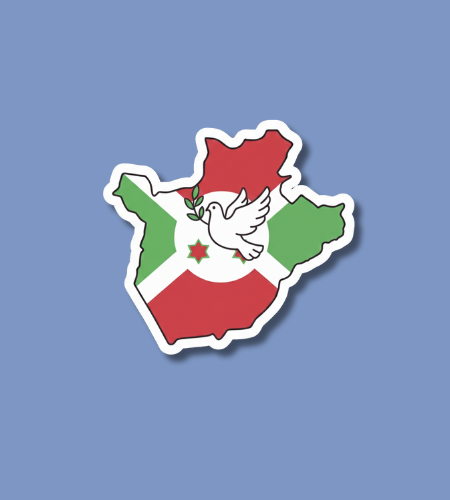
Unity Day Burundi is observed annually on February 5. This national public holiday commemorates the 1991 referendum on the Charter of National Unity, a document designed to abolish ethnic discrimination and promote peace between the Hutu and Tutsi populations. It serves as a day of reflection on the country’s past struggles and a collective pledge toward a future defined by social cohesion and shared national identity.
Table of Contents
History of Unity Day Burundi
The origins of Unity Day are rooted in the efforts of President Pierre Buyoya to end the cycles of ethnic violence that plagued Burundi after its independence from Belgium in 1962. Following severe clashes in 1988, Buyoya established a commission to study the causes of national division and find a path toward reconciliation. This commission drafted the Charter of National Unity, which explicitly forbade ethnic discrimination and regionalism, aiming to unify all Burundians under a single national banner regardless of their background.
On February 5, 1991, the citizens of Burundi participated in a historic referendum to approve the Charter. The vote saw a massive turnout of approximately 96%, with nearly 90% of the electorate voting in favor of the document. Although the implementation of the Charter did not immediately prevent the civil war that broke out in 1993, the date of the referendum was declared a national holiday to honor the spirit of the agreement. Today, the day is viewed as a foundational milestone in the country’s long transition toward a more inclusive and stable democratic system.
Why is Unity Day Burundi important?
This day is significant because it provides a formal framework for addressing the deep-seated ethnic divisions that have historically hindered the country’s development. It emphasizes that national unity is not merely the absence of conflict but a proactive commitment to justice, equity, and mutual respect. By observing this holiday, the government and the public acknowledge that the country’s progress depends on the ability of its diverse groups to work together toward common socio-economic goals.
The holiday also serves as an educational tool for the younger generation, teaching them about the importance of the Charter as an “inviolable pact” between citizens. It highlights the cultural values of ubuntu—humanity toward others—and the traditional roles of clans that once crossed ethnic lines. Celebrating unity helps to counteract divisionist ideologies and encourages the population to prioritize their identity as Burundians over regional or tribal affiliations.
- The holiday commemorates the successful 1991 referendum on the Charter of National Unity.
- It promotes the abolition of all forms of ethnic and religious discrimination.
- The day serves as a memorial for those lost during periods of civil unrest.
- It highlights the necessity of peace for achieving the country’s development goals.
- National leaders use the day to reaffirm their commitment to the Arusha Accords.
How to Observe Unity Day Burundi
The official observation of Unity Day begins with solemn ceremonies at the Monument of National Unity in Bujumbura. High-ranking government officials, including the President and members of the Senate, participate in a wreath-laying ceremony to honor the spirit of the Charter. These events are often mirrored at the provincial level, where local governors lead similar tributes. Public speeches delivered on this day usually focus on themes of solidarity, hard work, and the collective responsibility to maintain social order.
For the general public, the day is a time for community gathering and cultural expression. Traditional Burundian drumming, particularly by the Royal Drummers of Burundi, often accompanies the festivities, providing a rhythmic backdrop to the celebrations. In rural and urban areas, people may share a traditional meal or drink impeke, a local sorghum beer, from a large communal container to symbolize their oneness. Many also attend special church services or participate in local sports tournaments, using the day off from work and school to strengthen social bonds with neighbors.
- Attend the wreath-laying ceremonies held at national and local monuments.
- Listen to the televised address from the President regarding national cohesion.
- Participate in community gatherings featuring traditional drumming and dancing.
- Share a meal with friends or neighbors from different backgrounds.
- Reflect on the principles of the Charter to promote peace in daily life.
Unity Day Burundi Dates Table
| Year | Date | Day |
|---|---|---|
| 2026 | February 5 | Thursday |
| 2027 | February 5 | Friday |
| 2028 | February 5 | Saturday |
| 2029 | February 5 | Monday |
| 2030 | February 5 | Tuesday |
Subscribe to our newsletter and never miss a holiday again!