
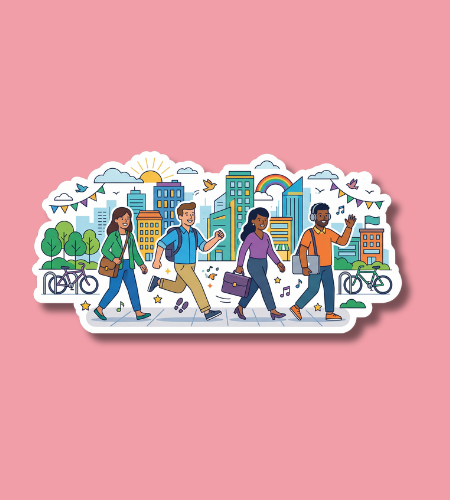
Walk to Work Day is observed on the first Friday of April. In 2026, it falls on April 3. This day serves as an annual invitation to trade car keys or transit passes for a pair of comfortable shoes to experience the benefits of a pedestrian commute. It highlights how small changes in daily travel habits can influence personal fitness and environmental sustainability.
Read also about International Winter Bike to Work Day
Table of Contents
History of Walk to Work Day
The concept of dedicating a day to walking as a form of commuting emerged from broader health and environmental movements in the late 20th century. While humans have walked to their places of occupation for millennia, the modern observance was formalized to combat the sedentary nature of office culture and the rising reliance on motorized transport. Organizations such as the American Heart Association and various pedestrian advocacy groups helped popularize the event by highlighting the link between active transport and reduced rates of chronic disease. 1
Over the years, the initiative expanded from a local grassroots effort to an international observance. It gained significant momentum as urban planners began to focus on walkability and “15-minute cities” where essential services are reachable on foot. Today, the day is recognized by government agencies and health departments worldwide as a tool to promote physical activity and lower urban carbon emissions.
Why is Walk to Work Day important?
This day addresses the physical consequences of the modern, stationary work environment. Walking is a low-impact cardiovascular exercise that helps regulate blood pressure, improves circulation, and strengthens the muscles in the lower body. By making the commute an active part of the day, individuals can meet recommended daily movement goals without needing a separate gym session.
Beyond personal health, the observance plays a role in environmental protection and urban social health. Reducing the number of vehicles on the road, even for one day, leads to a measurable decrease in nitrogen dioxide and carbon dioxide levels in city centers. Walking also changes how people interact with their surroundings, encouraging them to notice local businesses and engage with neighbors, which strengthens community ties.
- Regular walking lowers the risk of heart disease and stroke
- Fewer cars on the road result in less traffic congestion and noise
- Physical activity in the morning can increase focus and mental clarity
- Choosing to walk saves money on fuel, parking, and public transit fares
- Increased pedestrian activity encourages cities to invest in safer sidewalks
How to Observe Walk to Work Day
Observing the day requires a bit of logistical preparation regarding your route and gear. Many people find that walking the entire distance is not feasible due to suburban sprawl or long-distance commutes. In these cases, a partial walk is a practical alternative. You can park your car a mile away from the office or exit the bus or train several stops early to finish the final leg of the journey on foot.
Comfort is the most important factor for a successful walk. Wearing supportive walking shoes and carrying work attire in a backpack allows for a smooth transition once you arrive. If the weather is unpredictable, carrying a small umbrella or a lightweight waterproof jacket ensures the commute remains pleasant. Planning the route in advance using a digital map can help you find quieter side streets or scenic paths through local parks.
- Pack your professional shoes in a bag and wear sneakers for the walk
- Use a mapping app to find the most pedestrian-friendly path
- Invite a colleague who lives nearby to join you for the commute
- Take photos of interesting landmarks or nature along your walking route
- Share your step count on social media to encourage others to participate
Walk to Work Day Dates Table
| Year | Date | Day |
|---|---|---|
| 2026 | April 3 | Friday |
| 2027 | April 2 | Friday |
| 2028 | April 7 | Friday |
| 2029 | April 6 | Friday |
| 2030 | April 5 | Friday |
Subscribe to our newsletter and never miss a holiday again!