
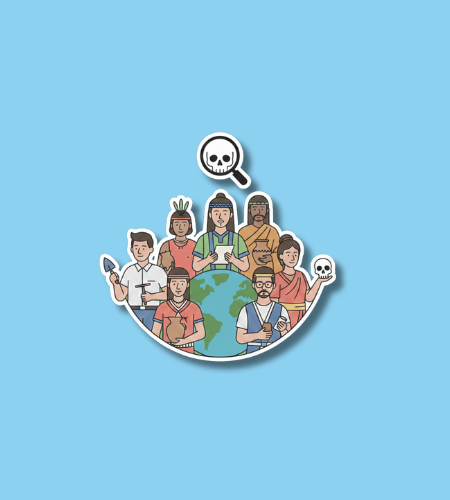
World Anthropology Day is observed on the third Thursday of February. In 2026, it falls on February 19. This global observance celebrates the study of humanity, encompassing everything from our biological evolution and archaeological remains to modern cultural practices and linguistic diversity.
Table of Contents
History of World Anthropology Day
The holiday was established in 2015 by the American Anthropological Association (AAA) as National Anthropology Day, but it quickly evolved into a global event. The goal was to create a specific day where anthropologists could step out of their research and academic settings to share their work with the public. By moving the focus toward public engagement, the organizers hoped to demonstrate how anthropology provides essential insights into solving contemporary world problems.
In 2016, the name was officially changed to World Anthropology Day to reflect the international participation of universities, museums, and research institutes across several continents. The third Thursday of February was selected to align with the academic calendar, allowing students and faculty to host events that showcase the four subfields of the discipline: archaeology, biological anthropology, cultural anthropology, and linguistic anthropology. Each year, the day highlights how understanding human differences and commonalities can foster global cooperation.
Why is World Anthropology Day important?
World Anthropology Day is important because it promotes a deeper understanding of human behavior and social structures in an increasingly globalized world. Anthropologists use a unique perspective called “cultural relativism,” which involves understanding a culture on its own terms without making judgments based on one’s own background. This approach is vital for addressing issues such as systemic inequality, healthcare disparities, and the preservation of Indigenous knowledge.
The day also highlights the practical applications of anthropology in the modern workforce, often referred to as “applied anthropology.” Large corporations, government agencies, and non-profits hire anthropologists to help design products that fit diverse user needs or to develop policies that respect local customs. By celebrating this field, the holiday encourages the public to appreciate the complexity of human history and the diverse ways people adapt to their environments, ultimately promoting empathy and cross-cultural dialogue.
- It helps the public understand how humans have evolved over millions of years.
- The day showcases the role of anthropology in solving modern social conflicts.
- It encourages students to pursue careers that bridge the gap between science and humanities.
- Many events highlight the importance of preserving endangered languages and traditions.
- It demystifies the work of archaeologists and researchers beyond Hollywood stereotypes.
How to Observe World Anthropology Day
Observing World Anthropology Day often involves participating in community-led educational activities. Many museums offer free tours or special exhibits that focus on local history and human artifacts. Universities frequently host “Anthropology Slams” or public lectures where researchers explain their field findings in simple, accessible language. If you are near a college campus, look for interactive displays that allow you to handle replicas of hominid fossils or learn about traditional weaving and pottery techniques.
For a more personal observation, you can engage with ethnographic media, such as documentaries or books that explore cultures different from your own. Many people use this day to research their own family history or to learn about the Indigenous peoples who originally inhabited their region. Sharing information on social media about how anthropology impacts daily life—such as the design of user-friendly technology or the understanding of food systems—helps spread awareness about the discipline’s ongoing relevance to the future.
- Visit a local museum of natural history or a cultural heritage site.
- Watch a documentary about ancient civilizations or modern tribal communities.
- Attend a virtual lecture hosted by a global anthropological association.
- Read an ethnography to learn about a culture or social group different from yours.
- Listen to a podcast that discusses the intersection of biology and human behavior.
World Anthropology Day Dates Table
| Year | Date | Day |
|---|---|---|
| 2026 | February 19 | Thursday |
| 2027 | February 18 | Thursday |
| 2028 | February 17 | Thursday |
| 2029 | February 15 | Thursday |
| 2030 | February 21 | Thursday |
Subscribe to our newsletter and never miss a holiday again!