

World Bonobo Day is celebrated annually on February 14, serving as a global platform to advocate for the protection of one of humanity’s closest living relatives. This date was chosen specifically to coincide with Valentine’s Day as a nod to the bonobo’s reputation as the “peace-loving” ape. While many people focus on romantic love, this observance directs attention toward the endangered Pan paniscus, a great ape found only in the Democratic Republic of Congo. The day highlights the species’ unique social structures and the urgent need to preserve their dwindling rainforest habitat.
Read also about:
Table of Contents
History of World Bonobo Day
The holiday was founded in 2017 by the Bonobo Conservation Initiative (BCI) to bring these “forgotten apes” out of the shadow of their more famous relatives, the chimpanzees and gorillas. Despite sharing 98.7% of their DNA with humans, bonobos were the last of the great apes to be scientifically identified, only recognized as a distinct species in 1933. The California Senate passed a resolution in 2017 officially recognizing the day, helping to kickstart a global movement. The timing of the inaugural celebration was intended to leverage the existing themes of love and companionship to illustrate the bonobo’s famous use of affection to maintain social harmony.
Since its inception, the day has been supported by major international ggroups,including the African Wildlife Foundation and the Lola Ya Bonobo Sanctuary. Historically, the species has faced extreme vulnerability due to civil unrest in the Congo Basin, which hindered conservation efforts and research for decades. World Bonobo Day was designed to counter this by creating a reliable annual window for fundraising and educational outreach. It has since evolved into a worldwide event where zoos, research centers, and environmental activists collaborate to secure a future for the estimated 15,000 to 20,000 bonobos remaining in the wild. 1
Why is World Bonobo Day important?
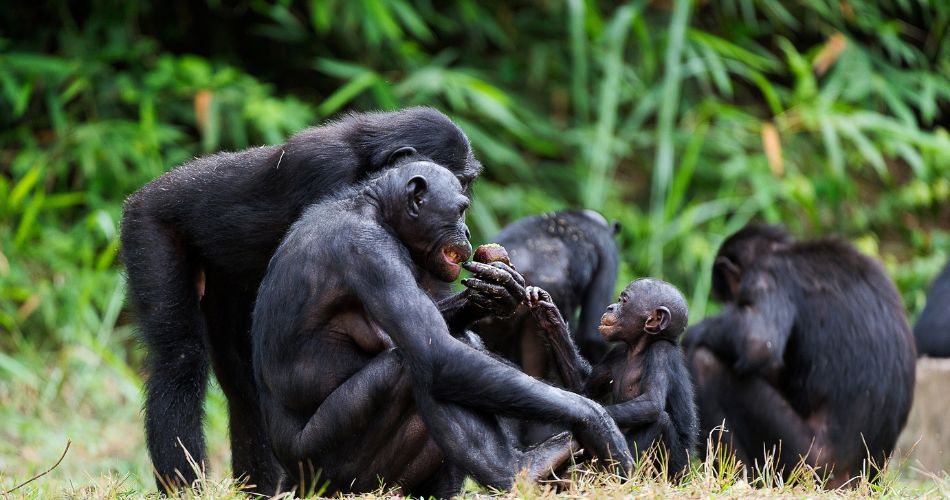
This day is critical because bonobos are a flagship species for the health of the Congo Basin, the world’s second-largest tropical rainforest. As frugivores, bonobos act as the “gardeners of the forest,” dispersing seeds across vast distances and ensuring the regeneration of plant life. Their survival is inextricably linked to the preservation of a massive carbon sink that regulates the global climate. By protecting bonobo habitats, conservationists are effectively protecting thousands of other species and the vital ecosystem services that the rainforest provides to the entire planet.
The observance also offers a unique window into primate evolution and social intelligence. Unlike many other great apes, bonobo society is matriarchal and remarkably peaceful, utilizing social bonding and intimacy to resolve conflicts rather than aggression. Studying these behaviors provides researchers with invaluable insights into the origins of empathy and cooperation in the hominid line. Because bonobos are found only in one country, the day emphasizes the importance of international partnership with Congolese communities to address the root causes of habitat loss, such as bushmeat hunting and illegal logging.
- Bonobos share an astounding 98.7% of their genetic code with human beings.
- They are the only great ape species with a predominantly female-led social structure.
- Peaceful conflict resolution through social grooming is a hallmark of their behavior.
- The Congo Basin forests they inhabit are essential for global carbon sequestration.
- Estimates suggest fewer than 20,000 individuals remain in their natural habitat.
Interesting facts about bonobos
- Matriarchal Society
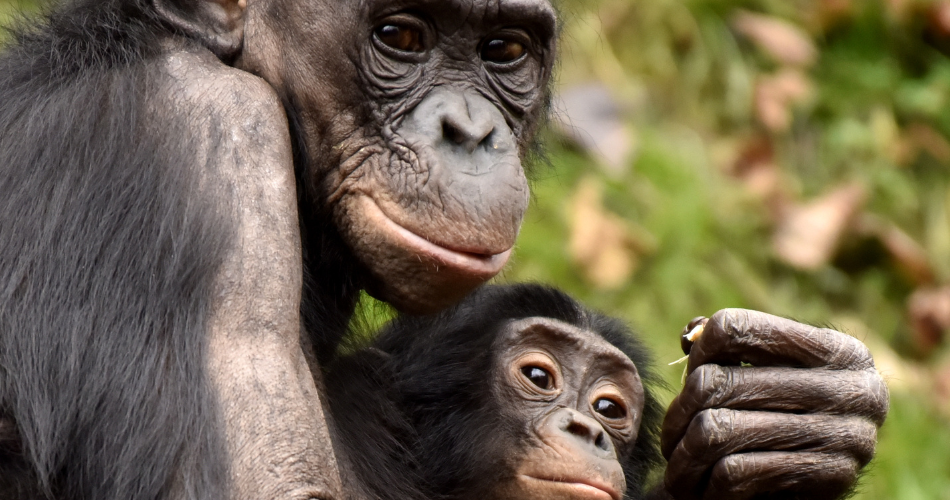
Unlike chimpanzees, which are led by alpha males, bonobo groups are female-led. Females form strong coalitions to prevent male aggression, and a male’s social rank is often determined by the status of his mother. - Extreme Altruism
Research has indicated that bonobos will proactively help strangers get food even if there is no immediate benefit to themselves. They have been observed sharing food with individuals outside their own social group, a trait once thought to be uniquely human. - Conflict Resolution through Sex
Bonobos are well-known for their “make love, not war” philosophy. They use sexual contact (both hetero- and homosexual) as a way to diffuse tension, say hello, and reconcile after a disagreement. This makes them significantly less violent than chimpanzees. - High Emotional Intelligence
Bonobos exhibit high levels of empathy. When a peer is distressed, others are quick to offer “consolation” through hugging and grooming. Their brains have more developed pathways in the regions associated with empathy and the inhibition of aggression. - Bipedal Tendencies
While they usually walk on all fours, bonobos walk on two legs more frequently than other great apes. They are often seen walking upright when carrying food or tools. - Self-Domestication
Scientists believe bonobos underwent “self-domestication.” Because they live in environments with abundant food, they didn’t have to compete as fiercely as chimpanzees, leading to the selection of more cooperative and less aggressive behavioral traits over generations.
How to Observe World Bonobo Day
Observing this day often begins with digital advocacy to increase the visibility of this lesser-known ape. Many supporters share “bonobo facts” on social media to dispel common myths and explain the differences between bonobos and chimpanzees. Donating to reputable sanctuaries or conservation funds is a primary way to provide direct support for anti-poaching patrols and community development programs in the Democratic Republic of Congo. Some participants choose to adopt a symbolic “bonobo twin” through organizations that provide long-term care for orphans rescued from the illegal wildlife trade.
Educational engagement is another pillar of the holiday, with families and schools using the day to learn about the biodiversity of Central Africa. One practical way to help is by recycling old electronics; the mining of minerals like coltan for smartphones often happens in bonobo habitats, so reducing demand helps protect their home. Many people also look for “bonobo-friendly” products that avoid ingredients linked to rainforest deforestation, such as unsustainably sourced palm oil. The goal is to make a conscious connection between everyday consumer choices and the survival of this gentle species.
- Share educational videos or articles to help others identify the bonobo.
- Support a fundraiser for the Lola Ya Bonobo sanctuary in the Congo.
- Recycle your old mobile phones to reduce the demand for destructive mining.
- Wear green or ape-themed apparel to spark conversations about primate conservation.
- Avoid products containing unsustainably harvested palm oil to protect habitats.
World Bonobo Day Dates Table
| Year | Date | Day |
|---|---|---|
| 2026 | February 14 | Saturday |
| 2027 | February 14 | Sunday |
| 2028 | February 14 | Monday |
| 2029 | February 14 | Wednesday |
| 2030 | February 14 | Thursday |
Subscribe to our newsletter and never miss a holiday again!