
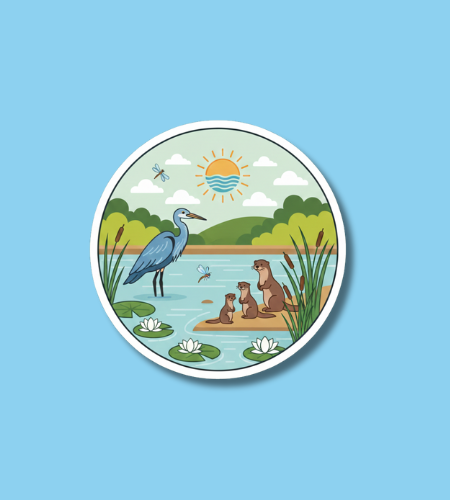
World Wetlands Day is observed annually on February 2. This international observance marks the date of the adoption of the Convention on Wetlands in 1971 in the Iranian city of Ramsar. The day raises global awareness about the vital role of wetlands—such as marshes, swamps, and mangroves—in maintaining biodiversity, providing clean water, and protecting coastal communities from the impacts of climate change.
Table of Contents
History of World Wetlands Day
The history of this day is rooted in the 1971 Ramsar Convention, an intergovernmental treaty that established a framework for the conservation and “wise use” of wetlands and their resources. While the treaty was signed on February 2, 1971, the first official World Wetlands Day was not celebrated until 1997. It was created by the Ramsar Secretariat to provide a recurring platform for environmentalists and governments to highlight the rapid disappearance of these ecosystems, which are currently being lost three times faster than forests. 1
In 2021, the United Nations General Assembly officially recognized World Wetlands Day as a UN International Day, further elevating its status on the global environmental calendar. The convention originally focused on protecting habitats for migratory waterfowl, but its scope has since expanded to recognize wetlands as “biological supermarkets” that support the entire food web. Today, there are over 170 contracting parties and more than 2,400 designated Ramsar sites worldwide, representing the largest network of protected areas on the planet.
Why is World Wetlands Day important?
This day is essential because wetlands are among the most productive and biologically diverse ecosystems on Earth. They act as natural sponges, absorbing and storing excess rainfall to reduce the risk of flooding in nearby towns and agricultural lands. Furthermore, wetlands serve as highly efficient water purification systems, filtering out pollutants and sediment before they reach larger bodies of water. For many communities, these areas are the primary source of freshwater for drinking, irrigation, and sanitation.
Beyond water management, wetlands are critical for climate resilience. Coastal wetlands like salt marshes and mangroves sequester carbon at rates much higher than terrestrial forests, helping to mitigate the effects of greenhouse gas emissions. They also provide essential nursery grounds for commercially valuable fish and shellfish, supporting the livelihoods of millions of people who depend on fisheries. Without healthy wetlands, the loss of biodiversity and the increased vulnerability to storms would significantly impact global food security and economic stability.
- Wetlands support over 40 percent of all the world’s plant and animal species.
- They provide natural buffers that protect coastlines from storm surges and erosion.
- Peatlands alone store twice as much carbon as all the world’s forests combined.
- Nearly one billion people worldwide rely on wetlands for their daily income.
- These areas act as critical rest stops for millions of migratory birds every year.
How to Celebrate World Wetlands DayDay
Observing this day often involves getting outdoors to experience a local wetland firsthand. Many people join guided nature walks led by biologists or birdwatchers to learn how to identify native species of flora and fauna. These visits help bridge the gap between abstract environmental data and the physical reality of these habitats. If you live near a marsh or river, you can also celebrate by participating in a community clean-up event to remove plastic waste and debris that can choke the ecosystem and harm local wildlife.
Educational activities are a major component of the day, with many schools and conservation centers hosting workshops on the water cycle or “citizen science” projects. Participants might spend the afternoon testing water quality or recording sightings of frogs and turtles for national databases. For those who cannot visit a site in person, donating to a wetland restoration project or advocating for the protection of local bogs and estuaries through local government channels is a powerful way to contribute. Raising awareness on social media by sharing facts about the importance of “wise use” helps ensure these resources remain available for future generations.
- Visit a nearby marsh, bog, or swamp to observe local wildlife in their habitat.
- Volunteer for a wetland restoration project to plant native trees or remove invasive species.
- Take photographs of your local wetland and share them to highlight its beauty.
- Reduce your water consumption at home to lower the pressure on local freshwater sources.
- Participate in a local bird count to help scientists track migratory patterns.
World Wetlands Day Dates Table
| Year | Date | Day |
|---|---|---|
| 2026 | February 2 | Monday |
| 2027 | February 2 | Tuesday |
| 2028 | February 2 | Wednesday |
| 2029 | February 2 | Friday |
| 2030 | February 2 | Saturday |
Subscribe to our newsletter and never miss a holiday again!