
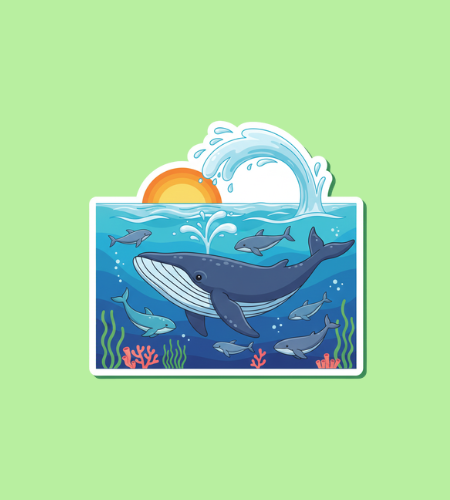
World Whale Day is traditionally observed on the third Sunday of February. This international observance focuses on the conservation of all whale species and the protection of the marine environments they inhabit. While the day features celebrations and educational programs, its primary goal is to address the man-made threats facing these marine mammals, including climate change, ship strikes, and ocean pollution.
Read also about International Whale Shark Day
Table of Contents
History of World Whale Day
The event was established in 1980 by Greg Kaufman, the founder of the Pacific Whale Foundation. It began as a local celebration on the island of Maui, Hawaii, specifically to honor the North Pacific humpback whales that migrate to the region’s warm waters each winter to breed and nurse their calves. Initially known as “Save the Whales Day,” the first gatherings were grassroots protests and community festivals designed to raise public awareness about the dangers of the commercial whaling industry, which had pushed several species to the brink of extinction.
Over the next four decades, the local festival in Maui evolved into a global movement. As the International Whaling Commission’s 1986 moratorium on commercial whaling took effect, the focus of the day expanded to include modern ecological challenges. Today, organizations around the world use this date to coordinate research efforts and advocate for policy changes. What started as a small community parade in Kihei has transformed into an international day of action, supported by scientists, conservationists, and coastal communities in every hemisphere.
Why is World Whale Day important?
Whales are vital to the health of the planet because they function as natural climate allies through carbon sequestration. When a whale dies and sinks to the ocean floor, its body traps massive amounts of carbon that would otherwise be released into the atmosphere, a process known as “whale fall.” Furthermore, whales contribute to nutrient cycling through the “whale pump” effect, where their movements between deep and shallow waters help distribute essential minerals that support the growth of phytoplankton, the foundation of the marine food web.
The day is also essential for highlighting the ongoing survival risks these animals face despite the ban on commercial hunting. Modern threats such as entanglement in “ghost” fishing gear, noise pollution from industrial shipping, and the ingestion of microplastics continue to cause significant population declines. By dedicating a day to these issues, conservation groups can secure funding for emergency response teams and push for the creation of marine protected areas. This collective focus ensures that the majesty of these creatures is preserved for future generations while stabilizing the oceanic ecosystems we depend on.
- Whales help regulate the climate by storing carbon in their massive bodies.
- The day raises awareness for the 400,000 children and adults who advocate for marine life.
- Healthy whale populations support the growth of oxygen-producing phytoplankton.
- It highlights the need for specialized legislation to reduce lethal ship strikes.
- The event celebrates the cultural and spiritual significance of whales to coastal indigenous peoples.
How to Celebrate World Whale Day
A common way to celebrate is by participating in “Great Whale Counts” or citizen science projects that track whale sightings along migratory paths. Many people choose to watch documentaries like A Voice for Whales or Blackfish to deepen their understanding of marine biology and the ethics of animal captivity. In coastal regions, responsible whale-watching tours are organized to allow the public to observe these animals in their natural habitat without causing distress. These tours often feature naturalists who provide educational talks on local conservation efforts.
Community action is also a significant part of the holiday, with many supporters organizing beach or neighborhood cleanups to prevent plastic waste from entering storm drains and oceans. Schools and museums often host workshops where children can learn about the different types of whales, such as toothed and baleen species, through interactive displays. On a personal level, individuals can celebrate by switching to sustainable seafood choices or donating to organizations like the Pacific Whale Foundation or Whale and Dolphin Conservation to support ongoing research and rescue missions.
- Watch a nature documentary to learn about whale communication and songs.
- Join a local beach or park cleanup to reduce plastic pollution in the water.
- Share educational infographics about endangered species on your social media.
- Support businesses that use whale-safe fishing methods and sustainable gear.
- Adopt a whale through a conservation charity to receive updates on their migration.
World Whale Day Dates Table
| Year | Date | Day |
|---|---|---|
| 2026 | February 15 | Sunday |
| 2027 | February 21 | Sunday |
| 2028 | February 20 | Sunday |
| 2029 | February 18 | Sunday |
| 2030 | February 17 | Sunday |
Subscribe to our newsletter and never miss a holiday again!