
Yom HaShoah
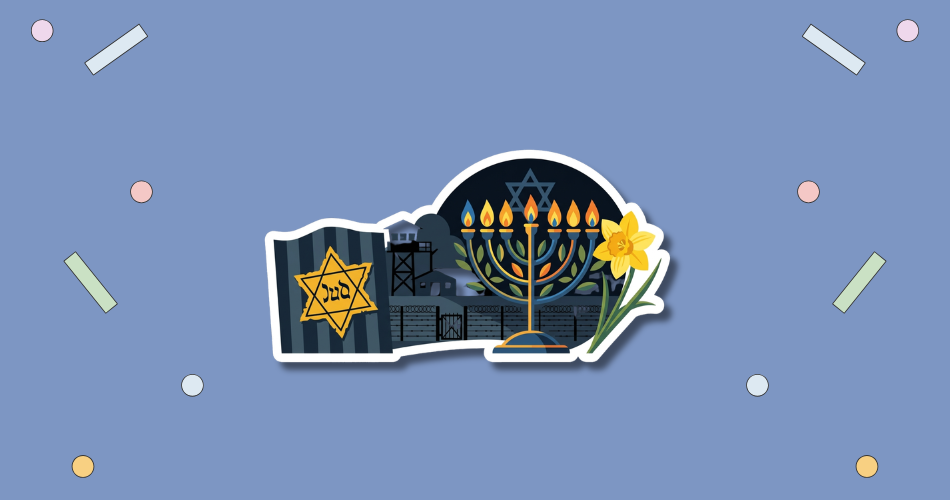
Yom HaShoah is observed on the 27th day of the Hebrew month of Nisan, unless that date borders the Jewish Sabbath, in which case it is shifted to avoid overlapping with religious rest. In 2027, this date falls on May 4. The observance begins at nightfall on the evening before. Formally known as Holocaust and Heroism Remembrance Day, the holiday is a solemn time to honor the six million Jewish victims of the Nazi regime and celebrate the resistance of those who fought back. It is distinct from International Holocaust Remembrance Day, as it specifically aligns with the Jewish calendar and the anniversary of the Warsaw Ghetto Uprising. This alignment ensures that the memory of the catastrophe is linked to the spirit of Jewish resilience and the preservation of history for future generations. 1
Contents
Read also about International Holocaust Remembrance Day, Day of Nazi Concentration Camps Prisoners Liberation
HT Meter
Does this day matter to you?
Say that it does, and say whether you will be marking it. Both are anonymous to nobody but kind to everybody.
This day matters to me
0 Be the first to say so
Quietly remembered
0 Nobody has said so yet
Notes of remembrance
Join those marking this day to share a word, a memory, or the reason it matters to you.
These notes are kept for the people marking this day. Say you will be marking it to read them and to leave your own.
You have already shared a note here recently.
No notes yet. Yours would be the first.
History of Yom HaShoah
The origins of Yom HaShoah are rooted in the early years of the State of Israel as leaders sought a way to officially memorialize the victims of the Holocaust. In 1951, the Israeli Parliament, the Knesset, passed a resolution establishing the 27th of Nisan as the date for remembrance. This specific day was chosen because it occurs shortly after the start of the Warsaw Ghetto Uprising, the largest and most significant act of Jewish resistance during World War II. While earlier proposals suggested holding the memorial on religious fast days, the 27th of Nisan was selected to emphasize both the tragedy of the “Shoah” and the “Gevurah,” or heroism, of those who resisted.
International Holocaust Remembrance Day
In 1959, the observance was formally anchored in Israeli law through the Martyrs’ and Heroes’ Remembrance Day Law. This legislation turned the day into a national event, mandating the closure of entertainment venues and the flying of flags at half-mast. Over the following decades, the holiday transcended national borders and became a standard part of the Jewish calendar worldwide. It serves as a historical bridge between the liberation of the camps and the establishment of a modern Jewish identity, ensuring that the stories of survivors are recorded and honored as a central part of the global human record.
Why is Yom HaShoah important?
This day is important because it provides a dedicated space for communal mourning and the preservation of historical truth. As the generation of Holocaust survivors grows smaller, Yom HaShoah serves as a vital tool for education and the prevention of future atrocities. By reading the names of victims and sharing personal testimonies, the holiday restores individuality to millions who were systematically stripped of their names and dignity. It acts as a shield against historical denial and ensures that the lessons of the past remain a guiding force for modern human rights and social justice.
Beyond the Jewish community, the day is significant for highlighting the universal dangers of prejudice, antisemitism, and indifference. It encourages people of all backgrounds to reflect on the moral choices made by individuals during the war, including the courage of “Righteous Among the Nations” who risked their lives to save others. The day reinforces the “Never Again” pledge, transforming historical grief into an active commitment to vigilance and the protection of vulnerable populations. It is a time for global reflection on the fragility of democracy and the absolute necessity of standing up against hatred in all its forms.
- It preserves the personal stories and names of the six million victims.
- The day connects historical grief with the celebration of Jewish resilience.
- Public silence and sirens create a shared moment of national and global reflection.
- It educates the public about the extreme consequences of unchecked hatred.
- The holiday supports survivors by acknowledging their trauma and their triumphs.
How to Observe Yom HaShoah
Make it yours
How would you like to spend Yom HaShoah?
Tick what fits you, and we will put together ideas made for this day — not for any day.
Day of Nazi Concentration Camps Prisoners Liberation
The most iconic observation of Yom HaShoah occurs in Israel, where an air-raid siren sounds for two minutes at 10:00 a.m. During this time, the entire country comes to a halt; cars stop in the middle of highways and pedestrians stand in silence to pay their respects. Outside of Israel, many communities host “Unto Every Person There is a Name” ceremonies, where participants take turns reading the names of victims for several hours. This simple but powerful act ensures that those who perished are remembered not just as a statistic, but as individuals with families, dreams, and identities.
In homes and synagogues, it is customary to light a yellow memorial candle or a “Yahrzeit” candle that burns for twenty-four hours. Many people also engage in study or read memoirs by survivors like Elie Wiesel or Primo Levi to deepen their understanding of the period. Educational programs often feature speakers who share their family’s history, helping to bridge the gap between historical documents and lived experience. Whether through quiet meditation or community service, the goal is to transform the memory of the victims into a source of inspiration for building a more compassionate and just world.
- Stand in silence for two minutes at 10:00 a.m. to honor the victims.
- Light a memorial candle in your home to symbolize a life lost.
- Read the names of Holocaust victims in a community or private setting.
- Watch a documentary or read a survivor’s memoir to learn their story.
- Attend a local memorial service or lecture at a synagogue or museum.
Yom HaShoah Dates
| Year | Date | Day of the week |
|---|---|---|
| 2026 | April 14 | Tuesday |
| 2027 next | May 4 | Tuesday |
| 2028 | April 24 | Monday |
| 2029 | April 12 | Thursday |
| 2030 | April 30 | Tuesday |
Thank you for your feedback!
Fuel the next post!