


Anniversary of the Memorandum of the Slovak Nation
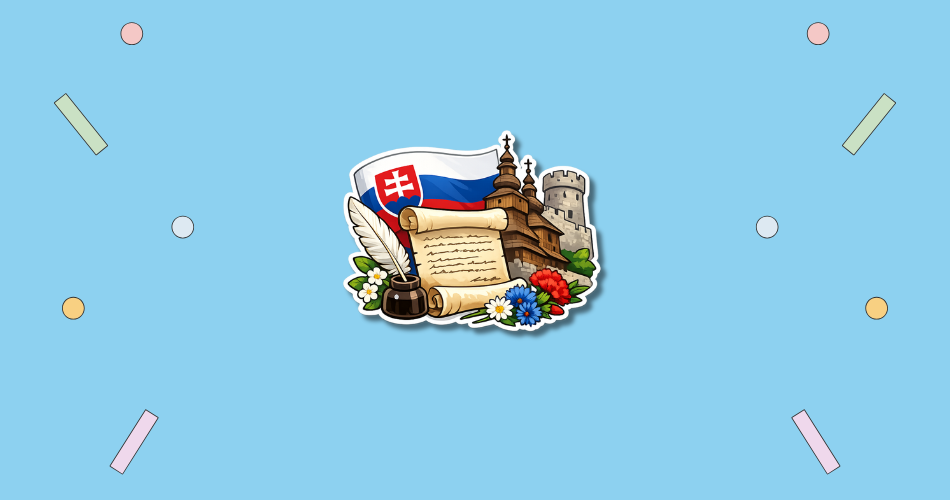
Anniversary of the Memorandum of the Slovak Nation is observed every year on June 7. In 2027, this date falls on a Monday. The date marks the adoption of the 1861 Memorandum of the Slovak Nation, a major political document in the Slovak national movement. It is a Slovak historical observance rather than a public holiday, so its tone is reflective and educational. The day centers on national identity, language rights, civic recognition, and the long effort to define Slovak political and cultural claims within a larger empire. 1
Contents
See also: Day of the Establishment of the Slovak Republic, Restoration Day of the Independent Czech State
HT Meter
Does this day matter to you?
Say that it does, and say whether you will be marking it. Both are anonymous to nobody but kind to everybody.
This day matters to me
0 Be the first to say so
Quietly remembered
0 Nobody has said so yet
Notes of remembrance
Join those marking this day to share a word, a memory, or the reason it matters to you.
These notes are kept for the people marking this day. Say you will be marking it to read them and to leave your own.
You have already shared a note here recently.
No notes yet. Yours would be the first.
History of Anniversary of the Memorandum of the Slovak Nation
On June 6 and 7, 1861, the Slovak National Assembly met at Turčiansky Svätý Martin, bringing together representatives of Slovak towns and villages. The assembly adopted a political document known as the Memorandum of the Slovak Nation. It set out demands connected with Slovak national identity in constitutional, political, cultural, and linguistic life within the multinational Habsburg Monarchy. Štefan Marko Daxner is identified as the main author, and the assembly also created a Permanent National Committee under Ján Francisci to work toward carrying out the adopted resolutions.
Anniversary of the Declaration of the Slovak Nation
The Memorandum did not immediately secure the political changes it requested, but it became one of the defining documents of Slovak national emancipation. Its program placed the Slovak language, public life, and civic equality at the center of national political discussion. The document’s principles continued to shape Slovak political thinking until the end of Austria-Hungary in 1918. For that reason, the anniversary is remembered less as a single ceremonial date and more as a marker of a wider struggle for recognition.
Why is Anniversary of the Memorandum of the Slovak Nation important?
The observance matters because it points to a moment when Slovak political and cultural goals were written down in a formal public program. The Memorandum connected identity with practical questions: language use, administrative recognition, education, and participation in public life. It also shows how national movements in 19th-century Europe often worked through assemblies, petitions, legal arguments, and civic organization. Remembering the anniversary helps explain how modern national identity was shaped through documents as well as through revolutions and wars.
The day also gives readers outside Slovakia a clearer view of Central European history. Slovakia’s modern statehood did not appear suddenly; it was preceded by generations of cultural work, language development, and political claims made under changing imperial and regional systems. The Memorandum is one of the documents that helps trace that longer path. For Slovaks and people of Slovak heritage, the date can carry meaning as a quiet recognition of language, memory, and historical continuity.
- It keeps attention on a major Slovak political document.
- The date helps explain 19th-century Slovak national goals.
- It connects language rights with public identity.
- The observance supports historical learning in Slovakia.
- It gives Slovak heritage a documented point of reflection.
How to Observe Anniversary of the Memorandum of the Slovak Nation
Make it yours
How would you like to spend Anniversary of the Memorandum of the Slovak Nation?
Tick what fits you, and we will put together ideas made for this day — not for any day.
Day of the Establishment of the Slovak Republic
Read a short history of the 1861 Memorandum and the Slovak National Assembly at Turčiansky Svätý Martin. Look up the people connected with the document, especially Štefan Marko Daxner and Ján Francisci, and place their work within the broader Slovak national movement. A map of the Habsburg Monarchy can also make the setting easier to understand, since the Memorandum was written in a political world very different from present-day Slovakia. For students, the date works well as a starting point for learning about language, citizenship, and minority rights in 19th-century Europe.
A more personal observance can focus on Slovak culture and family memory. People with Slovak roots may use the date to learn a few Slovak phrases, read about Slovak towns connected with national history, or talk with relatives about migration, language, and identity. Museums, libraries, and cultural groups can use the anniversary for lectures, displays, or reading lists about the national movement. The most fitting approach is respectful and curious, with attention on the document’s historical meaning rather than on festive customs.
- Read about the 1861 Memorandum.
- Learn where Turčiansky Svätý Martin fits in Slovak history.
- Look up Štefan Marko Daxner’s role.
- Discuss why language rights mattered in public life.
- Share a Slovak history resource with a student or friend.
Anniversary of the Memorandum of the Slovak Nation Dates
| Year | Date | Day of the week |
|---|---|---|
| 2026 | June 7 | Sunday |
| 2027 next | June 7 | Monday |
| 2028 | June 7 | Wednesday |
| 2029 | June 7 | Thursday |
| 2030 | June 7 | Friday |