
Bannockburn Day in Scotland
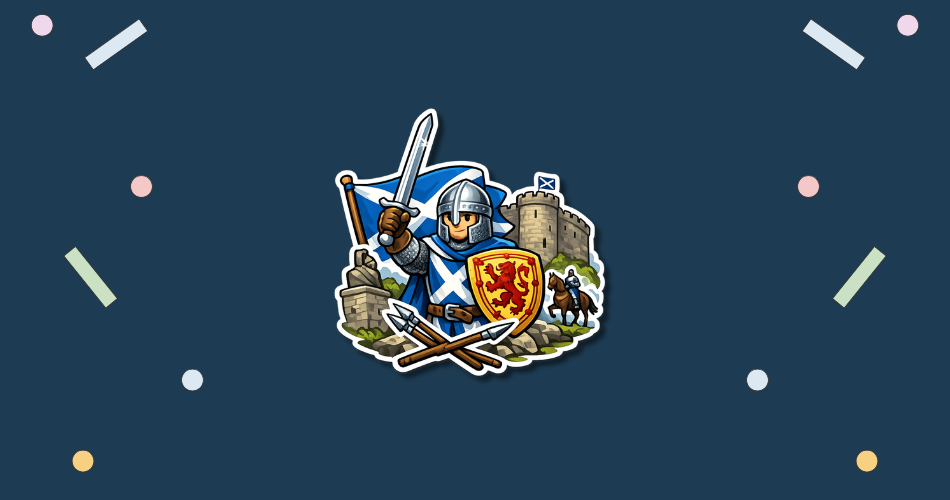
Bannockburn Day in Scotland is observed every year on June 24. In 2027, this date falls on a Thursday. The day commemorates the Scottish victory at the Battle of Bannockburn, fought near Stirling on June 23 and 24, 1314. It is a historical observance connected with Robert the Bruce, Edward II of England, the First War of Scottish Independence, and one of the best-known battlefield stories in Scottish history. The tone of the day is respectful and educational, focusing on remembrance, national history, and the long struggle for Scottish independence. 1 2 3
Contents
See also: Shetland Flag Day in Scotland, National Tartan Day, World Buckfast Day
HT Meter
Does this day matter to you?
Say that it does, and say whether you will be marking it. Both are anonymous to nobody but kind to everybody.
This day matters to me
0 Be the first to say so
Quietly remembered
0 Nobody has said so yet
Notes of remembrance
Join those marking this day to share a word, a memory, or the reason it matters to you.
These notes are kept for the people marking this day. Say you will be marking it to read them and to leave your own.
You have already shared a note here recently.
No notes yet. Yours would be the first.
History of Bannockburn Day in Scotland
The Battle of Bannockburn took place during the First War of Scottish Independence, when control of Scotland was still fiercely contested. Robert I, better known as Robert the Bruce, had claimed the Scottish throne in 1306 and spent years rebuilding support and reducing English-held strongholds. By 1314, Stirling Castle remained one of the most important English-held fortresses in Scotland, and its defenders faced surrender if they were not relieved. Edward II marched north with a larger army, while Bruce prepared his forces near the Bannock Burn, south of Stirling.
Burns Night
The battle unfolded over two days and ended in a decisive Scottish victory on June 24, 1314. The result did not end the war immediately, but it strengthened Bruce’s authority and badly damaged Edward II’s power in Scotland. Scottish independence was not formally recognized by England until the Treaty of Edinburgh-Northampton in 1328, fourteen years later. Today, Bannockburn is remembered through the battlefield landscape, commemorative monuments, a visitor centre, and the prominent statue of Robert the Bruce near Stirling.
Why is Bannockburn Day in Scotland important?
Bannockburn Day in Scotland matters because it marks a turning point in the story of Scotland’s medieval independence. The battle showed how planning, terrain, disciplined infantry, and leadership could overcome a larger and heavily mounted army. It also gave Robert the Bruce stronger political authority at a time when his kingship still had enemies inside and outside Scotland. Remembering the date helps place the battle in its real historical setting rather than treating it only as legend or patriotic shorthand.
The observance also has cultural value because Bannockburn became part of Scotland’s national memory. The battle appears in songs, poems, historical writing, school lessons, tourism, and public discussion about identity and heritage. It gives readers and visitors a reason to think about how battlefields are preserved, how national stories are shaped, and how history can be both meaningful and complicated. The day is not simply about victory; it is about understanding the people, choices, risks, and consequences behind a defining event.
- It keeps a major Scottish battlefield in public memory.
- It connects modern Scotland with medieval independence history.
- It encourages careful learning about Robert the Bruce.
- It draws attention to Stirling’s strategic place in Scottish history.
- It supports respect for historic landscapes and monuments.
How to Observe Bannockburn Day in Scotland
Make it yours
How would you like to spend Bannockburn Day in Scotland?
Tick what fits you, and we will put together ideas made for this day — not for any day.
National Tartan Day
Read a clear account of the Battle of Bannockburn and follow the events of June 23 and 24, 1314 in sequence. Look at a map of Stirling, the Bannock Burn, and the approaches to Stirling Castle to understand why the location mattered so much. Visitors in Scotland can go to the battlefield area near Stirling, walk the memorial park, see the Robert the Bruce statue, and spend time with the landscape rather than rushing through it. Readers elsewhere can use the day to learn about the First War of Scottish Independence and the political stakes behind the fighting.
A more reflective observance can include looking at how Bannockburn has been remembered in Scottish culture. Poems, songs, films, and popular histories often use the battle as a symbol, but the real event involved strategy, fear, uncertainty, and heavy loss. Families, classrooms, and history groups can use the day to compare legend with evidence and discuss why some battles remain powerful in public memory for centuries. The most useful approach is respectful curiosity: learn the history, notice the human cost, and treat the site as more than a backdrop for a famous victory.
- Read a timeline of the two-day battle.
- Find Stirling Castle and Bannock Burn on a map.
- Visit the battlefield memorial park if nearby.
- Learn about schiltrons and medieval infantry tactics.
- Discuss how historical memory shapes national identity.
Bannockburn Day in Scotland Dates
| Year | Date | Day of the week |
|---|---|---|
| 2026 | June 24 | Wednesday |
| 2027 next | June 24 | Thursday |
| 2028 | June 24 | Saturday |
| 2029 | June 24 | Sunday |
| 2030 | June 24 | Monday |