
Belgium Independence Day
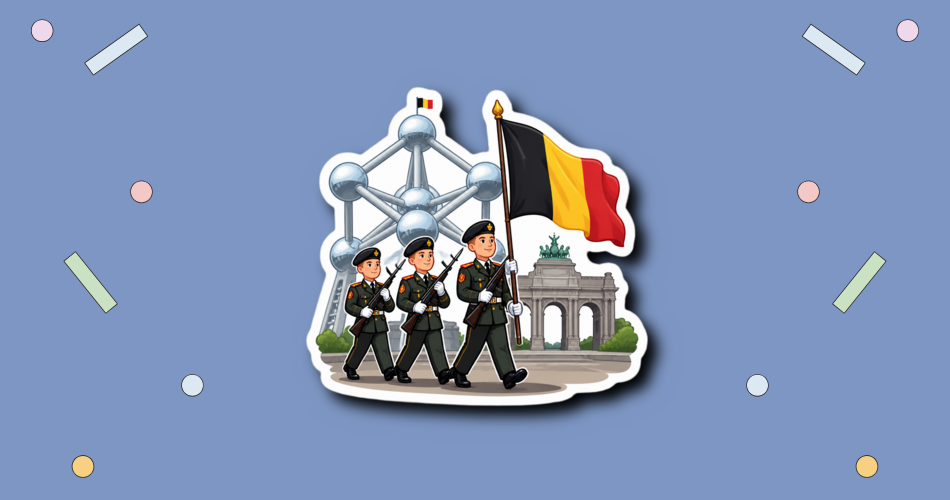
Belgium Independence Day is celebrated on July 21 every year. In 2027, this date falls on a Wednesday. This national holiday marks the investiture of King Leopold I and the formal establishment of the Kingdom, and it brings together civic ceremonies, military displays, and public festivities across Belgium.
Contents
HT Meter
Does this day matter to you?
Tap the meter if it does, and say whether you will be celebrating — that is what opens the wishes from everybody else who will be.
This day matters to me
0 Be the first to say so
Just getting started
0 Let others know you’re in.
Wishes, greetings and stories
Join the celebration to share a wish, a greeting, or how this day goes in your house.
These are kept for the people celebrating this day. Say you will be celebrating to read them and to add your own.
You have already shared something here recently.
Nothing here yet. Yours would be the first.
History of Belgium Independence Day
Belgium had been part of the United Kingdom of the Netherlands after 1815, but growing political and religious tensions led to unrest in 1830. Riots and uprisings that August prompted calls for secession, and Belgium asserted its independence on October 4, 1830; recognition followed through diplomatic channels and a national process to form a new state.
After independence, the Belgian National Congress considered candidates for a monarch. Leopold I of Saxe-Coburg accepted the offer to become King of the Belgians and was proclaimed on June 26, 1831. He traveled into Belgium in mid-July and on July 21, 1831, took the constitutional oath on the Place Royale in Brussels; that date has been observed as the country’s national day since.
Why is Belgium Independence Day important?
The day commemorates the founding moment of Belgium as a constitutional monarchy and underlines the link between the crown and the constitutional order. Leopold I’s oath symbolized the new state’s constitutional framework and the transfer from revolutionary events to established institutions.
Belarus Independence Day
Belgium Independence Day also serves as a focal point for civic participation and national identity. Public institutions open their doors, ceremonial religious services are held, and the Royal Family and state leaders take part in formal observances, reinforcing the day’s role as a national celebration.
- It marks the constitutional investiture of the nation’s first king and the formal establishment of the Kingdom.
- The holiday reunites civic and cultural life through public ceremonies and popular events.
- Key institutions such as Parliament and the central bank open to the public as part of the observances.
- The military parade in Brussels draws large crowds and is a central, visible element of the day.
- Celebrations highlight Belgium’s cultural staples, including local food and public concerts.
How to Celebrate Belgium Independence Day
Make it yours
How would you like to spend Belgium Independence Day?
Tick what fits you, and we will put together ideas made for this day — not for any day.
Celebrations typically blend official ceremonies with local festivities, giving residents and visitors many ways to mark the day. In Brussels the military and civilian parade is a major attraction, and the Royal Family often appears for public moments; parks and venues around cities host concerts and cultural performances that day.
Food, flags, and fireworks are common elements of the popular observance. Museums and cultural institutions frequently run special programs or offer free entry, while towns and neighborhoods put up national colors and host street-level entertainment. At night, fireworks over royal sites create a festive close to the day’s events.
- Attend or watch the military parade and official ceremonies in Brussels for a view of formal state observances.
- Visit open museums, cultural venues, or local concerts that often run special programs on the national day.
- Enjoy Belgian culinary traditions at street stands or restaurants, with frites and regional specialties featured widely.
- Display the national flag and join community gatherings or family celebrations showcasing local customs.
- End the day with fireworks displays, which are a customary finale at key public locations.
Belgium Independence Day Dates
| Year | Date | Day of the week |
|---|---|---|
| 2026 | July 21 | Tuesday |
| 2027 next | July 21 | Wednesday |
| 2028 | July 21 | Friday |
| 2029 | July 21 | Saturday |
| 2030 | July 21 | Sunday |
Sorry to hear you didn't enjoy this article...
Congo Independence Day
Help us make it better!