


Black Friday
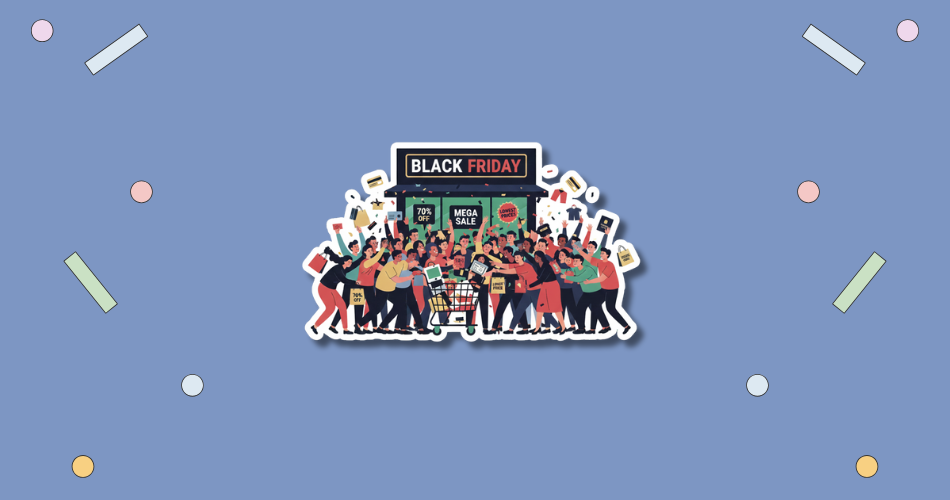
The Black Friday, observed annually on the Friday after Thanksgiving in the United States, has become the unofficial kickoff to the holiday shopping season—marked by major sales, big crowds, early store openings and a surge in consumer spending.
HT Meter
Does this day matter to you?
Tap the meter if it does, and say whether you will be celebrating — that is what opens the wishes from everybody else who will be.
This day matters to me
0 Be the first to say so
Just getting started
0 Let others know you’re in.
Wishes, greetings and stories
Join the celebration to share a wish, a greeting, or how this day goes in your house.
These are kept for the people celebrating this day. Say you will be celebrating to read them and to add your own.
You have already shared something here recently.
Nothing here yet. Yours would be the first.
History of Black Friday
The phrase “Black Friday” first emerged in the early 1960s in Philadelphia, where police used it to describe the heavy traffic, jammed streets and chaotic crowds that descended on the city the day after Thanksgiving as shoppers and visitors flooded in. Over time, retailers adopted the term with a different spin: by the 1980s, “Black Friday” had come to mean the day when stores moved from the red (loss) into the black (profit) thanks to heavy sales. As the decades passed, the event expanded—store hours stretched earlier, promotions grew larger, and the idea spread beyond the U.S. into many countries around the world.
Why is Black Friday important?
Black Friday matters for several overlapping reasons. It marks a cultural moment when consumers and retailers alike shift into holiday-mode, symbolising not just shopping but the start of the year’s biggest retail season. It also illustrates how retail economics and consumer behaviour intertwine—both in positive ways (jobs, sales, deals) and critical ways (over-consumption, aggressive marketing).
For many families and gift-buyers, Black Friday offers the promise of deals and savings. For retailers it has become a key financial moment. However, its role also prompts reflection on consumption, retail labour practices and the environmental footprint of mass discounted purchasing.
- It signals the unofficial start of major holiday shopping.
- It offers some of the deepest discounts of the year on electronics, toys, apparel and other goods.
- It influences the annual retail calendar, inventory cycles and marketing strategy.
- It has become a global phenomenon, with many countries importing the concept.
- It raises questions about consumerism, retail practices and the sustainability of “bigger, faster, cheaper”.
How to Participate in Black Friday
Make it yours
How would you like to spend Black Friday?
Tick what fits you, and we will put together ideas made for this day — not for any day.
Cyber Monday
Whether you’re a shop-savvy consumer or simply curious, participating in Black Friday can be done with both strategy and mindfulness. Start by planning ahead: decide what you need (not just what’s on sale), compare prices early, set a budget and consider online vs in-store options. Because the event has grown in complexity—with “early Black Friday” sales, online deals and extended time windows—the smart approach is to make informed decisions rather than impulse buys.
You might also choose to use the day as an opportunity to support local businesses or sustainable brands, or to avoid the frenzy if you prefer a calmer alternative. The key is aligning your participation with your values as well as your budget.
- Make a list of items you genuinely need or want ahead of time.
- Track prices in advance to ensure a deal is real.
- Arrive early if shopping in-store, or check for online doorbusters.
- Set a firm budget and avoid impulse purchases just because something seems “cheap”.
- Consider ethical or sustainable purchasing: look at labour conditions, eco-impact and long-term value.