


Brazil Independence Day
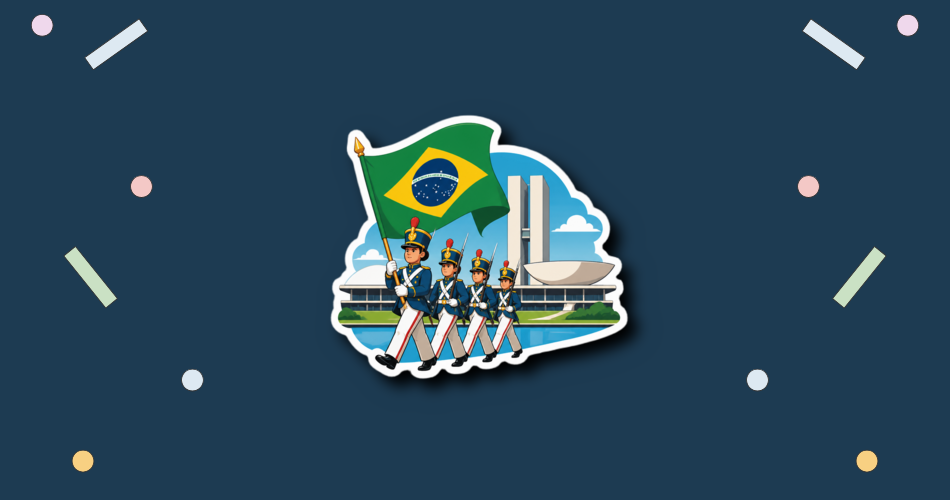
Brazil Independence Day is celebrated annually on September 7. In 2027, this date falls on a Tuesday. The day commemorates Brazil's declaration of independence from Portugal in 1822, a pivotal moment in the nation's history. Parades, concerts, and patriotic displays fill cities across the country, with the largest celebration held in the capital Brasília. Brazilians take pride in this national holiday, which is also known as Sete de Setembro (7 September) or Dia da Pátria (Nation Day).
Contents
HT Meter
Does this day matter to you?
Tap the meter if it does, and say whether you will be celebrating — that is what opens the wishes from everybody else who will be.
This day matters to me
0 Be the first to say so
Just getting started
0 Let others know you’re in.
Wishes, greetings and stories
Join the celebration to share a wish, a greeting, or how this day goes in your house.
These are kept for the people celebrating this day. Say you will be celebrating to read them and to add your own.
You have already shared something here recently.
Nothing here yet. Yours would be the first.
History of Brazil Independence Day
On September 7, 1822, Prince Pedro, son of King John VI of Portugal, declared Brazil's independence from Portugal. Standing by the Ipiranga River in São Paulo, he famously proclaimed "Independência ou Morte!" (Independence or Death). This act followed years of tension between Brazil and Portugal, heightened after the Portuguese court had relocated to Rio de Janeiro in 1808 due to Napoleon's invasion of Portugal. In 1815, Brazil was elevated to a kingdom within the United Kingdom of Portugal, Brazil and the Algarves, but the demand for full independence grew.
After the Liberal Revolution of 1820 in Portugal, the Portuguese assembly sought to reduce Brazil's autonomy and demanded Prince Pedro's return. Pedro, however, sided with Brazilian interests and refused to leave on January 9, 1822, a date now known as Dia do Fico (I'll Stay Day). He declared independence later that year and was crowned Emperor Dom Pedro I. Brazil remained a monarchy until 1889, when it became a republic, but September 7 was retained as Independence Day. It was officially made a federal holiday in 1949.
Why is Brazil Independence Day important?
Brazil Independence Day marks the birth of Brazil as a sovereign nation, free from colonial rule. The day symbolizes national unity and pride, bringing together people from all regions. It also honors the sacrifices and efforts of those who fought for freedom.
Republic Proclamation Day (Brazil)
The holiday reinforces Brazil's identity on the global stage, showcasing its rich culture and history. Educational activities in schools teach children about the country's heritage, ensuring future generations remember the struggle for independence.
- It celebrates the end of 322 years of Portuguese colonial rule.
- The cry of "Independência ou Morte" became a rallying call for freedom.
- The date is recognized as Brazil's national day, similar to other nations' independence days.
- It highlights the role of Prince Pedro, who became Emperor Dom Pedro I.
- The holiday fosters patriotism, with displays of the national flag and participation in civic events.
How to Celebrate Brazil Independence Day
Make it yours
How would you like to spend Brazil Independence Day?
Tick what fits you, and we will put together ideas made for this day — not for any day.
Celebrating Brazil Independence Day is a vibrant affair. The day begins with official ceremonies, including military parades in Brasília attended by the president. Similar parades occur in every state capital, featuring marching bands, air shows, and fireworks. People dress in green and yellow, the colors of the Brazilian flag, and wave flags along parade routes.
Beyond the official events, families and friends gather for festive meals, music, and dance. Samba and other Brazilian rhythms fill the streets. Many attend concerts or community festivals. It is also a time for reflection on national achievements and unity. Schools often hold special programs and performances.
- Attend the main parade along the Ministries Esplanade in Brasília.
- Display the Brazilian flag at home or in public.
- Enjoy traditional Brazilian cuisine such as feijoada or churrasco.
- Listen to music by famous Brazilian artists or watch televised celebrations.
- Participate in local community events or fireworks displays.
Brazil Independence Day Dates
| Year | Date | Day of the week |
|---|---|---|
| 2026 | September 7 | Monday |
| 2027 next | September 7 | Tuesday |
| 2028 | September 7 | Thursday |
| 2029 | September 7 | Friday |
| 2030 | September 7 | Saturday |
Sorry to hear you didn't enjoy this article...
Portugal Independence Day
Help us make it better!