
Festival of Popular Delusions Day
Festival of Popular Delusions Day is observed every year on June 5. In 2027, this date falls on a Saturday. This informal observance uses the eve of D-Day as a prompt to think about false certainty, crowd thinking, and the beliefs people accept too easily. Its tone is reflective rather than purely playful, because the date is commonly connected with the historical collapse of Nazi confidence during World War II. Today, the day is best treated as a reminder to check assumptions, question easy answers, and separate wishful thinking from evidence. 1
Contents
See also: European Day of Remembrance for Victims of Stalinism and Nazism, Victory in Europe Day, Time of Remembrance and Reconciliation for those who Lost their Lives during WWII, Day of Remembrance and Reconciliation in Ukraine
HT Meter
Does this day matter to you?
Say that it does, and say whether you will be marking it. Both are anonymous to nobody but kind to everybody.
This day matters to me
0 Be the first to say so
Quietly remembered
0 Nobody has said so yet
Notes of remembrance
Join those marking this day to share a word, a memory, or the reason it matters to you.
These notes are kept for the people marking this day. Say you will be marking it to read them and to leave your own.
You have already shared a note here recently.
No notes yet. Yours would be the first.
History of Festival of Popular Delusions Day
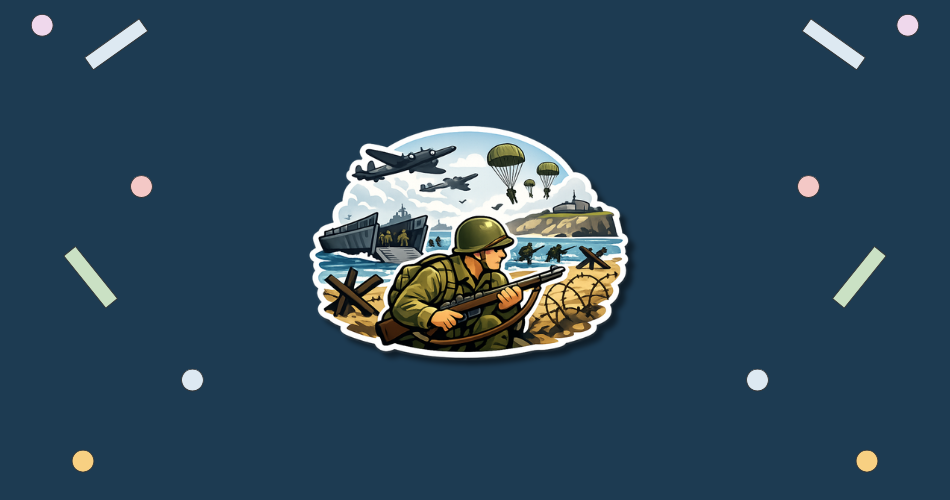
The commonly repeated explanation for Festival of Popular Delusions Day links it to June 5, the day before the Allied landings in Normandy on June 6, 1944. D-Day began the major Allied effort to break into German-occupied Western Europe, with forces landing on the beaches code-named Utah, Omaha, Gold, Juno, and Sword. Some accounts say the observance began in Germany on June 5, 1945, one year after the last full day before the D-Day invasion. No official founder is clearly documented, so the day is better understood as an informal observance with a historical theme rather than an officially established memorial day.

Debunking Day
The phrase “popular delusions” points beyond one wartime example. It refers to beliefs that can spread through groups, harden into certainty, and survive even when evidence points the other way. That makes the day broader than a single military anniversary, although the D-Day connection gives it a serious historical frame. In modern use, Festival of Popular Delusions Day is about reality checks: looking at myths, rumors, political slogans, financial manias, social assumptions, and personal blind spots with more care.
Why is Festival of Popular Delusions Day important?
Festival of Popular Delusions Day matters because false beliefs can have real consequences. A small misconception may only lead to embarrassment, but collective delusions can affect elections, markets, public health, war, and the way communities treat one another. The day asks people to slow down before repeating a claim, defending an assumption, or joining a crowd simply because it feels certain. That habit is useful in everyday life, especially when information moves quickly and emotionally charged claims spread easily.
The observance also fits naturally with media literacy and historical reflection. D-Day shows how dangerous certainty can be when leaders and societies build their decisions around propaganda, ideology, and denial. On a personal level, the day can be used without ridicule: everyone carries assumptions that deserve checking. It is not about mocking people for being wrong; it is about becoming more honest, careful, and willing to change when facts require it.
- False certainty can spread faster than careful thinking.
- History shows how dangerous mass denial can become.
- Checking a claim before sharing it protects other people.
- Admitting error is a sign of intellectual strength.
- Good judgment improves when evidence matters more than ego.
How to Observe Festival of Popular Delusions Day
Make it yours
How would you like to spend Festival of Popular Delusions Day (D-Day)?
Tick what fits you, and we will put together ideas made for this day — not for any day.
Defy Superstition Day
Pick one belief, habit, or “everybody knows” claim and examine it closely. Look for the original source, compare it with a reliable reference, and notice how much of the belief came from memory, repetition, or emotion. Read about D-Day, wartime propaganda, or a well-known example of crowd behavior such as a financial bubble or public panic. The point is not to become cynical, but to practice careful doubt where certainty has become too easy.
The day can also be useful in classrooms, workplaces, and family conversations. A teacher might use it for a media literacy lesson, while a team might discuss how groupthink affects decisions. Friends can trade harmless myths they once believed, as long as the conversation stays respectful. When connected with D-Day, the observance should keep a sober tone and remember that the historical background involved real people, real danger, and enormous sacrifice.
- Fact-check a claim before reposting it.
- Read a short account of the Normandy landings.
- Discuss a common myth without mocking anyone.
- Review one decision for signs of groupthink.
- Practice saying, “I was wrong,” when evidence changes.
Festival of Popular Delusions Day Dates
| Year | Date | Day |
|---|---|---|
| 2026 | June 5 | Friday |
| 2027 | June 5 | Saturday |
| 2028 | June 5 | Monday |
| 2029 | June 5 | Tuesday |
| 2030 | June 5 | Wednesday |