
Jerusalem Day
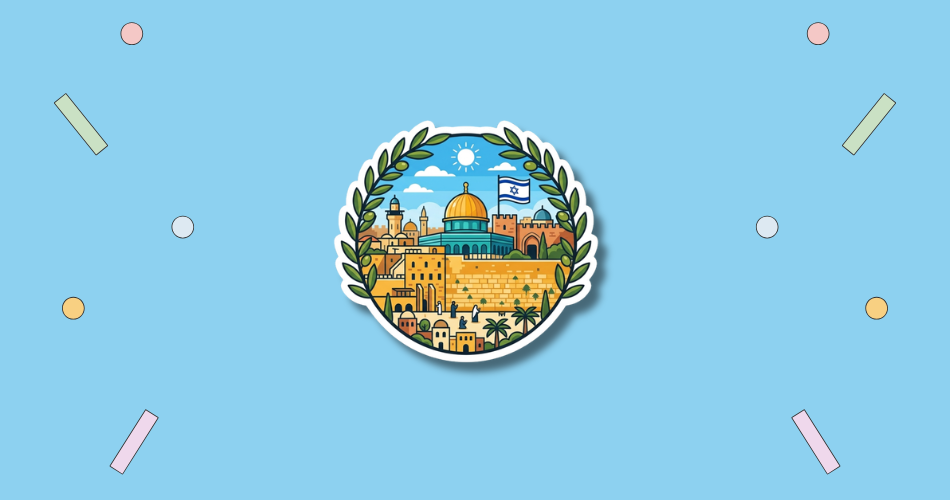
Jerusalem Day is observed on the 28th day of the Hebrew month of Iyar. In 2026, it falls on May 14-15. This national holiday commemorates the reunification of Jerusalem and the establishment of Israeli control over the Old City following the Six-Day War in 1967. It serves as a time for the Jewish people to celebrate their historical and spiritual connection to the city that serves as their ancient capital.
HT Meter
Does this day matter to you?
Tap the meter if it does, and say whether you will be celebrating — that is what opens the wishes from everybody else who will be.
This day matters to me
0 Be the first to say so
Just getting started
0 Let others know you’re in.
Wishes, greetings and stories
Join the celebration to share a wish, a greeting, or how this day goes in your house.
These are kept for the people celebrating this day. Say you will be celebrating to read them and to add your own.
You have already shared something here recently.
Nothing here yet. Yours would be the first.
See also: Israel Independence Day (Memorial Day in Israel), National Israel Day
History of Jerusalem Day
The roots of this holiday lie in the events of June 1967. For 19 years prior, from 1948 to 1967, Jerusalem was a divided city. Jordan controlled East Jerusalem, which included the Old City and the Western Wall, while Israel controlled West Jerusalem. During this period, Jews were barred from visiting their holiest sites. On June 7, 1967, during the third day of the Six-Day War, Israeli paratroopers broke through the Lions’ Gate and reached the Western Wall, bringing the entire city under a single administration.
Israel Independence Day (Memorial Day in Israel)
Following the victory, the Chief Rabbinate of Israel declared the 28th of Iyar a minor religious holiday to express gratitude through prayer. In 1968, the Israeli government officially established the date as Jerusalem Day to symbolize the continued historical connection between the city and the nation. The status of the day was further solidified in 1998 when the Knesset passed the Jerusalem Day Law, which formally recognized the date as a national holiday dedicated to the city’s liberation and unity.
Why is Jerusalem Day important?
Jerusalem Day is significant because it represents the end of nearly two decades of division and restricted access to sacred locations. The reunification allowed people of all faiths to visit holy sites like the Temple Mount, the Western Wall, and the Church of the Holy Sepulchre. This freedom of access is a cornerstone of the day’s meaning, reflecting the city’s transition into a place where religious expression is protected for everyone.
The day also serves as a memorial for the 182 Israeli soldiers who died in the battle for the city. It acts as a point of national unity, focusing on the shared heritage and cultural identity centered in the city’s ancient streets. For many, the holiday is a fulfillment of a multi-generational longing to return to the heart of Jerusalem, making it a powerful symbol of endurance and historical continuity.
- It commemorates the restoration of Jewish sovereignty over the Old City.
- It guarantees freedom of access to holy sites for all religious groups.
- The holiday honors the memory of the soldiers who fell in the 1967 battles.
- It celebrates the spiritual and cultural heart of the Jewish people.
- The day promotes national pride and the concept of an undivided capital.
How to Celebrate Jerusalem Day
Make it yours
How would you like to spend Jerusalem Day?
Tick what fits you, and we will put together ideas made for this day — not for any day.
National Israel Day
The most visible celebration is the Flag Dance, known as Rikudgalim, where thousands of people march through the streets of Jerusalem. Participants carry Israeli flags and sing traditional songs as they move from the city center toward the Western Wall. Many attendees wear blue and white clothing to match the national flag, creating a festive atmosphere throughout the capital’s neighborhoods.
State ceremonies are held at Ammunition Hill, the site of one of the fiercest battles during the reunification. These events often include speeches from government leaders and memorial services for veterans. In synagogues, special prayers of thanksgiving, including the Hallel, are recited to mark the religious importance of the return to the Old City. Families often take the opportunity to hike or tour the hills surrounding the city to appreciate its geography and history.
- Participate in the large flag parade through the streets of the city.
- Attend the official state memorial ceremony at Ammunition Hill.
- Recite special prayers of thanksgiving in a local synagogue.
- Take a guided tour of the Old City to learn about its 1967 history.
- Decorate homes and vehicles with blue and white national flags.