
Liberation Day in DR Congo
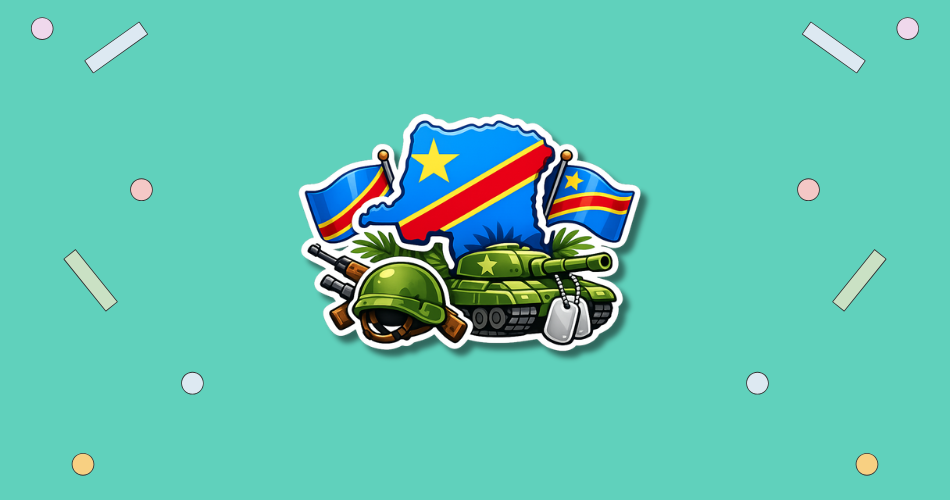
Liberation Day in DR Congo is observed every year on May 17. In 2027, this date falls on a Monday. It is a public holiday in the Democratic Republic of the Congo connected with the events of May 17, 1997, when Laurent-Désiré Kabila came to power after the First Congo War. The day is best approached as a national historical observance, with attention to the country’s political history, armed forces, and public memory.
Contents
HT Meter
Does this day matter to you?
Say that it does, and say whether you will be marking it. Both are anonymous to nobody but kind to everybody.
This day matters to me
0 Be the first to say so
Quietly remembered
0 Nobody has said so yet
Notes of remembrance
Join those marking this day to share a word, a memory, or the reason it matters to you.
These notes are kept for the people marking this day. Say you will be marking it to read them and to leave your own.
You have already shared a note here recently.
No notes yet. Yours would be the first.
History of Liberation Day in DR Congo
Liberation Day is tied to the end of Mobutu Sese Seko’s long rule and the arrival of Laurent-Désiré Kabila’s Alliance of Democratic Forces for the Liberation of Congo-Zaire in Kinshasa in May 1997. Holiday calendars and Congolese institutional references identify May 17 as the anniversary of liberation, associated with the AFDL’s entry into Kinshasa and the broader shift from Zaire back to the Democratic Republic of the Congo.
Today, the date is also linked in official and workplace holiday listings with the Congolese armed forces and national security services. Because the political history behind the day is complex and contested, the observance is most accurately described in careful terms: it marks a major change in state power in 1997 and remains part of the country’s public holiday calendar.
Why is Liberation Day in DR Congo important?
Liberation Day gives the Democratic Republic of the Congo a fixed date for reflecting on one of the country’s major political turning points. It connects public memory with the end of Mobutu’s rule, the First Congo War, and the redefinition of the country’s national identity after the name Zaire was abandoned.
Congo Independence Day
The day also matters because it sits within a broader history of conflict, governance, military service, and national rebuilding. For readers outside the country, it offers a useful entry point for learning about modern Congolese history beyond independence in 1960.
- It marks a major change in Congolese political history.
- It helps explain why 1997 remains important in the country’s public calendar.
- It connects historical memory with national institutions.
- It gives schools and families a reason to discuss modern Congolese history.
- It reminds observers that national holidays can carry complex meanings.
How to Observe Liberation Day in DR Congo
Make it yours
How would you like to spend Liberation Day in DR Congo?
Tick what fits you, and we will put together ideas made for this day — not for any day.
Read a clear overview of the First Congo War, Mobutu’s rule, and the political changes of 1997. For Congolese communities, the day may also be marked through public events, official messages, or time away from work and school where the holiday is observed.
A thoughtful observance should avoid treating the day as a simple victory story. The history behind May 17 includes conflict, political transition, and lasting national questions, so the most respectful approach is to learn, listen, and keep the focus on historical understanding.
- Look up a timeline of Congolese history from 1960 to 1997.
- Learn why the country changed from Zaire back to the Democratic Republic of the Congo.
- Read about Laurent-Désiré Kabila and the First Congo War.
- Discuss the holiday’s meaning with someone familiar with Congolese history.
- Use the day to learn more about the DRC beyond headlines about conflict.
Liberation Day in DR Congo Dates
| Year | Date | Day of the week |
|---|---|---|
| 2026 | May 17 | Sunday |
| 2027 next | May 17 | Monday |
| 2028 | May 17 | Wednesday |
| 2029 | May 17 | Thursday |
| 2030 | May 17 | Friday |
Sorry to hear you didn't enjoy this article...
Rwanda Liberation Day
Help us make it better!