
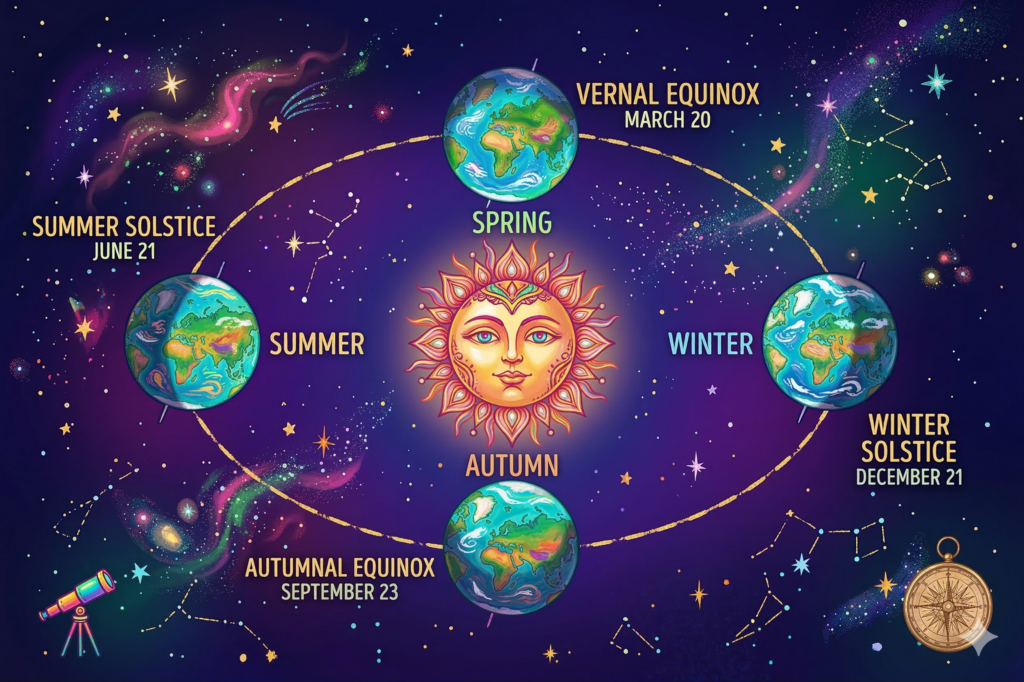
The March Equinox (Spring Equinox, Spring Begins) is observed at the moment the sun crosses the celestial equator from south to north, marking the official beginning of spring in the Northern Hemisphere and autumn in the Southern Hemisphere. In 2026, it falls on March 20. This astronomical event occurs when the Earth’s axis is tilted neither toward nor away from the sun, resulting in an almost equal amount of daylight and darkness across the entire planet. For many cultures, this transition represents a time of renewal, rebirth, and the restoration of balance as the natural world awakens from its winter dormancy.
Read also about The September Equinox (Fall Equinox)
Table of Contents
History of March Equinox
The significance of the March Equinox dates back to antiquity, as early civilizations used the event to track the passage of time and schedule agricultural activities. Ancient structures like Stonehenge in England and the Chichen Itza pyramid in Mexico were specifically designed to align with the sun’s position during the equinoxes. For the Maya, the “Kukulcan” feathered serpent shadow appearing on the steps of the El Castillo pyramid served as a divine signal to begin planting crops. These architectural feats demonstrate a sophisticated understanding of solar cycles and a deep spiritual connection to the changing seasons.
In the religious and civic history of the West, the March Equinox became a critical point for the calendar. The Council of Nicaea in 325 AD used the equinox to establish the formula for calculating the date of Easter, which is generally the first Sunday after the first full moon following the equinox. This alignment between the solar year and religious observance eventually led to the Gregorian calendar reform in 1582. Across various traditions, from the Iranian Nowruz to the Germanic Ostara, the spring equinox has remained a foundational point for celebrating the victory of light over darkness and the return of life to the soil.
Why is March Equinox important?
The March Equinox is a pivotal biological and environmental trigger that signals the start of the primary growing season in the Northern Hemisphere. As daylight hours increase, plants begin the process of photosynthesis more vigorously, leading to the blooming of flowers and the budding of trees. This surge in botanical activity supports the entire food chain, influencing the migration patterns of birds, the emergence of hibernating animals, and the breeding cycles of various wildlife. It is a moment of global synchronization where the Earth’s ecosystems shift gears to maximize the energy provided by the sun.
For human society, the equinox serves as a psychological and cultural reset. It is a time traditionally associated with “spring cleaning,” a practice rooted in the ancient tradition of clearing out the literal and metaphorical soot of winter. The equal length of day and night provides a symbolic reminder of balance and harmony. Economically, the equinox marks a transition in energy consumption and agricultural planning, as farmers prepare the earth for new seeds and cities adjust to longer periods of natural light, reducing the reliance on artificial illumination.
- The word “equinox” comes from the Latin words for “equal” and “night.”
- At the North Pole, the sun rises for the first time in six months during the March Equinox.
- It is the only time of year when the sun rises exactly in the east and sets exactly in the west.
- Many ancient calendars, including the Roman and Persian, began their new year on this date.
- The equinox occurs at a specific moment in time, regardless of your time zone on Earth.
How to Celebrate March Equinox
Celebrating the arrival of spring often involves getting outdoors to witness the immediate changes in the environment. Many people observe the day by planting a “first seed” or visiting a local botanical garden to see early blooms like crocuses and daffodils. It is also a popular time for hiking and nature walks, focusing on the sensory experience of the warming air and the return of birdsong. For those interested in the astronomical aspect, viewing the sunrise or sunset provides a clear visual of the sun’s alignment with the cardinal directions of east and west.
Cultural celebrations often involve food and gatherings that emphasize fresh, seasonal ingredients. In many Middle Eastern and Central Asian cultures, the New Year (Nowruz) is celebrated with elaborate table settings and symbolic foods representing rebirth and prosperity. At home, people may choose to perform a thorough cleaning of their living spaces or open windows to allow fresh air to circulate. It is a day to set new intentions for the coming months, reflecting the energy of growth and transformation that is visible throughout the natural world.
- Spend time in a park or garden to observe the first buds and emerging insects.
- Organize a spring cleaning of your home to remove winter clutter and dust.
- Prepare a meal using seasonal spring vegetables like asparagus, radishes, or peas.
- Research the ancient monuments in your region that align with the equinox sun.
- Watch the sunset to see it dip below the horizon at the true west point.
March Equinox (Spring Equinox, Spring Begins) Dates Table
| Year | Date | Day |
|---|---|---|
| 2026 | March 1 | Sunday |
| 2027 | March 1 | Monday |
| 2028 | March 1 | Wednesday |
| 2029 | March 1 | Thursday |
| 2030 | March 1 | Friday |
Subscribe to our newsletter and never miss a holiday again!