
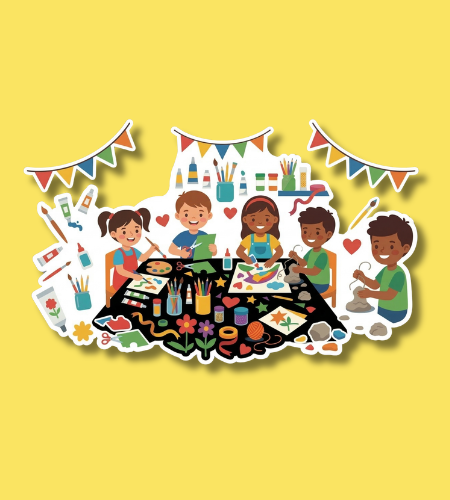
National Children’s Craft Day is a creative holiday observed on March 14. This day is part of the larger National Craft Month and aims to introduce children to the diverse world of arts and crafts. By encouraging youngsters to work with their hands, the holiday seeks to ignite their imagination and help them discover new hobbies that can last a lifetime. It serves as a reminder to parents and educators that providing children with simple materials like paper, glue, and markers can open up a vast universe of creative expression.
Table of Contents
History of National Children’s Craft Day
While the exact year of its founding remains unconfirmed, National Children’s Craft Day was established as a key highlight within National Craft Month, which is observed throughout March. It is widely believed that American craft retailers and advocacy groups initiated the day to specifically engage a younger audience in hands-on activities. This movement coincided with a growing awareness of the need for non-electronic entertainment and the historical value of traditional skills like sewing, woodworking, and papercraft being passed down through generations.
The arts and crafts movement itself has deep roots in the late 19th century, led by figures like William Morris who championed the value of handmade goods over industrial production. This holiday carries that legacy into the modern era, focusing on the pedagogical benefits of making things. Since its inception, the day has grown from small classroom activities to a nationwide event supported by major craft chains that offer special workshops and demonstrations. It has become a staple for libraries and community centers looking to provide productive, screen-free engagement for children during the spring.
Why is National Children’s Craft Day important?
This day is vital because it directly supports the cognitive and physical development of children. Engaging in craft projects requires fine motor skills, such as cutting with scissors or threading beads, which help strengthen the small muscles in the hands and fingers. Furthermore, following a set of instructions to complete a project teaches children patience and the ability to focus on a task from start to finish. These skills are fundamental for early childhood education and translate into better handwriting and improved dexterity in daily life.
Beyond physical growth, crafting provides a significant boost to a child’s emotional well-being and self-esteem. Completing a project—no matter how simple—gives a child a sense of accomplishment and pride in their own work. It offers a safe space for experimentation where there are no “wrong” answers, allowing kids to express their unique personalities and feelings through color and texture. In a digital age dominated by passive screen time, National Children’s Craft Day preserves the essential human experience of creating something tangible from nothing.
- Crafting helps develop hand-eye coordination and fine motor control.
- It teaches children how to follow multi-step directions to reach a goal.
- Creative activities provide a healthy outlet for stress and emotional expression.
- Working on crafts together strengthens the bond between parents and children.
- The holiday encourages the reuse of household materials, teaching environmental awareness.
How to Celebrate National Children’s Craft Day
The most effective way to celebrate is to set aside a dedicated block of time for a specific project that matches a child’s age and interests. For toddlers, this might involve simple finger painting or using stickers to decorate paper plates. Older children might enjoy more complex tasks such as building model airplanes, learning basic knitting, or creating jewelry with beads. The key is to provide the materials and guidance while letting the child’s own vision lead the creative process, ensuring they feel ownership over the final product.
Organizing a small craft swap or a community “maker” session is another excellent way to observe the day. This can be as simple as inviting neighbors over to transform recycled items like egg cartons and milk jugs into “recycled art” monsters or bird feeders. Sharing the results on social media with dedicated hashtags can help inspire other families to join in. Whether the project is a masterpiece or a messy experiment, the focus should remain on the joy of the process and the valuable time spent exploring new ideas together.
- Clear off a table and provide various materials like felt, glitter, and glue.
- Turn recycled household items into creative sculptures or functional toys.
- Visit a local craft store to participate in a scheduled children’s workshop.
- Create handmade bookmarks or cards to give to friends and family members.
- Set up a “craft station” where kids can freely choose their own project for the day.
National Children’s Craft Day Dates Table
| Year | Date | Day |
|---|---|---|
| 2026 | March 14 | Saturday |
| 2027 | March 14 | Sunday |
| 2028 | March 14 | Tuesday |
| 2029 | March 14 | Wednesday |
| 2030 | March 14 | Thursday |
Subscribe to our newsletter and never miss a holiday again!