

National Learn a Word Day
National Learn a Word Day is celebrated every year on October 16. On this day, people are encouraged to expand their vocabulary by learning one new word (or a few) and reflecting on the richness of language.
Contents
HT Meter
Does this day matter to you?
Say that it does, and say whether you will be marking it. Both are anonymous to nobody but kind to everybody.
This day matters to me
0 Be the first to say so
Quietly remembered
0 Nobody has said so yet
Notes of remembrance
Join those marking this day to share a word, a memory, or the reason it matters to you.
These notes are kept for the people marking this day. Say you will be marking it to read them and to leave your own.
You have already shared a note here recently.
No notes yet. Yours would be the first.
History of National Learn a Word Day
The precise origins of National Learn a Word Day are unclear. It appears on calendars and awareness‑day sites alongside other language‑oriented observances. Some suggest it may align with National Dictionary Day, which honors Noah Webster’s birthday (October 16), giving the day a natural connection to vocabulary and lexicography.
Over time, the day has gained small but steady recognition among educators, writers, word lovers, and language communities—becoming a light, friendly prompt to pause and notice a word you don’t know, then learn it and use it.
Why National Learn a Word Day is meaningful
Words are the building blocks of thought, communication, and connection. By learning a new word, we stretch our mental reach—opening doors to nuance, new ideas, and subtleties in expression. On this day, we remind ourselves that language is living, growing, and that each new word is a little lens through which we see the world differently.
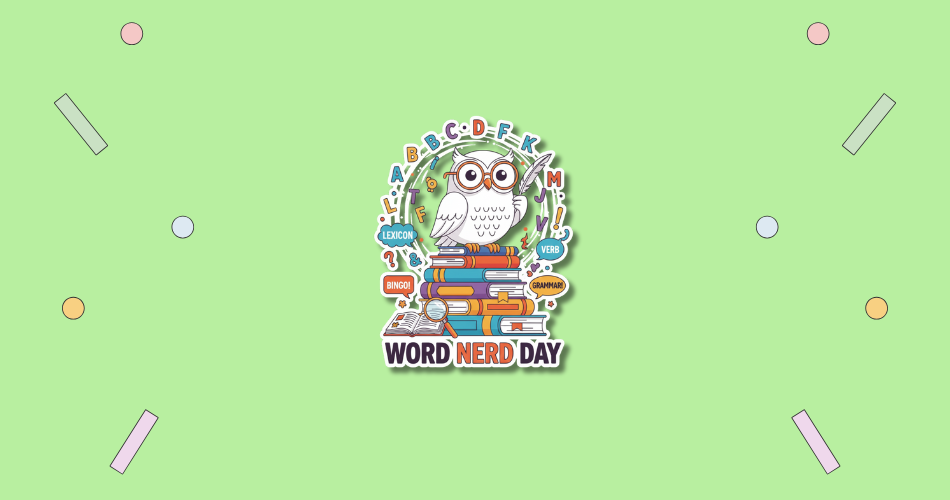
National Word Nerd Day
Also, observing National Learn a Word Day encourages a gentle humility: it tells us even the most fluent speaker has gaps, and that curiosity about words is a worthwhile, lifelong practice. It can spark conversations, prompt reading, and build bridges among people who share or admire language.
Here are some down‑to‑earth reasons this day matters
- It gives us a small, doable challenge that builds our vocabulary
- It helps us notice words we pass by without thinking
- It supports reading, thinking, and better communication
- It can spark joy in discovering a word’s history, sound, or meaning
- It connects us with communities of learners, writers, and enthusiasts
How to Observe National Learn a Word Day
Make it yours
How would you like to spend National Learn a Word Day?
Tick what fits you, and we will put together ideas made for this day — not for any day.
You don’t need anything fancy. Pick a word you don’t know—maybe from a book, an article, or a “word of the day” app. Look up its meaning, pronunciation, usage, and try to use it in a sentence before the day ends. Let that word stick with you a little—maybe revisit it the next day.
Dictionary Day
In groups—friends, classes, writing circles—you might do a mini “word swap”: each person brings a word they’ve just learned, shares it, and everyone tries to use one in conversation that day. Or challenge yourself to pick words from another language, dialect, or domain. Even turning it into a game or small competition adds fun.
Some simple ideas you might try
- choose a new word and write its definition, then use it in a sentence
- share that word and its meaning with a friend or online
- browse through a dictionary or thesaurus and pick one unfamiliar word
- use a “word of the day” app or calendar as inspiration
- challenge someone else to learn the same word and compare usage
National Learn a Word Day Dates Table
| Year | Date | Day |
|---|---|---|
| 2026 | October 16 | Friday |
| 2027 | October 16 | Saturday |
| 2028 | October 16 | Monday |
| 2029 | October 16 | Tuesday |
| 2030 | October 16 | Wednesday |