
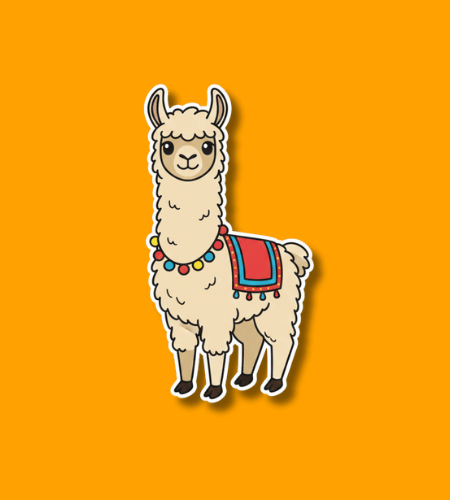
National Llama Day is observed annually on December 9. This day celebrates the enduring cultural history, agricultural utility, and unique personality of the South American camelid that has captivated people worldwide.
Table of Contents
History of National Llama Day
The exact origins of this observance remain somewhat obscure, though several theories exist regarding its establishment. One popular claim suggests the day was first recognized in Canada in the 1930s to honor the llama’s resilience during severe droughts when other livestock struggled to survive. A more contemporary explanation is that the holiday gained traction through social media in the mid-2010s, created by animal enthusiasts to spread awareness about camelids. Regardless of its specific founding date, the day serves as a global recognition of an animal that has been central to human civilization in the Andes for millennia.
The history of the llama itself dates back approximately 4,000 to 5,000 years, when it was domesticated by indigenous peoples in the Peruvian highlands. Descended from the wild guanaco, llamas were integral to the Inca Empire, serving as the only beast of burden native to the Americas before the arrival of Europeans. They transported goods across treacherous mountain terrain, provided wool for clothing, and their dried dung was used as fuel in areas where wood was scarce. Their deep connection to Andean culture is still evident today, where they are often decorated with colorful tassels and regarded as a symbol of regional identity.
Why is National Llama Day important?
Llamas possess a remarkable biology that allows them to thrive in harsh environments where other animals might fail. Their blood contains a high concentration of hemoglobin, enabling them to navigate high altitudes with low oxygen levels efficiently. Unlike horses or cattle, they have soft, leathery pads on their two-toed feet rather than hard hooves, which minimizes erosion and damage to delicate terrain. This eco-friendly footprint makes them excellent pack animals for conservation work and hiking expeditions. Additionally, they are increasingly valued as therapy animals; their calm, observant nature allows them to connect with patients in hospitals and nursing homes in profound ways.
Beyond their biological traits, llamas are vital to the textile and agricultural industries. Their double-coat fiber is distinct from sheep’s wool because it is lanolin-free, making it hypoallergenic and lightweight yet incredibly warm. Farmers also prize llamas as effective livestock guardians. They have a strong herd instinct and are known to aggressively drive away predators like coyotes and foxes to protect sheep or goats living alongside them. This natural protective behavior, combined with their intelligence and trainability, highlights their multifaceted value to humans beyond just being photogenic creatures.
- They provided the primary means of transport for the ancient Inca civilization.
- Llama fiber is hypoallergenic, warm, and free of grease or lanolin.
- They serve as natural guard animals for smaller livestock herds.
- Their padded feet prevent damage to trails and fragile ecosystems.
- Therapy programs use their gentle demeanor to help reduce human anxiety.
How to Observe National Llama Day
The most direct way to observe the day is by visiting a local llama farm or sanctuary. Many owners open their doors to the public for educational tours, allowing visitors to feed the animals and learn about their care. Interacting with a llama up close reveals their unique communication methods, such as humming, which they use to express various moods. Some locations even offer “llama treks,” where you can hike alongside a llama carrying your gear, experiencing their traditional role as a pack animal firsthand.
For those unable to visit a farm, learning about Andean culture or the biology of camelids is a meaningful alternative. Libraries and online resources offer documentaries detailing the domestication of the llama and its impact on South American history. Crafters might choose to work with llama yarn to knit or weave a small project, appreciating the texture and warmth of the fiber. Supporting organizations that rescue neglected llamas or protect their wild cousins, the guanacos, also aligns with the spirit of the day.
- Visit a petting zoo or farm that houses llamas to see them up close.
- Read about the history of the Inca Empire and the llama’s role in it.
- Knitting or crocheting with llama yarn supports sustainable fiber arts.
- Donate to a sanctuary that rescues and rehabilitates camelids.
- Share educational facts about the differences between llamas and alpacas.
National Llama Day Dates
| Year | Date | Day |
|---|---|---|
| 2026 | December 9 | Wednesday |
| 2027 | December 9 | Thursday |
| 2028 | December 9 | Saturday |
| 2029 | December 9 | Sunday |
| 2030 | December 9 | Monday |
Subscribe to our newsletter and never miss a holiday again!