

National Moon Day
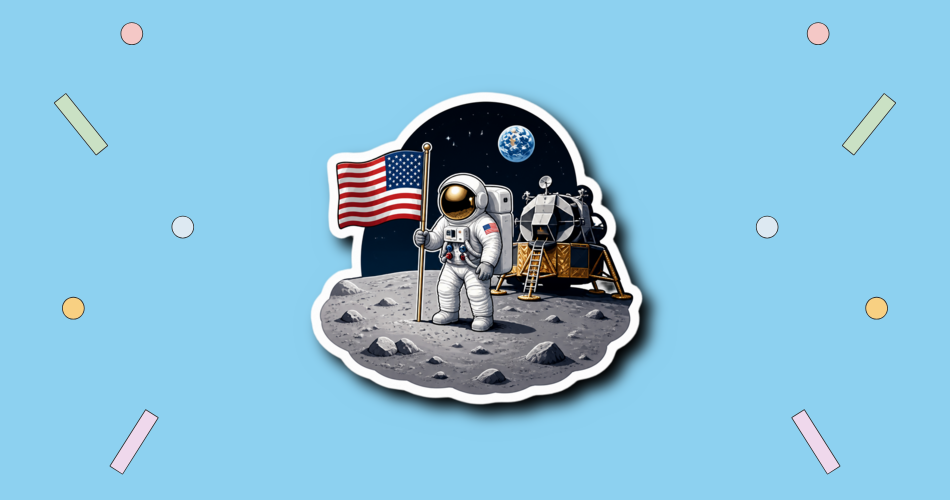
National Moon Day falls on July 20 each year. In 2027, this date falls on a Tuesday. It commemorates the day in 1969 when American astronauts Neil Armstrong and Buzz Aldrin became the first humans to walk on the Moon, an achievement that turned a moment in one mission into an annual occasion for education and celebration.
Contents
HT Meter
Does this day matter to you?
Tap the meter if it does, and say whether you will be celebrating — that is what opens the wishes from everybody else who will be.
This day matters to me
0 Be the first to say so
Just getting started
0 Let others know you’re in.
Wishes, greetings and stories
Join the celebration to share a wish, a greeting, or how this day goes in your house.
These are kept for the people celebrating this day. Say you will be celebrating to read them and to add your own.
You have already shared something here recently.
Nothing here yet. Yours would be the first.
History of National Moon Day
On July 20, 1969, the Apollo 11 mission reached a milestone when the lunar module touched down and Neil Armstrong stepped onto the lunar surface, followed shortly by Buzz Aldrin. Millions around the world watched live broadcasts of the event, and the landing became a defining moment of the space age and a marker for future exploration.
The anniversary of that landing has since been observed in many ways. Schools, museums, and community groups use the date as an opportunity to teach about spaceflight, the Apollo program, and the engineers and technicians whose work made the mission possible. Various groups and calendars list July 20 as a day to remember and celebrate the first human steps on the Moon.
Why is National Moon Day important?
National Moon Day highlights a singular achievement in human exploration and the broader value of scientific ambition. The Apollo 11 landing serves as a reference point for discussing technological progress, teamwork, and how public attention can rally support for large scientific projects.

Space Exploration Day
The day also creates space—literally and figuratively—for educational outreach. Planetariums, science centers, and classrooms use the anniversary to introduce new audiences to astronomy and engineering, and to link historical accomplishment with current and future missions.
- It honors the Apollo 11 mission and the first human steps on the Moon.
- It promotes public interest in science, technology, engineering, and math (STEM).
- It offers a yearly focal point for museums, schools, and planetariums to present exhibits and programs.
- It connects historical achievement to ongoing and planned lunar and space activities.
- It provides a simple way for communities and families to engage with space history.
How to Celebrate National Moon Day
Make it yours
How would you like to spend National Moon Day?
Tick what fits you, and we will put together ideas made for this day — not for any day.
Celebrate National Moon Day by turning curiosity into action: watch documentaries or archived footage about Apollo 11, read first-hand accounts, or host a viewing party with family or classmates. Many science centers and museums offer special programming and discounted admission around the date, which makes it an ideal time to visit exhibits on spaceflight and lunar science.
Bring the Moon closer at home with hands-on activities: set up a telescope or binoculars for moon watching, join a local astronomy club event, or create a small classroom project about the phases of the Moon and the history of the Apollo missions. Bookstores and libraries often feature reading lists and film screenings to help people of all ages learn more about lunar exploration.
- Arrange a moon-watching night with a telescope, binoculars, or a guided session at a planetarium.
- Watch documentaries or archival footage about Apollo 11 and astronaut interviews.
- Visit a science museum or planetarium that offers special events or exhibits for the anniversary.
- Host a classroom activity or community talk about engineering, navigation, or the science behind lunar landings.
- Explore space-themed kits, books, and models to inspire hands-on learning.
National Moon Day Dates
| Year | Date | Day of the week |
|---|---|---|
| 2026 | July 20 | Monday |
| 2027 next | July 20 | Tuesday |
| 2028 | July 20 | Thursday |
| 2029 | July 20 | Friday |
| 2030 | July 20 | Saturday |

Sorry to hear you didn't enjoy this article...

National Astronaut Day
Help us make it better!