
National SAFE Day
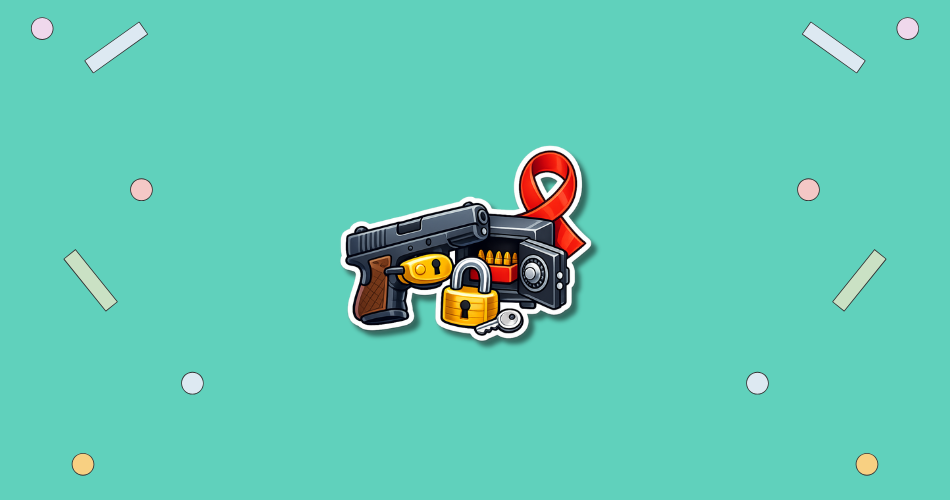
National SAFE Day is observed every year on June 4. In 2027, this date falls on a Friday. It is a serious awareness observance focused on secure firearm storage, child safety, and conversations that can prevent accidental shootings. The day is connected with the memory of Brooklynn Mae Mohler, a 13-year-old who died after a preventable shooting involving an unsecured firearm in a friend’s home. Its name uses the acronym SAFE to call attention to four practical steps: secure firearms, ask about unsecured guns in homes children visit, frequently talk with children about firearm danger, and educate others about responsible safety habits.
Contents
See also: Pistol Patent Day
HT Meter
Does this day matter to you?
Say that it does, and say whether you will be marking it. Both are anonymous to nobody but kind to everybody.
This day matters to me
0 Be the first to say so
Quietly remembered
0 Nobody has said so yet
Notes of remembrance
Join those marking this day to share a word, a memory, or the reason it matters to you.
These notes are kept for the people marking this day. Say you will be marking it to read them and to leave your own.
You have already shared a note here recently.
No notes yet. Yours would be the first.
History of National SAFE Day
National SAFE Day was founded in 2016 by the Brooklynn Mae Mohler Foundation to raise awareness about gun safety and prevent similar tragedies. Brooklynn Mae Mohler died on June 4, 2013, after being shot by a firearm that had been left unsecured in a home she was visiting. The observance was placed on June 4 because it marks the anniversary of her death. Rather than treating the day as a general safety campaign, the foundation tied it directly to the risks children face when firearms are loaded, unlocked, or accessible in homes.
National Gun Violence Awareness Day
The day is now understood as a call for practical responsibility among gun owners, parents, guardians, relatives, and anyone who hosts children. Its message is not limited to families who own firearms, because children often spend time in other homes where adults may not know the storage practices. The SAFE acronym gives the observance a clear structure that is easy to remember and repeat. It turns a painful story into a direct safety checklist that can be used before playdates, visits, sleepovers, family gatherings, and other situations where children may enter another household.
Why is National SAFE Day important?
National SAFE Day is important because unsecured firearms create risks that are preventable. A child does not have to live in a gun-owning household to be affected by unsafe storage; danger can appear in the home of a friend, neighbor, relative, or caregiver. The observance encourages adults to treat firearm access as a normal safety question, much like asking about swimming pools, pets, allergies, or supervision. That kind of conversation can feel uncomfortable, but it gives parents and guardians information they need before leaving a child in someone else’s care.
The day also places responsibility where it belongs: on adults who own, store, and control access to firearms. Secure storage, open conversations, and repeated safety education reduce the chance that curiosity, peer pressure, or a moment of unsupervised access turns into tragedy. National SAFE Day also gives communities a respectful way to talk about child safety without losing sight of the family whose experience inspired the observance. Its value is practical, personal, and urgent.
- It keeps attention on preventable firearm injuries.
- It helps parents ask a difficult but necessary question.
- It reminds gun owners that storage choices affect others.
- It gives families a simple safety acronym to remember.
- It honors Brooklynn Mae Mohler through prevention work.
How to Observe National SAFE Day
Make it yours
How would you like to spend National SAFE Day?
Tick what fits you, and we will put together ideas made for this day — not for any day.

National SAFER Workplace Day
Start by checking that every firearm in the home is secured, unloaded when appropriate, and inaccessible to children or unauthorized users. Use a gun safe, lock box, cable lock, trigger lock, or other secure storage method that fits the firearm and the household. Store ammunition separately when that is part of the safest plan for the home. Parents and guardians can also ask, before a visit or sleepover, whether there are any unsecured firearms where their child will be spending time.
Use the day to have age-appropriate conversations with children about what to do if they ever see a gun. The message should be calm, clear, and repeated over time: do not touch it, leave the area, and tell an adult immediately. Community groups, schools, police departments, health organizations, and neighborhood associations can use National SAFE Day to share safe-storage reminders and distribute information about locks or local safety resources. The most useful observance is one that leads to a real change in storage habits or a conversation that would not otherwise happen.
- Check every firearm storage location in the home.
- Ask about unsecured guns before a child visits another home.
- Teach children to leave a firearm untouched and find an adult.
- Share the SAFE acronym with parents and caregivers.
- Review local safe-storage laws and available lock resources.
National SAFE Day Dates
| Year | Date | Day of the week |
|---|---|---|
| 2026 | June 4 | Thursday |
| 2027 next | June 4 | Friday |
| 2028 | June 4 | Sunday |
| 2029 | June 4 | Monday |
| 2030 | June 4 | Tuesday |