
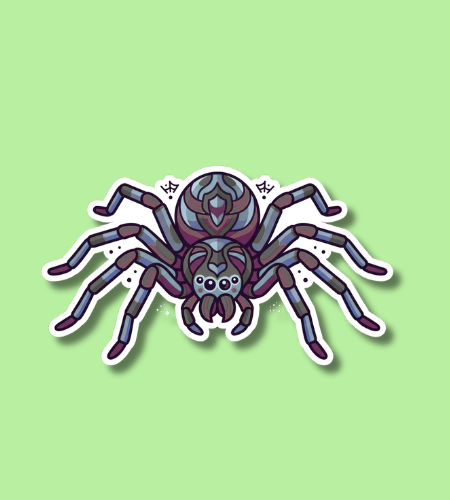
National Save a Spider Day is an environmental awareness holiday observed on March 14. This day is dedicated to educating the public about the vital role spiders play in our ecosystem and discouraging the reflexive urge to kill them. While many people suffer from arachnophobia, the holiday emphasizes that spiders are beneficial predators that provide natural pest control. By fostering a better understanding of these eight-legged creatures, the observance aims to shift the public perception of spiders from frightening pests to essential members of the natural world.
Read also about National Learn About Butterflies Day (Moth-er Day)
Table of Contents
History of National Save a Spider Day
The origins of National Save a Spider Day are rooted in the efforts of entomologists and nature conservationists who wanted to combat the widespread misinformation regarding spiders. Historically, spiders have been portrayed in folklore and media as dangerous or malevolent, leading to a culture where they are often crushed on sight. The holiday was established to counter these negative stereotypes by highlighting the scientific and ecological importance of the nearly 50,000 known species of spiders found across the globe.
While the specific year of the holiday’s creation is not documented in a single legislative act, it has grown significantly in the digital age through the support of wildlife organizations and science educators. It aligns with other “neglected” wildlife holidays that focus on animals often excluded from mainstream conservation efforts. Over time, the day has become a popular topic for nature centers and libraries, which use the date to explain that the vast majority of spiders are harmless to humans and are actually protective allies in our gardens and homes.
Why is National Save a Spider Day important?
Spiders are some of the most effective natural pest controllers on the planet, consuming tons of insects every year. This day is important because it highlights how spiders help protect human food supplies and reduce the spread of diseases by eating mosquitoes, flies, and agricultural pests. Without spiders, insect populations would skyrocket, leading to significant damage to crops and a higher reliance on chemical pesticides. Understanding this predatory relationship helps people appreciate spiders as a free, organic service that maintains the balance of local environments.
Furthermore, the observance encourages the protection of biodiversity. Spiders are a primary food source for many birds, lizards, and small mammals, meaning their survival is linked to the health of larger wildlife populations. The holiday also brings attention to the incredible biological properties of spiders, such as their silk, which is one of the strongest natural materials known to science and is currently being researched for applications in medicine and engineering. Saving a spider is not just an act of kindness to an individual creature; it is a way to support the complex web of life that sustains our planet.
- Spiders eat common household pests like roaches, earwigs, and moths.
- Most spiders are unable to bite humans or possess venom that is too weak to cause harm.
- They reduce the need for harmful chemical insecticides in home gardens.
- Spider silk is being studied for use in creating biodegradable sutures and artificial tendons.
- Observing spiders can provide a fascinating introduction to biology and animal behavior for children.
How to Observe National Save a Spider Day
The most direct way to observe the day is to adopt a “catch and release” policy for any spiders found indoors. Instead of reaching for a shoe or a spray, use a clear glass and a piece of stiff paper to gently trap the spider and move it to a garden or a nearby bush. This simple act preserves the life of the spider while removing it from your living space. You can also take the time to learn how to identify the very few species in your area that are actually medically significant, such as the black widow or brown recluse, which helps eliminate unnecessary fear of common house spiders.
Educational activities are another great way to mark the occasion. Many nature centers host “spider walks” or webinars that explain how to spot different types of webs, from the classic orb web to funnel and sheet webs. If you have a garden, you can celebrate by leaving a small corner “wild” with tall grass or shrubs to provide a safe habitat for local arachnids. Sharing a photo of a beautiful web or a cool spider fact on social media helps spread the message that these creatures deserve our respect and protection.
- Use a jar and paper to relocate indoor spiders to an outdoor habitat.
- Research the common spiders in your region to learn which ones are beneficial.
- Avoid using broad-spectrum pesticides that kill spiders and other helpful bugs.
- Spend a few minutes observing a spiderweb to appreciate its intricate engineering.
- Teach children about the “spider’s job” in the garden to help reduce their fear.
National Save a Spider Day Dates Table
| Year | Date | Day |
|---|---|---|
| 2026 | March 14 | Saturday |
| 2027 | March 14 | Sunday |
| 2028 | March 14 | Tuesday |
| 2029 | March 14 | Wednesday |
| 2030 | March 14 | Thursday |
Subscribe to our newsletter and never miss a holiday again!