

Orange Shirt Day
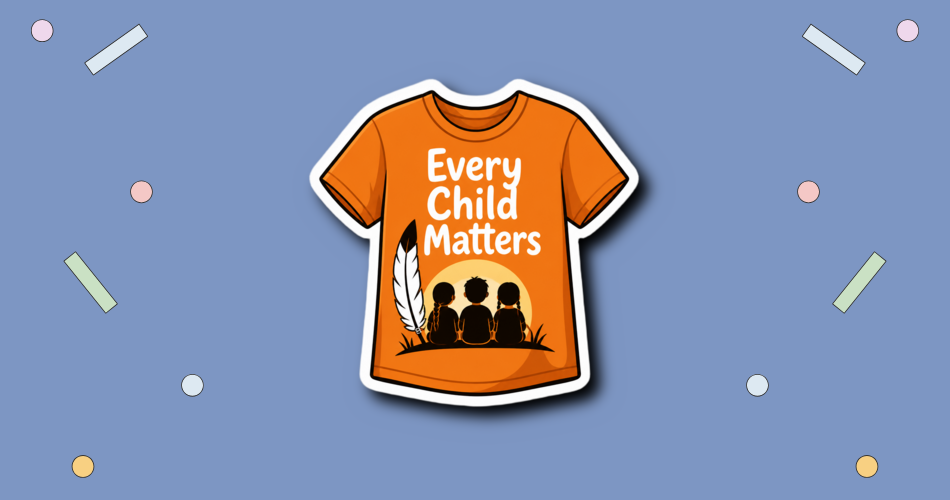
Orange Shirt Day is observed annually on September 30 to honor the Indigenous children who were forced into Canada’s residential school system and to support survivors and their families. In 2027, this date falls on a Thursday. This day of remembrance and healing was inspired by the story of Phyllis Webstad, who had her new orange shirt taken from her on her first day at a residential school in 1973.
Contents
HT Meter
Does this day matter to you?
Say that it does, and say whether you will be marking it. Both are anonymous to nobody but kind to everybody.
This day matters to me
0 Be the first to say so
Quietly remembered
0 Nobody has said so yet
Notes of remembrance
Join those marking this day to share a word, a memory, or the reason it matters to you.
These notes are kept for the people marking this day. Say you will be marking it to read them and to leave your own.
You have already shared a note here recently.
No notes yet. Yours would be the first.
History of Orange Shirt Day
Orange Shirt Day was created to raise awareness of the residential school system in Canada, which forcibly removed Indigenous children from their homes and placed them in schools where they were often subjected to abuse. The day is tied to the St. Joseph Mission Residential School Commemoration Project reunion event held in 2013, when Phyllis Webstad shared her experience of having her orange shirt taken away. The orange shirt has since become a symbol of the systematic stripping away of Indigenous cultures and the trauma children endured.
The first Orange Shirt Day was observed in 2013 in British Columbia, Canada. In 2017, a private member’s bill sought to make it an official holiday focused on reconciliation. September 30 has now been designated as the National Day for Truth and Reconciliation in Canada, encompassing the importance of Orange Shirt Day nationwide. The day is recognized across Canada and increasingly globally, contributing to education and awareness about the impact of residential schools.
Why is Orange Shirt Day important?
Orange Shirt Day is a day dedicated to honoring the survivors of the residential school system in Canada. By acknowledging and remembering the harm caused by the residential school system, the day helps promote reconciliation between Indigenous and non-Indigenous peoples. It reminds survivors that they are not alone and that their experiences matter.
- It stands against all forms of racism, including systemic racism, and bullying in our societies.
- It honors the strength and resilience of survivors and the children who never returned home.
- It educates the public about the traumatic legacy of residential schools and its ongoing effects on Indigenous communities.
- It fosters dialogue, understanding, and reconciliation between Indigenous and non-Indigenous peoples.
- It reinforces the message that every child matters, no matter how much they were ignored or dismissed during the residential school era.
How to Observe Orange Shirt Day
Make it yours
How would you like to spend Orange Shirt Day?
Tick what fits you, and we will put together ideas made for this day — not for any day.

Pink Shirt Day
Wear an orange shirt to stand in solidarity with survivors and against all forms of racism. Many communities hold events and ceremonies to commemorate the day, providing opportunities to hear stories shared by survivors and witness their truth. Attending these events shows support and deepens understanding of the day’s significance.
- Learn about the history and significance of Orange Shirt Day by researching the residential school system and its impacts.
- Use social media to share information and raise awareness about Orange Shirt Day, using the hashtag #OrangeShirtDay.
- Support Indigenous-led organizations and initiatives that work toward healing and reconciliation.
- Encourage schools and workplaces to make Orange Shirt Day a special day by promoting orange attire and educational activities.
- Reflect on the importance of residential school healing and the ongoing journey of reconciliation.
Orange Shirt Day Dates
| Year | Date | Day of the week |
|---|---|---|
| 2026 | September 30 | Wednesday |
| 2027 next | September 30 | Thursday |
| 2028 | September 30 | Saturday |
| 2029 | September 30 | Sunday |
| 2030 | September 30 | Monday |

International Stand Up to Bullying Day
Sorry to hear you didn't enjoy this article...
Help us make it better!