


Trooping the Colour
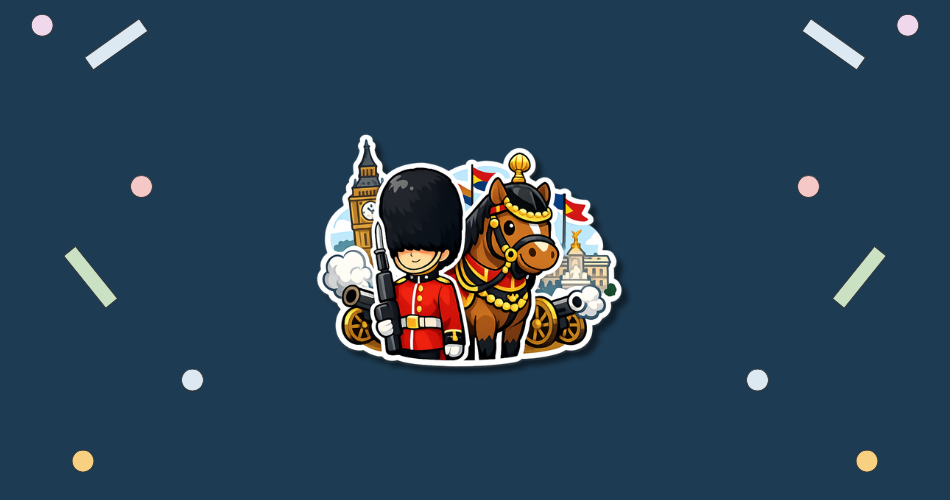
Trooping the Colour is observed on the second Saturday of June. In 2027, this date falls on June 12. The ceremony marks the British Sovereign’s official birthday with a formal military parade in London. It is closely associated with the Household Division, Horse Guards Parade, the procession along The Mall, and the Royal Air Force flypast seen from Buckingham Palace. Although it is not the monarch’s actual birthday, it is one of the United Kingdom’s most recognizable royal and military events. 1 2 3 4 5
Contents
HT Meter
Does this day matter to you?
Tap the meter if it does, and say whether you will be celebrating — that is what opens the wishes from everybody else who will be.
This day matters to me
0 Be the first to say so
Just getting started
0 Let others know you’re in.
Wishes, greetings and stories
Join the celebration to share a wish, a greeting, or how this day goes in your house.
These are kept for the people celebrating this day. Say you will be celebrating to read them and to add your own.
You have already shared something here recently.
Nothing here yet. Yours would be the first.
See also: Falkland Islands Liberation Day, National Children’s Day in UK
History of Trooping the Colour
Trooping the Colour grew from a practical military custom connected with regimental flags, known as Colours. In earlier warfare, a regiment’s Colour helped soldiers identify their unit and rally point in the confusion of battle, so displaying it clearly was a matter of discipline and survival. The ceremony is believed to have been performed during the reign of King Charles II, and in 1748 it was decided that the parade would be used to mark the Sovereign’s official birthday. It became an annual royal birthday event after George III became King in 1760.
Armed Forces Day in the UK
The modern parade preserves that military background while presenting it as a public ceremonial occasion. Foot Guards take turns trooping their Colour, and the Sovereign attends to inspect the troops and take the salute. The event also reflects the long connection between the monarch and the Armed Forces, especially the Household Division. Today, the public recognizes Trooping the Colour as both a royal birthday parade and a display of military precision, music, horsemanship, and pageantry.
Why is Trooping the Colour important?
Trooping the Colour matters because it keeps a centuries-old military ceremony visible in public life. The parade is not only decorative; it is built around regimental identity, discipline, service, and the symbolic role of the Colour itself. The participation of soldiers, musicians, mounted troops, and service personnel shows how ceremonial duties remain part of the British Army’s public role. For many viewers, the event is also a rare chance to see a large state ceremony unfold in the center of London.
The day also has cultural importance because it marks the Sovereign’s official birthday separately from the monarch’s actual birthday. This summer birthday tradition helps make the outdoor parade more practical and has become part of the rhythm of the British ceremonial calendar. Crowds along The Mall, broadcasts on television, and the balcony appearance at Buckingham Palace all give the event a shared public character. It links monarchy, military history, national ceremony, and public spectacle in a way few other annual events do.
- It preserves a historic military tradition.
- It marks the Sovereign’s official birthday.
- It highlights the role of the Household Division.
- It brings public ceremony into central London.
- It connects royal pageantry with active military service.
How to Celebrate Trooping the Colour
Make it yours
How would you like to spend Trooping the Colour?
Tick what fits you, and we will put together ideas made for this day — not for any day.
Commonwealth Day
Watch the parade broadcast, follow the procession route on a map, or read about the regiments taking part in that year’s ceremony. People in London can view parts of the event from public areas along The Mall or near St James’s Park, while ticketed seating is arranged for Horse Guards Parade. The ceremony includes the royal procession, the inspection of troops, the marching display, and the return to Buckingham Palace. The RAF flypast is often one of the most watched moments of the day.
A thoughtful way to mark the day is to learn what the Colours mean to a regiment and why the ceremony has lasted so long. The parade can also be used as a starting point for learning about British ceremonial uniforms, military music, mounted units, and the history of the official royal birthday. Families can watch together and explain the difference between the King’s actual birthday and the public birthday parade. For visitors, planning ahead matters because central London becomes crowded and security arrangements can affect movement around the route.
- Watch the live broadcast of the parade.
- Learn which regiment is trooping its Colour.
- Look up the route from Buckingham Palace to Horse Guards Parade.
- Read about the history of regimental Colours.
- Watch the RAF flypast from a suitable public viewing point.
Trooping the Colour Dates
| Year | Date | Day of the week |
|---|---|---|
| 2026 | June 13 | Saturday |
| 2027 next | June 12 | Saturday |
| 2028 | June 10 | Saturday |
| 2029 | June 9 | Saturday |
| 2030 | June 8 | Saturday |

- https://kbp.army.mod.uk/kingsbirthdayparade/[↩]
- https://kbp.army.mod.uk/[↩]
- https://www.householddivision.org.uk/events?end_date=End%20date&events%5B0%5D=30&start_date=Start%20date[↩]
- https://www.royal.uk/what-is-trooping-the-colour[↩]
- https://www.visitlondon.com/things-to-do/event/8974720-trooping-the-colour[↩]