


Walpurgis Night
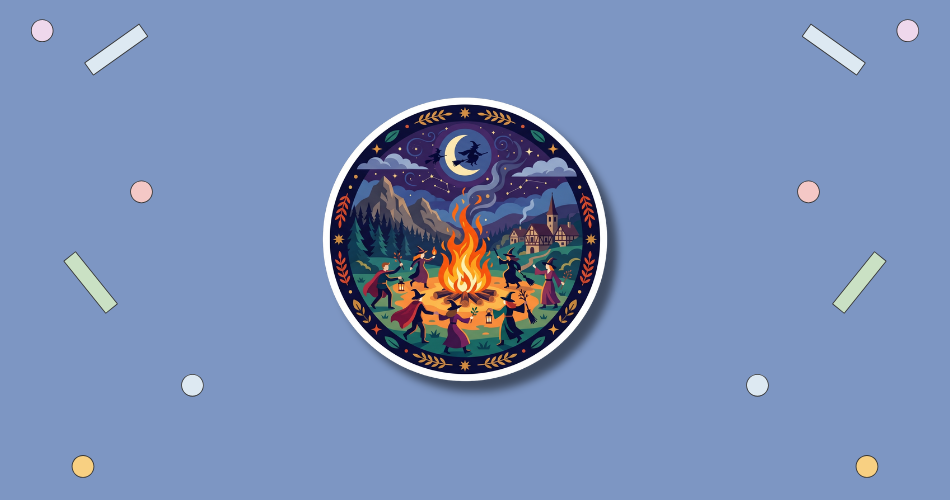
Walpurgis Night, also known as Walpurgisnacht, is observed annually on April 30. This event takes place on the eve of the feast day of Saint Walpurga and marks the transition from the end of winter to the beginning of spring. In many Northern and Central European countries, it is a night defined by communal gatherings and folk traditions that celebrate the awakening of nature. In 2027, this date falls on a Friday.
Contents
See also: March Full Moon, Kupala Night, Halloween, Midsummer
HT Meter
Does this day matter to you?
Tap the meter if it does, and say whether you will be celebrating — that is what opens the wishes from everybody else who will be.
This day matters to me
0 Be the first to say so
Just getting started
0 Let others know you’re in.
Wishes, greetings and stories
Join the celebration to share a wish, a greeting, or how this day goes in your house.
These are kept for the people celebrating this day. Say you will be celebrating to read them and to add your own.
You have already shared something here recently.
Nothing here yet. Yours would be the first.
History of Walpurgis Night
The origins of this night are a blend of ancient pagan customs and Christian history. The name is derived from Saint Walpurga, an 8th-century English missionary who traveled to Germany to establish a monastery and spread Christianity. Her canonization on May 1 in the year 870 led to her name being associated with the night before her feast. Historically, Saint Walpurga was invoked for protection against evil spirits, illness, and sorcery.

Snowman Burning Day
In Germanic folklore, the night of April 30 was believed to be the time when witches gathered on the Brocken, the highest peak in the Harz Mountains, to celebrate a great Sabbath. These legends were immortalized in Johann Wolfgang von Goethe’s “Faust,” which described the supernatural revelry on the mountain. To counter these perceived evil forces, local villagers would light huge fires on hillsides and create loud noises to drive away spirits, a tradition that evolved into the modern bonfires seen today.
Why is Walpurgis Night important?
This observance serves as a vital cultural bridge between the cold winter months and the agricultural season of spring. It is socially significant because it encourages community cooperation through the building of massive public bonfires and the organization of local festivals. In many regions, particularly in Sweden and Germany, the night acts as a symbolic cleansing, where the debris of the previous year is literally and figuratively burned away to make room for new growth.
The day also plays a key role in regional identity and tourism, especially in the Harz Mountains and historical university towns. For students in Sweden, the night is a major milestone in the academic calendar, celebrated with choral singing and the donning of white student caps. It reinforces the connection between human activity and the natural cycle of the seasons, providing a shared moment of relief as the days grow longer and the landscape begins to bloom.
- Public bonfires bring together entire communities for shared warmth and celebration.
- The holiday marks the halfway point between the spring equinox and the summer solstice.
- Traditional songs and speeches celebrate the return of greenery and bird migration.
- It provides an occasion for people to reconnect with folklore and regional legends.
- The event supports local economies through fairs, markets, and cultural performances.
How to Celebrate Walpurgis Night
Make it yours
How would you like to spend Walpurgis Night?
Tick what fits you, and we will put together ideas made for this day — not for any day.

Ostara
The central activity for this holiday is the lighting of a communal bonfire on a hill or in a central town square. People gather around the flames to sing traditional spring songs and watch as an effigy of a witch is sometimes burned to symbolize the end of winter’s hardships. In rural areas, it is common to roast sausages over smaller fires and share seasonal drinks like “Maibowle,” a woodruff-flavored wine punch.
In the Czech Republic and parts of Germany, many people dress up in costumes as witches or sorcerers, participating in parades and competitions. Children often play pranks or engage in games that involve making noise to “scare away” the lingering spirits of the cold months. In Sweden, the evening is more focused on formal choral performances and speeches given by community leaders to officially welcome the spring. To participate, one simply needs to find a local gathering, wear warm clothing, and join in the collective songs and cheers as the sun sets.
- Gather around a local bonfire to watch the symbolic burning of the winter season.
- Dress up in a witch or wizard costume to participate in a town parade.
- Listen to local choirs perform traditional songs that welcome the arrival of spring.
- Roast sausages or marshmallows over a small fire with friends and family.
- Decorate your home with spring flowers or greenery to mark the seasonal shift.
Walpurgis Night Dates Table
| Year | Date | Day of the week |
|---|---|---|
| 2026 | April 30 | Thursday |
| 2027 next | April 30 | Friday |
| 2028 | April 30 | Sunday |
| 2029 | April 30 | Monday |
| 2030 | April 30 | Tuesday |