

Chainmail Day
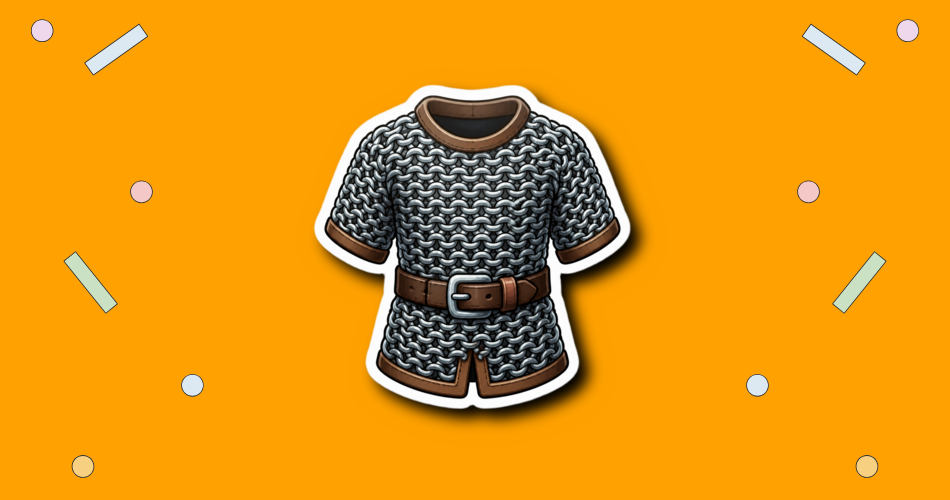
Chainmail Day is celebrated every year on September 22. In 2027, this date falls on a Wednesday. This observance honors the interlocked metal rings that once protected medieval warriors and now appear in historical reenactments and modern fashion alike.
Contents
HT Meter
Does this day matter to you?
Tap the meter if it does, and say whether you will be celebrating — that is what opens the wishes from everybody else who will be.
This day matters to me
0 Be the first to say so
Just getting started
0 Let others know you’re in.
Wishes, greetings and stories
Join the celebration to share a wish, a greeting, or how this day goes in your house.
These are kept for the people celebrating this day. Say you will be celebrating to read them and to add your own.
You have already shared something here recently.
Nothing here yet. Yours would be the first.
History of Chainmail Day
Mail armor—commonly called chainmail—consists of thousands of small metal rings linked together in a pattern to form a flexible mesh. Each ring typically connects with four neighbors, creating a dense, protective barrier that can turn aside blades and deflect arrows. The design proved remarkably effective and durable, and it was widely used in European militaries from the 3rd century BC to the 16th century AD. In Asia, Africa, and the Middle East, mail remained in military service until the 18th century. The earliest surviving examples of mail were discovered in the Carpathian Basin, including a burial in Horný Jatov, Slovakia, dated to the 3rd century BC, and a chieftain’s burial in Ciumești, Romania. Historians commonly credit the Celts with its invention, although Etruscan pattern mail dates from at least the 4th century BC.
For centuries, mail was one of the most valued pieces of armor a soldier could own. A knee-length shirt of mail, called a hauberk, required enormous time and skill to produce, which made it expensive and highly prized. Mail could be made from iron, steel, or bronze, and the rings were often riveted for extra strength. After the fall of the Western Roman Empire, mail remained a mainstay of European warfare, and it continued to be used even as plate armor became common in the 14th century. In the modern era, the same linked-ring structure protects workers in industries such as butchery and woodworking, and it appears in shark-resistant wetsuits. Chainmail has also inspired artists, fashion designers, and reenactors, keeping the ancient craft alive in new forms.
Why is Chainmail Day important?
Chainmail Day matters because it celebrates a technology that shaped military history and human ingenuity. Understanding how mail was made and used connects us to the lives of ancient soldiers, armorers, and the societies that relied on it. The day also honors the patience of skilled craftspeople who spent months creating a single hauberk, and it keeps their legacy visible to new generations. Without days like this, the story of mail armor might fade into footnotes.

International Body Piercing Day
On a broader level, the day highlights how old ideas can find new relevance. Chainmail now appears in cut-resistant gloves, stab-resistant vests, and even high-fashion garments worn on runways. It reminds us that practical innovation often begins with simple, elegant solutions—in this case, interlocking rings that flex with the body while deflecting blades and bites. The continued popularity of chainmail in jewelry and costume design shows that craftsmanship can thrive in the modern world.
- It highlights a technology that protected soldiers for nearly two millennia.
- It honors the unnamed armorers and craftswomen who produced mail in workshops across Europe.
- It showcases the link between ancient warfare and modern industrial applications like cut-resistant gloves.
- It invites hands-on learning through workshops and DIY projects.
- It celebrates the artistic side of armor, including medieval garb and contemporary chainmail fashion.
How to Celebrate Chainmail Day
Make it yours
How would you like to spend Chainmail Day?
Tick what fits you, and we will put together ideas made for this day — not for any day.
There are many enjoyable ways to celebrate Chainmail Day. You can study the armor’s history through museum collections or online resources, watch videos of makers forging and connecting rings, or browse social media for chainmail art. The day is also a great excuse to learn a new skill: chainmail crafting requires only pliers, wire, and patience. Beginners can start small, while experienced artisans can take on larger projects such as coifs, hauberks, or decorative wall pieces.
For those who want to get hands-on, look for local workshops or online tutorials that teach the basic European 4-in-1 weave. Experienced crafters often share tips on choosing the right rings and tools, and many publish free patterns. If you already own a piece of chainmail, wear it or display it proudly. Even a simple keychain made from jump rings can capture the spirit of the day. The best way to appreciate chainmail is to feel its weight and flexibility for yourself.
- Visit a history museum or medieval fair featuring chainmail exhibits.
- Try making a simple chainmail bracelet with jump rings and two pairs of pliers.
- Watch a tutorial video on the classic European 4-in-1 weave.
- Read about famous mail armor, from the Roman lorica hamata to medieval hauberks.
- Share your chainmail project or favorite piece with the hashtag #ChainmailDay.
Chainmail Day Dates
| Year | Date | Day of the week |
|---|---|---|
| 2026 | September 22 | Tuesday |
| 2027 next | September 22 | Wednesday |
| 2028 | September 22 | Friday |
| 2029 | September 22 | Saturday |
| 2030 | September 22 | Sunday |

Sorry to hear you didn't enjoy this article...

National Leathercraft Day
Help us make it better!