
Mali Independence Day
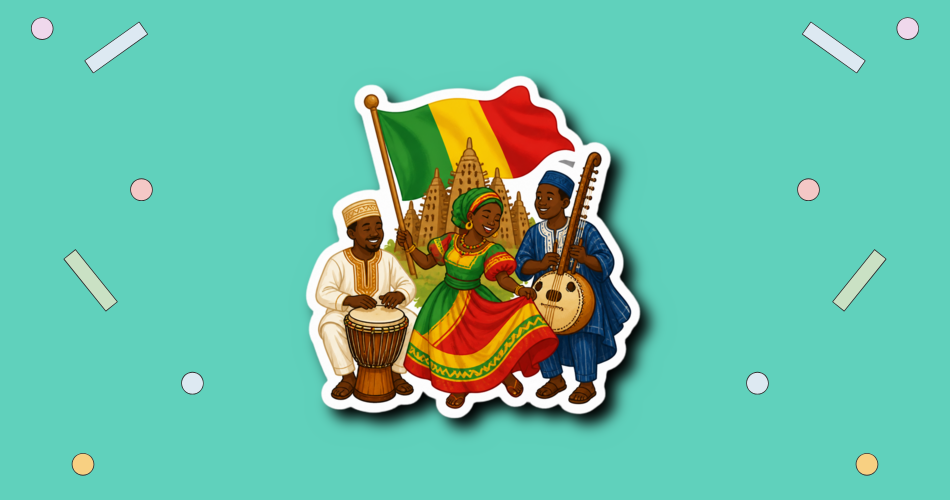
Mali Independence Day is celebrated annually on September 22. In 2027, this date falls on a Wednesday. The day marks the nation's hard-won freedom from colonial rule and is a vibrant celebration of Malian identity, culture, and sovereignty.
Contents
HT Meter
Does this day matter to you?
Tap the meter if it does, and say whether you will be celebrating — that is what opens the wishes from everybody else who will be.
This day matters to me
0 Be the first to say so
Just getting started
0 Let others know you’re in.
Wishes, greetings and stories
Join the celebration to share a wish, a greeting, or how this day goes in your house.
These are kept for the people celebrating this day. Say you will be celebrating to read them and to add your own.
You have already shared something here recently.
Nothing here yet. Yours would be the first.
History of Mali Independence Day
The West African region now called Mali was once home to three powerful empires: the Ghana Empire, the Mali Empire, and the Songhai Empire. These empires controlled sub-Saharan trade, amassed immense wealth, and became centers of learning and Islamic culture. Mansa Musa, emperor of the Mali Empire, is often considered the wealthiest person in history. Over time, the Mali Empire weakened and was absorbed by the Songhai Empire. As European trade routes shifted, the once-prosperous sub-Saharan trade declined, and by the 19th century, internal Islamic wars had fractured the region into multiple theocratic states. France began taking interest in the landlocked territory, gradually seizing control by 1892 and making it a French colony by 1905.
In 1946, a territorial assembly called the Sudanese Union–African Democratic Party was formed, marking the first step toward autonomy. The region merged with Senegal in January 1959 to form the Mali Federation, and France signed an agreement to transfer power in June 1960. However, policy differences with Senegal led to the federation's dissolution in August of that year. Undeterred, Mali declared its independence on September 22, 1960, becoming the Republic of Mali. Celebrations have been held every year since to commemorate this struggle for freedom.
Why is Mali Independence Day important?
Mali Independence Day honors the sacrifices of those who fought for the nation's freedom and celebrates the country's rich heritage. It is a time for national pride and reflection on Mali's journey from colonial rule to sovereignty.
- The day remembers the heroes who fought for independence, including figures like Modibo Keïta, and acknowledges their contributions to building the modern nation.
- It highlights Mali's historical significance as a center of wealth, learning, and culture in West Africa, with empires that shaped the region's language, customs, and faith.
- The holiday showcases Mali's vibrant culture through traditional music, dance, and art, strengthening national identity and unity among its diverse population.
- Independence Day serves as a reminder of Mali's resilience and its ability to overcome challenges, from colonial domination to internal divisions.
- It fosters pride in Mali's natural resources and young population, promoting optimism for the country's future.
How to Celebrate Mali Independence Day
Make it yours
How would you like to spend Mali Independence Day?
Tick what fits you, and we will put together ideas made for this day — not for any day.
Independence Day of Senegal
Celebrate Mali Independence Day by exploring the country's rich history and culture. Read about the Mali Empire, watch documentaries, or attend events hosted by Malian diaspora communities, cultural centers, or embassies. These events often feature traditional music, dance performances, and art exhibitions that highlight Mali's heritage.
Support Malian-owned businesses or donate to organizations working on cultural preservation and development in Mali. Learn about Malian cuisine by trying dishes like Maafe or Thieboudienne, or share historical facts and images on social media using #MaliIndependenceDay. Engage with Malian community groups to learn more about the nation's diverse customs and traditions.
- Read about the Mali Empire and its legacy as a center of learning and wealth.
- Participate in local or online celebrations, including parades, concerts, and cultural showcases.
- Explore Malian culture through its music, food, art, and languages, including Bambara and French.
- Support Malian artists and craftspeople by purchasing their work or attending exhibitions.
- Share your appreciation for Mali on social media to spread awareness and celebrate its independence.
Mali Independence Day Dates
| Year | Date | Day of the week |
|---|---|---|
| 2026 | September 22 | Tuesday |
| 2027 next | September 22 | Wednesday |
| 2028 | September 22 | Friday |
| 2029 | September 22 | Saturday |
| 2030 | September 22 | Sunday |
Sorry to hear you didn't enjoy this article...
Help us make it better!