
Chimborazo Day
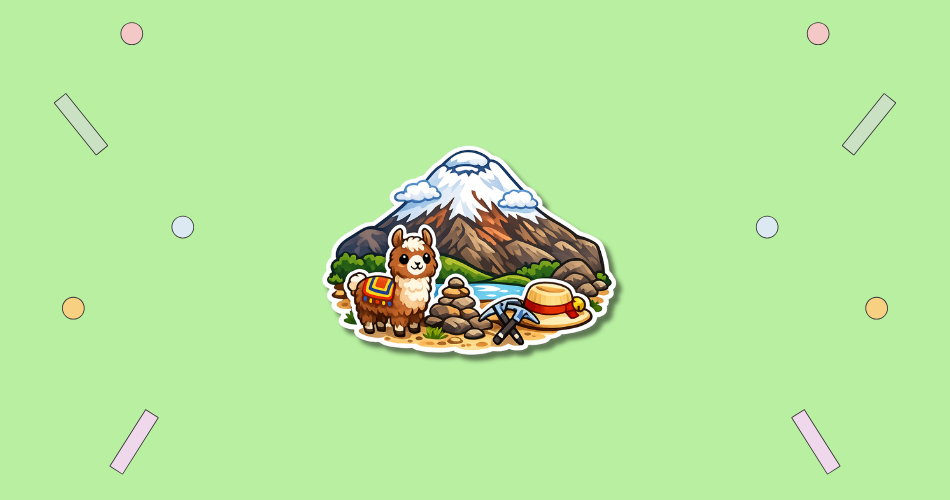
Chimborazo Day is observed every year on June 3. In 2027, this date falls on a Thursday. The day focuses on Mount Chimborazo, Ecuador’s highest peak and one of the most unusual geographic landmarks on the planet. Although Mount Everest is higher above sea level, Chimborazo’s summit is often described as the point on Earth farthest from the planet’s center because the mountain sits near the equatorial bulge. Chimborazo Day is an informal observance for learning about mountains, hiking, geography, Ecuador, and the natural forces that shape the Earth. 1
Contents
See also: Mount Everest Day, International Mountain Day
HT Meter
Does this day matter to you?
Tap the meter if it does, and say whether you will be celebrating — that is what opens the wishes from everybody else who will be.
This day matters to me
0 Be the first to say so
Just getting started
0 Let others know you’re in.
Wishes, greetings and stories
Join the celebration to share a wish, a greeting, or how this day goes in your house.
These are kept for the people celebrating this day. Say you will be celebrating to read them and to add your own.
You have already shared something here recently.
Nothing here yet. Yours would be the first.
History of Chimborazo Day
Mount Chimborazo stands in central Ecuador in the Cordillera Occidental of the Andes. The mountain is an inactive volcano, heavily glaciated near the top, and rises to more than 20,000 feet above sea level. Long before the modern observance, Chimborazo drew attention from explorers, geographers, climbers, and local communities because of its size, position, and dramatic presence in the Andean landscape. Alexander von Humboldt reached high on the mountain in 1802, and British mountaineer Edward Whymper became the first climber known to reach the summit in 1880.

Mount Everest Day
The modern observance is not strongly tied to a clearly documented founder or official proclamation. It is now mainly used to highlight the mountain’s scientific and cultural interest, especially the surprising fact that “highest” can mean different things depending on how height is measured. Chimborazo is not the tallest mountain above sea level, but its location near the equator places its summit farther from Earth’s center than Everest’s summit. That makes the day a useful occasion for connecting outdoor recreation with geography, earth science, and curiosity about the natural world.
Why is Chimborazo Day important?
Chimborazo Day matters because it turns a single mountain into a clear lesson about how the Earth works. The planet is not a perfect sphere; it is slightly wider around the equator than at the poles. Because Chimborazo rises from that wider part of Earth, its summit reaches farther from the center of the planet than mountains that are much taller when measured from sea level. That distinction makes the day especially useful for classrooms, hikers, travelers, and anyone interested in maps and measurement.
The day also draws attention to Ecuador’s Andean landscapes and the high-altitude environments that surround Chimborazo. Mountains are sources of water, weather patterns, cultural identity, wildlife habitat, and human challenge. Learning about Chimborazo can lead to broader conversations about glaciers, volcanic landforms, mountain safety, and the people who live near high peaks. It also reminds readers that famous rankings are often shaped by the question being asked.
- It makes geography easier to understand.
- It shows that measurement changes perspective.
- It highlights one of Ecuador’s major landmarks.
- It connects hiking with science and observation.
- It invites respect for fragile mountain environments.
How to Celebrate Chimborazo Day
Make it yours
How would you like to spend Chimborazo Day?
Tick what fits you, and we will put together ideas made for this day — not for any day.

International Mountain Day
Read about Mount Chimborazo, look up its location on a map, and compare it with Mount Everest, Mauna Kea, and other famous peaks. A short hike, a walk on a local trail, or a visit to a nearby overlook fits the spirit of the day without requiring a major expedition. Teachers and families can use a globe or simple diagram to explain why Earth’s equatorial bulge changes the way height can be understood. Anyone interested in travel can learn more about Ecuador’s highlands, Riobamba, and the protected areas around the mountain.
Chimborazo Day can also be marked by paying attention to mountain safety and conservation. High-altitude environments are beautiful, but they can be dangerous, especially when weather, ice, altitude, and difficult terrain are involved. Watching a documentary about climbing, reading an explorer’s account, or studying volcanoes can make the day more thoughtful. Outdoor groups can also use the day for a trail cleanup or a conversation about protecting natural places close to home.
- Take a local hike and notice the terrain.
- Learn why Earth is wider at the equator.
- Find Chimborazo on a map of Ecuador.
- Compare mountain heights by different measurements.
- Pick up litter on a trail or in a park.
Chimborazo Day Dates
| Year | Date | Day of the week |
|---|---|---|
| 2026 | June 3 | Wednesday |
| 2027 next | June 3 | Thursday |
| 2028 | June 3 | Saturday |
| 2029 | June 3 | Sunday |
| 2030 | June 3 | Monday |