
Uganda Martyrs Day
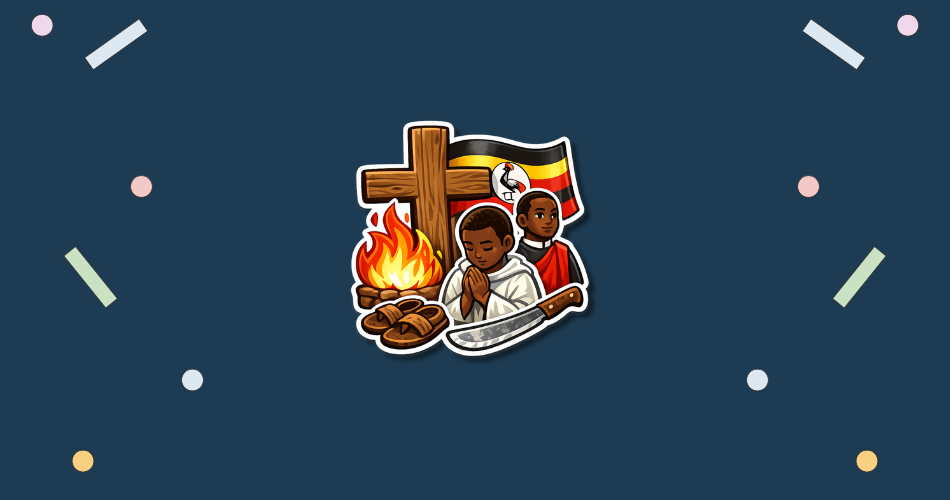
Uganda Martyrs Day is observed every year on June 3. In 2027, this date falls on a Thursday. It is a public holiday in Uganda and a solemn religious commemoration honoring Christians who were killed for their faith in the Buganda kingdom in the late 19th century. The day is closely associated with Namugongo, where many pilgrims gather for prayer, worship, and reflection. It is especially important to Catholic and Anglican communities, but it also holds a wider national meaning in Uganda as a day of memory, courage, and faith.
Contents
See also: Africa Day for Food and Nutrition Security, International Day of Remembrance of the Victims of the Rwanda Genocide, African Liberation Day
HT Meter
Does this day matter to you?
Say that it does, and say whether you will be marking it. Both are anonymous to nobody but kind to everybody.
This day matters to me
0 Be the first to say so
Quietly remembered
0 Nobody has said so yet
Notes of remembrance
Join those marking this day to share a word, a memory, or the reason it matters to you.
These notes are kept for the people marking this day. Say you will be marking it to read them and to leave your own.
You have already shared a note here recently.
No notes yet. Yours would be the first.
History of Uganda Martyrs Day
Uganda Martyrs Day is rooted in events that took place between 1885 and 1887, during the reign of Kabaka Mwanga II of Buganda. Christian converts, including both Catholics and Anglicans, were executed after refusing to renounce their faith. Many of the martyrs were young men connected with the royal court, including pages who had embraced Christianity during the early years of missionary activity in the region. June 3 is especially linked with the execution of a group of martyrs at Namugongo in 1886, where several were burned to death.

Uganda Independence Day
The Catholic martyrs were beatified in 1920 and canonized in 1964, giving the commemoration a place in the wider Catholic calendar as the Memorial of Saint Charles Lwanga and Companions. Anglican martyrs are also remembered as part of the same historical witness, making the day important across Christian traditions in Uganda. Namugongo became the central pilgrimage site connected with the martyrs, with Catholic and Anglican shrines located there. Today, the observance combines national remembrance, Christian devotion, and reflection on the cost of conscience.
Why is Uganda Martyrs Day important?
Uganda Martyrs Day matters because it preserves the memory of people who chose faith and conviction despite extreme pressure. Their story is not only about death, but also about moral courage, religious identity, and the difficult meeting point between political authority and personal belief. For many Ugandans, the martyrs represent steadfastness, sacrifice, and spiritual commitment. The day gives families, churches, schools, and communities a shared moment to revisit that history with seriousness and respect.
The observance also has cultural and national importance because it draws attention to a defining chapter in Uganda’s religious history. Pilgrimage to Namugongo has become one of the most visible expressions of the day, with worshippers traveling for Mass, prayer services, hymns, and reflection. The commemoration connects local history with global Christianity, especially through the recognition of Saint Charles Lwanga and Companions. It also offers a way to think about religious freedom, leadership, youth, and the responsibility to honor those who suffered for their beliefs.
- It honors Catholic and Anglican Christians killed for their faith.
- It preserves an important part of Uganda’s religious history.
- It encourages reflection on courage under pressure.
- It connects Ugandan Christianity with the wider church.
- It gives communities a respectful day of prayer and remembrance.
How to Observe Uganda Martyrs Day
Make it yours
How would you like to spend Uganda Martyrs Day?
Tick what fits you, and we will put together ideas made for this day — not for any day.

Rwanda Liberation Day
Attend a church service, Mass, prayer meeting, or local commemoration connected with the Uganda Martyrs. Many people also read about Saint Charles Lwanga and the other martyrs to understand the historical setting behind the day. For those unable to travel to Namugongo, a quiet time of prayer, scripture reading, or reflection at home can still be meaningful. Schools and families can use the day to discuss courage, conscience, and the importance of respecting religious belief.
A thoughtful observance should keep the tone respectful rather than festive. Learn about both the Catholic and Anglican martyrs, since the history of the day includes both traditions. Community groups can organize discussions, hymns, charitable acts, or youth programs that connect the martyrs’ witness with present-day values. The day is also a fitting time to pray for peace, unity, religious freedom, and people who face persecution because of their beliefs.
- Visit a local church service or prayer gathering.
- Read a short biography of Saint Charles Lwanga.
- Learn why Namugongo is central to the commemoration.
- Discuss the story with children or students.
- Pray for people facing religious persecution today.
Uganda Martyrs Day Dates
| Year | Date | Day of the week |
|---|---|---|
| 2026 | June 3 | Wednesday |
| 2027 next | June 3 | Thursday |
| 2028 | June 3 | Saturday |
| 2029 | June 3 | Sunday |
| 2030 | June 3 | Monday |
Thank you for your feedback!
Fuel the next post!