


East Timor Independence Day
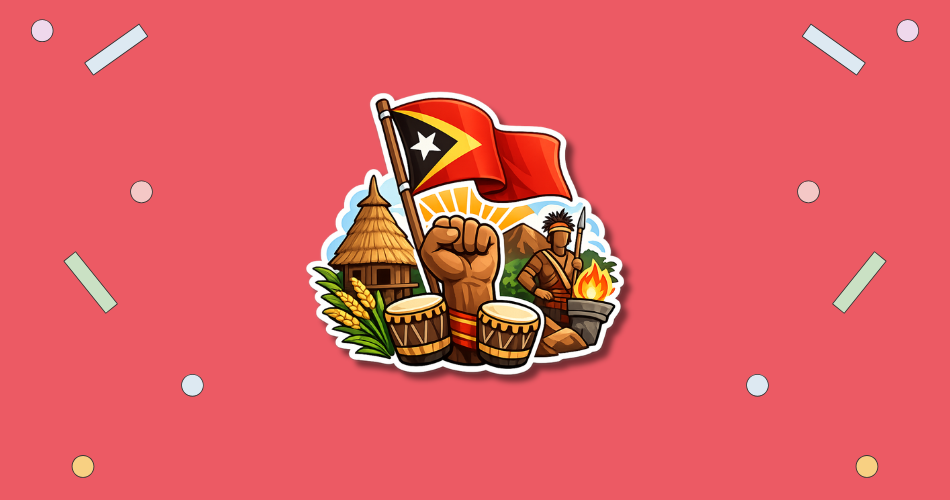
East Timor Independence Day is observed every year on May 20. In 2027, this date falls on a Thursday. The public holiday is officially known in Timor-Leste as Restoration of Independence Day, marking the restoration of the country’s independence on May 20, 2002. It is a national day of remembrance, civic pride, and reflection on the long struggle for self-determination. Public ceremonies, flag events, memorial gestures, and community gatherings connect the date with both national history and the responsibilities of independence. 1
Contents
HT Meter
Does this day matter to you?
Say that it does, and say whether you will be marking it. Both are anonymous to nobody but kind to everybody.
This day matters to me
0 Be the first to say so
Quietly remembered
0 Nobody has said so yet
Notes of remembrance
Join those marking this day to share a word, a memory, or the reason it matters to you.
These notes are kept for the people marking this day. Say you will be marking it to read them and to leave your own.
You have already shared a note here recently.
No notes yet. Yours would be the first.
History of East Timor Independence Day
Timor-Leste’s modern independence story includes several defining dates, but May 20 is tied to the restoration of full sovereignty in 2002. The territory had been colonized by Portugal for centuries, and political upheaval in Portugal in the 1970s opened the way for a tense and unstable decolonization process. On November 28, 1975, Timorese leaders proclaimed independence from Portugal, but Indonesia invaded days later and later incorporated the territory as a province. After years of occupation and resistance, a United Nations-backed process led to a 1999 popular consultation in which voters supported independence.
Following that vote, Timor-Leste came under United Nations administration during the transition to statehood. On May 20, 2002, the country formally restored its independence and became a sovereign state in the 21st century. The date is now recognized by Timor-Leste as a fixed-date public holiday, while November 28 is separately observed as Proclamation of Independence Day. In 2026, official commemorative events for the restoration anniversary were scheduled from May 17 through May 20, including ceremonies in Tasi-Tolu and national flag-raising and flag-lowering events.
Why is East Timor Independence Day important?
East Timor Independence Day matters because it marks the return of national self-government after colonization, conflict, occupation, and international administration. The date does not stand alone as a simple anniversary; it represents the result of political persistence, civic courage, and a long demand for self-determination. For many Timorese families, the meaning of the day is connected with memory as much as celebration. It honors those who struggled, suffered, organized, voted, served, and helped build the institutions of a new country.
Popular Consultation Day
The day also helps explain why national identity in Timor-Leste is closely tied to resilience. Independence did not arrive through a single event, but through decades of pressure, diplomacy, community endurance, and international attention. Observing the day can help readers understand Timor-Leste not only as a young nation, but as a country with deep historical experience. It is also a reminder that sovereignty brings ongoing work: protecting democratic institutions, preserving memory, developing public services, and strengthening national unity.
- It honors Timor-Leste’s restoration of sovereignty.
- It keeps public attention on the struggle for self-determination.
- Families can remember the sacrifices behind independence.
- Civic ceremonies give the date national visibility.
- The day connects history with the responsibilities of statehood.
How to Observe East Timor Independence Day
Make it yours
How would you like to spend East Timor Independence Day?
Tick what fits you, and we will put together ideas made for this day — not for any day.
Learn the difference between Timor-Leste’s Restoration of Independence Day on May 20 and its Proclamation of Independence Day on November 28. Reading a reliable history of the country helps place both dates in context and avoids flattening the independence story into a single moment. People in Timor-Leste may attend public ceremonies, watch flag events, visit memorial places, or join community gatherings connected with the anniversary. Outside the country, the day can be marked by learning about Timorese history, culture, languages, and modern civic life.
A thoughtful observance should make room for both pride and remembrance. The country’s independence story includes celebration, grief, political courage, and the hard work of rebuilding public institutions after conflict. Schools, cultural groups, and community organizations can use the day for discussions about decolonization, democracy, peacebuilding, and national identity. For readers with Timorese connections, it can also be a day to share family stories, cook familiar food, listen to Timorese music, or talk with younger generations about why May 20 matters.
- Read about Timor-Leste’s path to sovereignty.
- Watch or attend a flag ceremony if available.
- Learn the meaning of May 20 and November 28.
- Share a respectful post about Timorese history.
- Explore Timorese culture through music, food, or language.
East Timor Independence Day Dates
| Year | Date | Day of the week |
|---|---|---|
| 2026 | May 20 | Wednesday |
| 2027 next | May 20 | Thursday |
| 2028 | May 20 | Saturday |
| 2029 | May 20 | Sunday |
| 2030 | May 20 | Monday |
Sorry to hear you didn't enjoy this article...
Mozambique Independence Day
Help us make it better!