



Josephine Baker Day
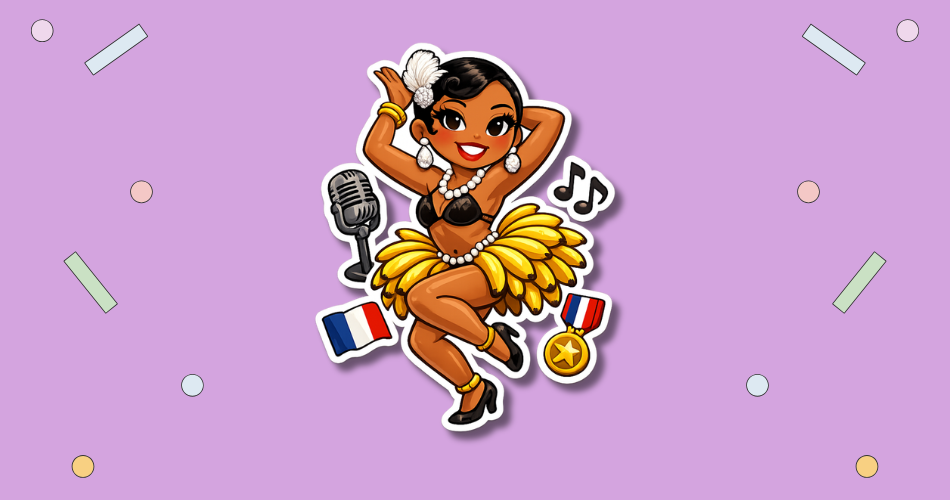
Josephine Baker Day is observed every year on May 20. In 2027, this date falls on a Thursday. The observance honors Josephine Baker, the American-born French performer, civil rights advocate, and World War II Resistance figure whose life connected art, courage, and public service. It is a respectful day of recognition rather than a lighthearted pop-culture holiday. The day is especially tied to Baker’s stand against racism and segregation, including her work with civil rights organizations and her refusal to accept segregated audiences. 1 2
Contents
HT Meter
Does this day matter to you?
Say that it does, and say whether you will be marking it. Both are anonymous to nobody but kind to everybody.
This day matters to me
0 Be the first to say so
Quietly remembered
0 Nobody has said so yet
Notes of remembrance
Join those marking this day to share a word, a memory, or the reason it matters to you.
These notes are kept for the people marking this day. Say you will be marking it to read them and to leave your own.
You have already shared a note here recently.
No notes yet. Yours would be the first.
History of Josephine Baker Day
Josephine Baker Day dates back to May 20, 1951, when the NAACP honored Baker for her civil rights work. That recognition came during a period when Baker, already famous in Europe, used her public reputation to challenge racial discrimination in the United States. Born Freda Josephine McDonald in St. Louis in 1906, she became a major entertainer in Paris after moving there in the 1920s. Her career made her internationally known, but her activism gave the observance its lasting meaning.
Baker’s life crossed several worlds: stage performance, wartime service, anti-racist activism, and public symbolism. During World War II, she aided the French Resistance, and after the war she continued to speak and act against segregation. She later became one of the few women to speak at the 1963 March on Washington for Jobs and Freedom. Today, Josephine Baker Day is understood as a way to remember a performer who used fame not only to entertain, but also to confront injustice.
Why is Josephine Baker Day important?
Josephine Baker Day matters because it highlights a public figure who challenged racism in practical, visible ways. Baker refused to perform for segregated audiences, spoke openly about discrimination, and supported civil rights efforts at a time when doing so carried personal and professional risks. Her story shows how culture and activism can overlap. She did not separate her artistry from her belief that public life should make room for dignity and equality.

National Black Women in Jazz and the Arts Day
The day also helps keep attention on a broader history of Black performers who faced discrimination while shaping modern entertainment. Baker’s fame in France did not erase the racism she encountered in the United States, and her international success gave her a platform she used with purpose. Remembering her life adds depth to conversations about civil rights, migration, performance, war service, and the way artists can influence public attitudes. The observance is strongest when it treats her not only as an icon, but as a person who made difficult choices in public.
- It honors a major Black entertainer and activist.
- It recognizes courage in the face of segregation.
- It connects arts history with civil rights history.
- It keeps Baker’s wartime service in public memory.
- It shows how fame can be used for justice.
How to Observe Josephine Baker Day
Make it yours
How would you like to spend Josephine Baker Day?
Tick what fits you, and we will put together ideas made for this day — not for any day.
Read about Josephine Baker’s life beyond her most familiar stage image. Look for reliable biographies, museum resources, interviews, archival photographs, or recordings that show the range of her career. Watch one of her film appearances or listen to her music with attention to the era in which she performed. For a school, library, or community group, the day can support a focused discussion on the Harlem Renaissance, Black performers in Europe, or civil rights activism in entertainment.
A thoughtful observance can also include learning about the institutions and movements connected to Baker’s work. Her life offers entry points into the history of the NAACP, the French Resistance, the March on Washington, and the long struggle against segregated public spaces. Instead of treating her simply as a glamorous figure, use the day to consider the pressure she faced and the choices she made. Baker’s legacy is most clearly honored through informed remembrance and honest discussion.
- Read a biography of Josephine Baker.
- Listen to one of her recorded songs.
- Learn about her work with the French Resistance.
- Discuss her refusal to perform for segregated audiences.
- Share a museum or archive resource about her life.
Josephine Baker Day Dates
| Year | Date | Day of the week |
|---|---|---|
| 2026 | May 20 | Wednesday |
| 2027 next | May 20 | Thursday |
| 2028 | May 20 | Saturday |
| 2029 | May 20 | Sunday |
| 2030 | May 20 | Monday |

Sorry to hear you didn't enjoy this article...

Joseph Brackett Day
Help us make it better!

- https://www.nps.gov/mamc/learn/historyculture/josephine-baker.htm[↩]
- https://www.womenshistory.org/education-resources/biographies/josephine-baker[↩]
Cook it
Make something for Josephine Baker Day
Tell us what you feel like making and what you have to work with, and we will write one recipe for it.